格物
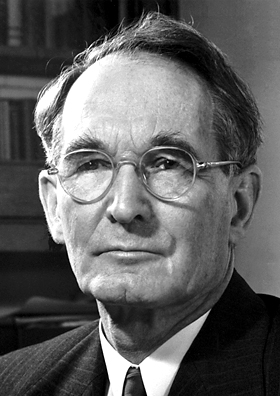
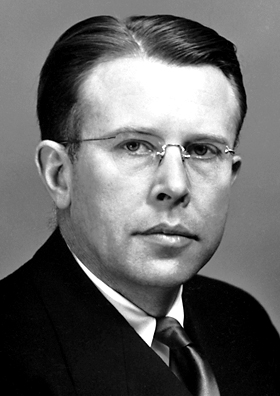
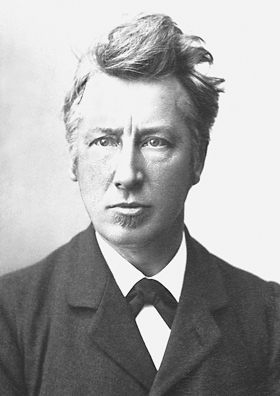
图:Nobel foundation · Public domain · Wikimedia Commons
珀西·布里奇曼1882—1961
Percy Williams Bridgman
物理学家, 美国
珀西·威廉姆斯·布里奇曼,美国物理学家,因他在高压物理方面的贡献,1946年获得诺贝尔物理学奖。布里奇曼对科学方法及科学哲学的一些观点有相当广泛的著述。晚年因罹患癌症,饮弹自杀。
摘自维基百科「珀西·布里奇曼」,CC BY-SA 4.0
- 出生
- 1882 年 4 月 21 日,剑桥
- 逝世
- 1961 年 8 月 20 日,兰道夫
- 国籍
- 美国
- 学科
- 物理学、博物与综合
- 职业
- 物理学家、大学教师
- 母语 / 工作语言
- 英语
- 母校
- 哈佛大学、北牛顿高中
- 工作单位
- 哈佛大学
研究领域
师承
博士导师1
来自 Wikidata 的「博士导师」「师从」「博士生」「学生」记录,可能不全。
所获奖项(11)
- 1917伦福德奖金
- 1929Guthrie Lecture
- 1931约西亚·威拉德·吉布斯讲座
- 1932埃利奥特·克雷森奖章
- 1933科姆斯托克物理学奖
- 1946诺贝尔物理学奖
- 1949英国皇家学会外籍会员
- 1950贝克演讲
- 1950doctor honoris causa from the University of Paris
- 1951宾汉奖章
- —贝克尔讲座
学会与院士
百科正文
英文维基百科补充中文条目比较短,下面是英文条目「Percy Williams Bridgman」的原文
Percy Williams Bridgman (April 21, 1882 – August 20, 1961) was an American physicist who received the Nobel Prize in Physics in 1946 for his work on the physics of high pressures. He also wrote extensively on the scientific method and on other aspects of the philosophy of science. The Bridgman effect, the Bridgman–Stockbarger technique, and the high-pressure mineral bridgmanite are named after him.
Early life and education
Percy Williams Bridgman was born on April 21, 1882, in Cambridge, Massachusetts, and grew up in nearby Auburndale. His parents were both born in New England. His father, Raymond Landon Bridgman, was "profoundly religious and idealistic" and worked as a newspaper reporter assigned to state politics. His mother, Mary Ann Maria Williams, was described as "more conventional, sprightly, and competitive."
Bridgman attended both elementary and high school in Auburndale, where he excelled at competitions in the classroom, on the playground, and while playing chess. Described as both shy and proud, his home life consisted of family music, card games, and domestic and garden chores. The family was deeply religious; reading the Bible each morning and attending a Congregational Church. However, Bridgman later became an atheist.
In 1900, Bridgman entered Harvard University, where he received his A.B. in 1904, his A.M. in 1905, and his Ph.D. in 1908.
Career and research
From 1910 until his retirement, Bridgman taught at Harvard University, becoming a full professor in 1919. In 1905, he began investigating the properties of matter under high pressure. A machinery malfunction led him to modify his pressure apparatus; the result was a new sealing device enabling him to create pressures eventually exceeding 100,000 kgf/cm2 (10 GPa; 100,000 atmospheres). This was a huge improvement over previous machinery, which could achieve pressures of only 3,000 kgf/cm2 (0.3 GPa). This new apparatus led to an abundance of new findings, including a study of the compressibility, electric and thermal conductivity, tensile strength and viscosity of more than 100 different compounds. Bridgman is also known for his studies of electrical conduction in metals and properties of crystals. He developed the Bridgman seal and is the eponym for Bridgman's thermodynamic equations, which were used to further his research.
Bridgman made many improvements to his high-pressure apparatus over the years, and unsuccessfully attempted the synthesis of diamond many times. The high-pressure torsion apparatus developed by Bridgman significantly contributed to the development of severe plastic deformation field decades later.
In 1946 he received the Nobel Prize in Physics for his high pressure physics work.
His philosophy of science book The Logic of Modern Physics (1927) advocated operationalism and coined the term operational definition. In 1938 he participated in the International Committee composed to organise the International Congresses for the Unity of Science. He was also one of the 11 signatories to the Russell–Einstein Manifesto.
Personal life and death
Bridgman married Olive Ware (1882-1972), of Hartford, Connecticut, in 1912. Ware's father, Edmund Asa Ware, was the founder and first president of Atlanta University. The couple had two children and were married for nearly 50 years, living most of that time in Cambridge. The family also had a summer home in Randolph, New Hampshire, where Bridgman was known as a skilled mountain climber.
Bridgman was a "penetrating analytical thinker" with a "fertile mechanical imagination" and exceptional manual dexterity. He was a skilled plumber and carpenter, known to shun the assistance of professionals in these matters. He was also fond of music and played the piano, and took pride in his flower and vegetable gardens.
Bridgman committed suicide by gunshot after suffering from metastatic cancer for some time. His suicide note was a mere two sentences; "It isn't decent for society to make a man do this thing himself. Probably this is the last day I will be able to do it myself." Bridgman's words have been quoted by many in the assisted suicide debate.
Recognition
Commemoration
The Percy W. Bridgman House, in Massachusetts, is a U.S. National Historic Landmark designated in 1975.
In 2014, the Commission on New Minerals, Nomenclature and Classification of the International Mineralogical Association approved the name bridgmanite for perovskite-structured (Mg,Fe)SiO3, the Earth's most abundant mineral, in honor of his high-pressure research.
以上节选摘自英文维基百科「Percy Williams Bridgman」,按 CC BY-SA 4.0 使用,去掉了参考文献、外部链接等尾部小节,公式改写成了纯文本。篇幅所限,较长的小节只摘了开头一部分,有的小节没有收;全文、配图和出处见原文。
同一学科、同时代的科学家





同一学科的科学家
更多 ›