格物

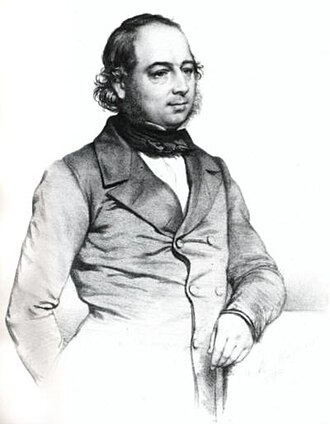
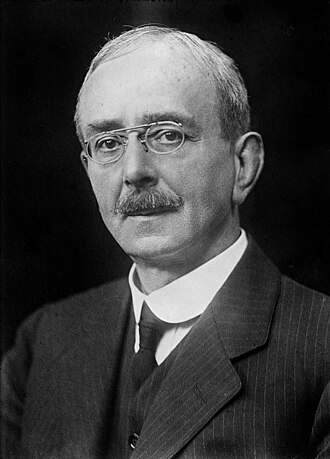
图:作者不详 · Public domain · Wikimedia Commons
雷·兰克斯特1847—1929
Ray Lankester
British zoologist (1847-1929)
E·雷·兰克斯特爵士 是一位英国动物学家,伦敦大学学院和牛津大学教授,专攻无脊椎动物动物学和进化生物学,曾任伦敦自然史博物馆的第三任馆长。
摘自维基百科「雷·兰克斯特」,CC BY-SA 4.0
- 出生
- 1847 年 5 月 15 日,威斯敏斯特
- 逝世
- 1929 年 8 月 13 日,切尔西
- 国籍
- 英国
- 学科
- 生物学、博物与综合
- 职业
- 植物学家、新闻工作者、动物学家、大学教师
- 母语 / 工作语言
- 英语
- 母校
- 牛津大学基督堂学院、剑桥大学唐宁学院、伦敦圣保禄学校
- 工作单位
- 伦敦大学学院
研究领域
师承
来自 Wikidata 的「博士导师」「师从」「博士生」「学生」记录,可能不全。
所获奖项(6)
- 1885皇家奖章
- 1908达尔文-华莱士奖章
- 1913科普利奖章
- 1920林奈奖章
- —英国皇家学会院士
- —Knight Commander of the Order of the Bath
学会与院士
百科正文
英文维基百科补充中文条目比较短,下面是英文条目「Ray Lankester」的原文
Sir Edwin Ray Lankester (15 May 1847 – 13 August 1929) was a British zoologist.
An invertebrate zoologist and evolutionary biologist, he held chairs at University College London and Oxford University. He was the third Director of the Natural History Museum, London, and was awarded the Copley Medal of the Royal Society.
Life
Ray Lankester was born on 15 May 1847 on Burlington Street in London, the son of Edwin Lankester, a coroner and doctor-naturalist who helped eradicate cholera in London, and his wife, the botanist and author Phebe Lankester. Ray Lankester was probably named after the naturalist John Ray: his father had just edited the memorials of John Ray for the Ray Society.
In 1855 Ray went to boarding school at Leatherhead, and in 1858 to St Paul's School. His university education was at Downing College, Cambridge, and Christ Church, Oxford; he transferred from Downing, after five terms, at his parents' behest because Christ Church had better teaching in the form of the newly appointed George Rolleston.
Lankester achieved first-class honours in 1868. His education was rounded off by study visits to Vienna, Leipzig and Jena, and he did some work at the Stazione Zoologica at Naples. He took the examination to become a Fellow of Exeter College, Oxford, and studied under Thomas H. Huxley before taking his MA.
Lankester therefore had a far better education than most English biologists of the previous generation, such as Huxley, Wallace and Bates. Even so, it could be argued that the influence of his father Edwin and his friends were just as important. Huxley was a close friend of the family, and whilst still a child Ray met Hooker, Henfrey, Clifford, Gosse, Owen, Forbes, Carpenter, Lyell, Murchison, Henslow and Darwin.
He was a large man with a large presence, of warm human sympathies and in his childhood a great admirer of Abraham Lincoln. His interventions, responses and advocacies were often colourful and forceful, as befitted an admirer of Huxley, for whom he worked as a demonstrator when a young man. In his personal manner he was not so adept as Huxley, and he made enemies by his rudeness. Arthur Conan Doyle speculated that this damaged and limited the second half of his career.
Lankester appears, thinly disguised, in several novels. He is the model for Sir Roderick Dover in H. G.
Career
Lankester became a Fellow of Exeter College, Oxford, in 1873. He co-edited the Quarterly Journal of Microscopical Science which his father had founded. From 1869 until his death he edited this journal (jointly with his father, 1869–1871). He worked as one of Huxley's team at the new buildings in South Kensington, and after the death of Francis Balfour became Huxley's intended successor.
Lankester was appointed Jodrell Professor of Zoology and Comparative Anatomy and curator of what is now the Grant Museum of Zoology at University College London from 1874 to 1890, Linacre Professor of Comparative Anatomy at Merton College, Oxford, from 1891 to 1898, and director of the Natural History Museum from 1898 to 1907. He was a founder in 1884 of the Marine Biological Association and served as its second President between 1890 and 1929. Influential as teacher and writer on biological theories, comparative anatomy, and evolution, Lankester studied the protozoa, mollusca, and arthropoda. Lankester was elected an International Honorary Member of the American Academy of Arts and Sciences in 1902, and an International Member of both the United States National Academy of Sciences and the American Philosophical Society in 1903. He was knighted in 1907, awarded the Copley Medal of the Royal Society in 1913, and the Linnean Society of London's Darwin-Wallace Medal in 1908.
At University College London, one person who attended his class was Raphael Weldon (1860–1906). Another interesting student was Alfred Gibbs Bourne, who went on to hold senior positions in biology and education in the Indian Empire.
After Huxley the most important influence on his thought was August Weismann, the German zoologist who rejected Lamarckism, and wholeheartedly advocated natural selection as the key force in evolution at a time when other biologists had doubts. Weismann's separation of germplasm (genetic material) from soma (somatic cells) was an idea which took many years before its significance was generally appreciated.
Lectures
In 1903 he was invited to deliver the Royal Institution Christmas Lecture on Extinct Animals.
以上节选摘自英文维基百科「Ray Lankester」,按 CC BY-SA 4.0 使用,去掉了参考文献、外部链接等尾部小节,公式改写成了纯文本。篇幅所限,较长的小节只摘了开头一部分,有的小节没有收;全文、配图和出处见原文。
同一学科、同时代的科学家

同一学科的科学家
更多 ›