格物
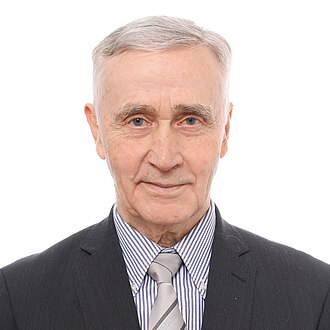
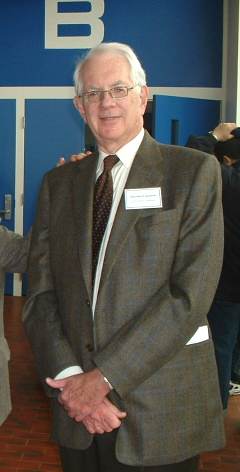
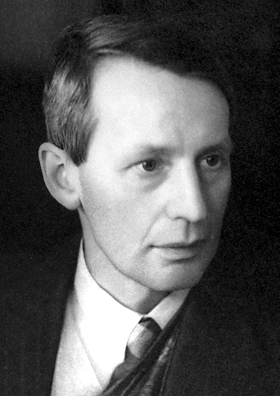
图:А. Н. Скринский · CC BY-SA 4.0 · Wikimedia Commons
- 出生
- 1936 年 1 月 15 日,奥伦堡
- 国籍
- 苏联、俄罗斯
- 学科
- 物理学
- 职业
- 物理学家
- 母语 / 工作语言
- 俄语
- 母校
- MSU Faculty of Physics、新西伯利亚国立大学、莫斯科国立大学(1959 年)
- 工作单位
- 布德克核子物理研究所
研究领域
师承
来自 Wikidata 的「博士导师」「师从」「博士生」「学生」记录,可能不全。
所获奖项(16)
- 1997杰米多夫奖
- 2002Robert R. Wilson Prize
- 2004PL Kapitza Gold Medal
- —苏联国家奖
- —十月革命勋章
- —Order "For Merit to the Fatherland", 2nd class
- —Order "For Merit to the Fatherland", 3rd class
- —Order "For Merit to the Fatherland", 4th class
- —红旗劳动勋章
- —列宁奖
- —美国物理学会会士
- —俄罗斯联邦国家奖
- —VI Veksler Prize
- —荣誉勋章
- —Order "For Merit to the Fatherland", 1st class
- —罗蒙诺索夫金质奖章
学会与院士
百科正文
本条目暂无中文维基百科条目,下面是英文维基百科原文。
Biography
He was born in Orenburg and was educated at the high school in the city of Gorky and then at the Lomonosov Moscow State University.
In 1957 he joined the laboratory of Gersh Budker, which was a part of the I. V. Kurchatov Institute of Atomic Energy (now the Kurchatov Institute). Since 1962, Skrinsky has been connected with the Budker Institute of Nuclear Physics, where he was director from 1977 to 2015.
Skrinsky made a significant contribution to the development of the physics of accelerators and high-energy physics (in particular, he developed a method of colliding beams, he participated in the creation of new types of colliders in electron-electron, electron-positron and proton-antiproton beams).
In 1964, together with Budker, he developed the foundations of the method of colliding beams, on the basis of which the world's first VEP-1 collider was created at the Institute of Nuclear Physics of the Siberian Branch of the Academy of Sciences of the USSR for experiments in the physics of elementary particles and a series of studies on quantum electrodynamics was carried out. In 1966 an electron-positron collider VEPP-2 was constructed, experiments on which yielded valuable results on the physics of vector mesons and other hadrons. Later, the method of colliding beams became the basis of modern high-energy experimental physics; In particular, based on the technology of the colliding beams method, the Large Hadron Collider was built.
On November 26, 1968 he was elected a corresponding member, and on December 24, 1970 a full member, of the Academy of Sciences of the USSR (since 1991 the Russian Academy of Sciences) in the Division of Nuclear Physics (High Energy Physics). He is also a full member of the American Physical Society (1999) and a foreign member of the Royal Swedish Academy of Sciences (2000).
Skrinsky was a member of CERN's (European Organization for Nuclear Research) Scientific Policy Council from 1986 to 1992. He was chair of the International Committee for Future Accelerators, a working group of the International Union of Pure and Applied Physics, from 1990 to 1992.
Awards and honors
Lenin Prize (1967) – for participation in the development of the method of colliding beams
- Order of the Red Banner of Labour (1975)
- Order of the October Revolution (1982)
- USSR State Prize (1989)
- Order "For Merit to the Fatherland", 4th class (1996)
- Demidov Prize (1997)
- Order "For Merit to the Fatherland", 3rd class (2000)
- Robert R. Wilson Prize (2001)
- Two State Prizes of the Russian Federation (2002, 2006)
- Order "For Merit to the Fatherland", 2nd class (2007)
- Order of Honour (2018)
- Order "For Merit to the Fatherland", 1st class (2024)
以上内容摘自英文维基百科「Alexander Skrinsky」,按 CC BY-SA 4.0 使用,去掉了参考文献、外部链接等尾部小节,公式改写成了纯文本。全文、配图和出处见原文。
同一学科、同时代的科学家




同一学科的科学家
更多 ›