格物
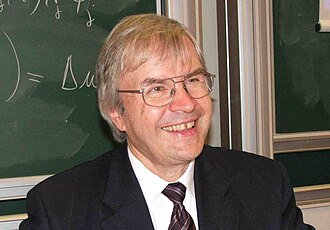
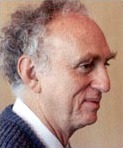
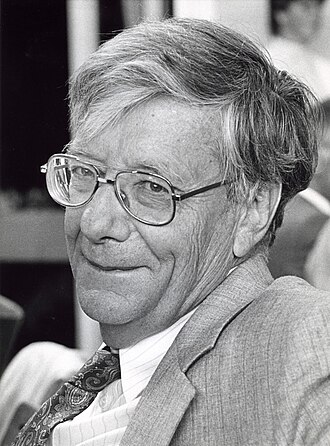
图:No machine-readable author provided. Blinking Spirit assumed… · CC BY-SA 3.0 · Wikimedia Commons
- 出生
- 1941 年 10 月 30 日,海德堡
- 国籍
- 德国、美国
- 学科
- 物理学、博物与综合
- 职业
- 物理学家、大学教师
- 母语 / 工作语言
- 德语
- 母校
- 海德堡大学、斯坦福大学、慕尼黑大学、Helmholtz-Gymnasium Heidelberg
- 工作单位
- 慕尼黑大学、斯坦福大学、海德堡大学、马克斯·普朗克量子光学研究所、佛罗伦萨大学
研究领域
师承
博士生7
来自 Wikidata 的「博士导师」「师从」「博士生」「学生」记录,可能不全。
所获奖项(35)
- 1978洪堡奖
- 1979奥托·克隆-韦伯银行奖
- 1983Herbert P. Broida Prize
- 1983科姆斯托克物理学奖
- 1985威廉·弗雷德里克·梅格斯光谱学奖
- 1986Albert A. Michelson Medal
- 1989King Faisal Prize in Science
- 1989戈特弗里德·威廉·莱布尼茨奖
- 1995Einstein Prize for Laser Science
- 1996Arthur L. Schawlow Prize in Laser Science
- 2000Stern–Gerlach Medal
- 2000Philip Morris Research Prize
- 2001马泰乌奇奖章
- 2002Alfried-Krupp Science Prize
- 2003巴伐利亚马克西米兰科学与艺术勋章
- 2005诺贝尔物理学奖
- 2005Frederic Ives Medal
- 2005奥托·哈恩奖
- 2005意大利共和国功绩大军官勋章
- 2005拉比奖
- 2005honorary member of the Physics Association (Frankfurt am Main, Germany)
- 2006Knight Commander's Cross of the Order of Merit of the Federal Republic of Germany
- 2006Rudolf-Diesel-Medaille
- 2006Honorary doctor of the Free University of Berlin
- 2006honorary doctor of the University of St Andrews
- 2006Officer's Cross of the Order of Merit of the Federal Republic of Germany
- 2008Pour le Mérite for Sciences and Arts order
- 2008honorary doctor of the Bar-Ilan University
- 2010Bayerische Verfassungsmedaille in Gold
- 2011Hall of Fame of German Research
- 2012威廉·埃斯内奖章
- 2019Ernst Mach Medal
- —Humboldt Research Fellowship
- —美国物理学会会士
- —Fellow of the Optical Society
学会与院士
百科正文
生平
出生于德国海德堡。因为对光学梳形频谱技术等激光精确光谱学发展上的贡献,与约翰·霍尔共同获得2005年诺贝尔物理学奖奖金的一半,另一半授予了罗伊·格劳伯。特奥多尔·亨施是马克斯·普朗克学会(量子光学)的理事,也是德国巴伐利亚慕尼黑大学实验物理学和激光光谱学教授。
在海德堡获得博士学位后,1972年到1986年,亨施在加利福尼亚的斯坦福大学任教授。苹果公司前任首席执行官斯蒂夫·乔布斯就是他的学生。1986年,亨施回到德国,主持马克斯·普朗克学会的量子光学研究所。1988年,他荣获德国科学基金会的“戈特弗里德·威廉·莱布尼茨奖”。2005年,他又获得德国化学学会及物理学会颁发的奥托·哈恩奖。
亨施的学生卡尔·威曼于2001年获得诺贝尔物理学奖。
获奖
- 1973年 “加利福尼亚年度科学家”
- 1988年 德国科学基金会“戈特弗里德·威廉·莱布尼茨奖”
- 1989年 Faisal国王国际激光科学奖
- 2000年 德国物理学会“施特恩-格拉赫奖章”
- 1998年 2000年度菲利普·莫瑞斯研究奖
- 2002年 Alfried-Krupp-科学奖
- 2003年 联邦十字勋章 德意志联邦共和国一等勋章
- 2003年 巴伐利亚科学和艺术最高勋章
- 2005年 奥托·哈恩奖
- 2005年 美国光学学会 Frederic Ives 奖章
- 2005年 诺贝尔物理学奖
以上内容摘自维基百科「特奥多尔·亨施」,按 CC BY-SA 4.0 使用,去掉了参考文献、外部链接等尾部小节,公式改写成了纯文本。全文、配图和出处见原文。
英文维基百科补充中文条目比较短,下面是英文条目「Theodor W. Hänsch」的原文
Theodor Wolfgang Hänsch (German pronunciation: [ˈteːodoːɐ̯ ˈhɛnʃ]; born 30 October 1941) is a German physicist. He received one-fourth of the 2005 Nobel Prize in Physics for "contributions to the development of laser-based precision spectroscopy, including the optical frequency comb technique", sharing the prize with John L. Hall and Roy J. Glauber.
Hänsch is Director of the Max-Planck-Institut für Quantenoptik (quantum optics) and Professor of experimental physics and laser spectroscopy at LMU Munich in Munich, Bavaria, Germany.
Biography
Hänsch received his secondary education at Helmholtz-Gymnasium Heidelberg and gained his Diplom and doctoral degree from Heidelberg University in 1969. Subsequently, he was a NATO postdoctoral fellow at Stanford University with Arthur L. Schawlow from 1970 to 1972. Hänsch became an assistant professor at Stanford University, California from 1975 to 1986. He was awarded the Comstock Prize in Physics from the National Academy of Sciences in 1983. In 1986, he received the Albert A. Michelson Medal from the Franklin Institute. In the same year Hänsch returned to Germany to head the Max-Planck-Institut für Quantenoptik. In 1989, he received the Gottfried Wilhelm Leibniz Prize of the Deutsche Forschungsgemeinschaft, which is the highest honour awarded in German research. In 2005, he also received the Otto Hahn Award of the City of Frankfurt am Main, the Society of German Chemists and the German Physical Society. That same year, the Optical Society of America awarded him the Frederic Ives Medal and the status of honorary member in 2008.
One of his students, Carl E. Wieman, received the Nobel Prize in Physics in 2001.
In 1970 he invented a new type of laser that generated light pulses with an extremely high spectral resolution (i.e. all the photons emitted from the laser had nearly the same energy, to a precision of 1 part in a million). Using this device he succeeded to measure the transition frequency of the Balmer line of atomic hydrogen with a much higher precision than before. During the late 1990s, he and his coworkers developed a new method to measure the frequency of laser light to an even higher precision, using a device called the optical frequency comb generator.
Background to Nobel Prize
The Nobel Prize was awarded to Professor Hänsch in recognition for work that he did at the end of the 1990s at the Max Planck Institute in Garching, near Munich, Germany. He developed an optical "frequency comb synthesiser", which makes it possible, for the first time, to measure with extreme precision the number of light oscillations per second. These optical frequency measurements can be millions of times more precise than previous spectroscopic determinations of the wavelength of light.
The work in Garching was motivated by experiments on the very precise laser spectroscopy of the hydrogen atom. This atom has a particularly simple structure. By precisely determining its spectral line, scientists were able to draw conclusions about how valid our fundamental physical constants are – if, for example, they change slowly with time. By the end of the 1980s, the laser spectroscopy of hydrogen had reached the maximum precision allowed by interferometric measurements of optical wavelengths.
The researchers at the Max Planck Institute of Quantum Optics thus speculated about new methods, and developed the optical frequency comb synthesizer. Its name comes from the fact that it generates a light spectrum out of what are originally single-colour, ultrashort pulses of light. This spectrum is made of hundreds of thousands of sharp spectral lines with a constant frequency interval.
Such a frequency comb is similar to a ruler. When the frequency of a particular radiation is determined, it can be compared to the extremely acute comb spectral lines, until one is found that "fits". In 1998, Professor Hänsch received a Philip Morris Research Prize for the development of this "measurement device".
Laser development
Hänsch introduced intracavity telescopic beam expansion to grating tuned laser oscillators thus producing the first narrow-linewidth tunable laser. This development has been credited with having had a major influence in the development of further narrow-linewidth multiple-prism grating laser oscillators. In turn, tunable narrow-linewidth organic lasers, and solid-state lasers, using total illumination of the grating, have had a major impact in laser spectroscopy.
以上节选摘自英文维基百科「Theodor W. Hänsch」,按 CC BY-SA 4.0 使用,去掉了参考文献、外部链接等尾部小节,公式改写成了纯文本。篇幅所限,较长的小节只摘了开头一部分,有的小节没有收;全文、配图和出处见原文。
同年获同一奖项
同一学科、同时代的科学家




同一学科的科学家
更多 ›