格物
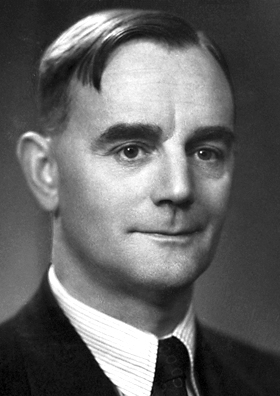
图:Yuriy Kolodin at English Wikipedia. · Public domain · Wikimedia Commons
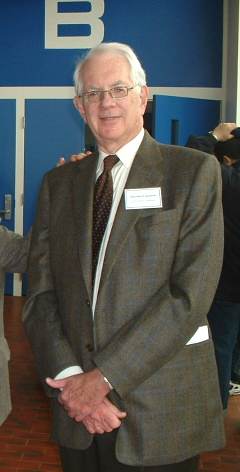
伯特·萨克曼1942—
Bert Sakmann
生物学家, 德国
伯特·萨克曼,德国细胞生理学家。1991年,他与厄温·内尔一同夺得诺贝尔生理学或医学奖。
摘自维基百科「伯特·薩克曼」,CC BY-SA 4.0
- 出生
- 1942 年 6 月 12 日,斯图加特
- 国籍
- 德国、纳粹德国
- 学科
- 物理学、生物学、医学
- 职业
- 生物物理学家、大学教师、医生、生理学家
- 母语 / 工作语言
- 德语
- 母校
- 伦敦大学学院、慕尼黑大学、蒂宾根大学、弗赖堡大学、哥廷根大学
- 工作单位
- 哥廷根大学、海德堡大学
研究领域
师承
博士生1
来自 Wikidata 的「博士导师」「师从」「博士生」「学生」记录,可能不全。
所获奖项(20)
- 1979菲尔德伯格基金会
- 1983W·艾尔登·斯宾塞奖
- 1984Adolf Fick Prize
- 1986路易莎·格罗斯·霍维茨奖
- 1987戈特弗里德·威廉·莱布尼茨奖
- 1988路易·让泰化学奖
- 1989盖尔德纳国际奖
- 1990Ernst Hellmut Vits Award
- 1991诺贝尔生理学或医学奖
- 1991Carus medal
- 1991哈维奖
- 1991Baden-Wuerttemberg Research Award
- 1991Ralph W. Gerard Prize
- 1992巴登-符腾堡州功绩勋章
- 1992honorary doctorate from University of Bordeaux-II
- 1993honorary doctor of the University of Alicante
- 1994英国皇家学会外籍会员
- 1996Pour le Mérite for Sciences and Arts order
- 2002Hodgkin-Huxley-Katz Prize Lecture
- 2016The Paton Lecture
学会与院士
百科正文
英文维基百科补充中文条目比较短,下面是英文条目「Bert Sakmann」的原文
Bert Sakmann (German pronunciation: [ˈbɛʁt ˈzakˌman]; born 12 June 1942) is a German cell physiologist. He shared the Nobel Prize in Physiology or Medicine with Erwin Neher in 1991 for their work on "the function of single ion channels in cells," and the invention of the patch clamp. Bert Sakmann was Professor at Heidelberg University and is an emeritus scientific member of the Max Planck Institute for Medical Research in Heidelberg, Germany. Since 2008 he leads an emeritus research group at the Max Planck Institute of Neurobiology.
Life and career
Sakmann was born in Stuttgart, the son of Annemarie (née Schaefer), a physical therapist, and Bertold Sakmann, a theater director. Sakmann enrolled in Volksschule in Lindau, and completed the Wagenburg gymnasium in Stuttgart in 1961. He studied medicine from 1967 onwards in Tübingen, Freiburg, Berlin, Paris and Munich. After completing his medical exams at LMU Munich, he became a medical assistant in 1968 at LMU Munich, while also working as a scientific assistant (Wissenschaftlicher Assistent) at Munich's Max-Planck-Institut für Psychiatrie, in the Neurophysiology Department under Otto Detlev Creutzfeldt. In 1971, he moved to University College London, where he worked in the Department of Biophysics under Bernard Katz. In 1974, he completed his medical dissertation, under the title Elektrophysiologie der neuralen Helladaptation in der Katzenretina (Electrophysiology of Neural Light Adaption in the Cat Retina) in the Medical Faculty of Göttingen University.
Afterwards (still in 1974), Sakmann returned to the lab of Otto Creutzfeldt, who had meanwhile moved to the Max Planck Institute for Biophysical Chemistry in Göttingen. Sakmann joined the membrane biology group in 1979.
In 1990, he accepted a position at the Faculty of Natural Science Medicine at Heidelberg University. One year later, he became a full university professor at the Faculty of Biology in Heidelberg.
On 2 June 2009, Peter Gruss, the president of the Max Planck Society, announced that Sakmann would serve as the scientific director of the Max Planck Florida Institute, the organization's biomedical research facility at Florida Atlantic University in Jupiter, Florida.
Sakmann is the founder of the Bert-Sakmann-Stiftung.
Awards and honors
In 1986, Sakmann and Erwin Neher were awarded the Louisa Gross Horwitz Prize from Columbia University. In 1987, he received the Gottfried Wilhelm Leibniz Prize of the Deutsche Forschungsgemeinschaft, which is the highest honour awarded in German research. In 1991, he received the Ralph W. Gerard Prize in Neuroscience, the Harvey Prize and the Nobel Prize in Physiology or Medicine along with Neher, with whom he had worked in Göttingen. In 1993 he became a member of the German Academy of Sciences Leopoldina. He was elected a Foreign Member of the Royal Society (ForMemRS) in 1994.
以上内容摘自英文维基百科「Bert Sakmann」,按 CC BY-SA 4.0 使用,去掉了参考文献、外部链接等尾部小节,公式改写成了纯文本。全文、配图和出处见原文。
同年获同一奖项
同一学科、同时代的科学家




同一学科的科学家
更多 ›