格物

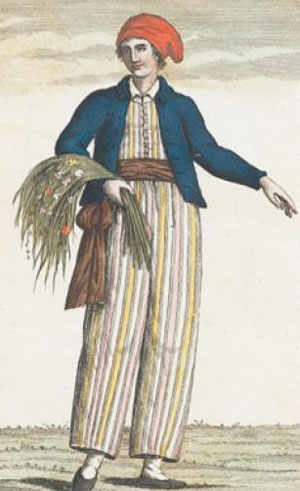
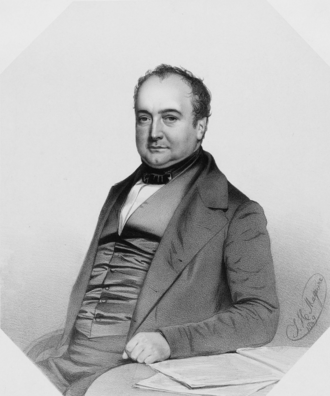
图:Lithograph by E. Porrens · Public domain · Wikimedia Commons
- 出生
- 1794 年 4 月 17 日,埃朗根
- 逝世
- 1868 年 12 月 13 日,慕尼黑
- 国籍
- 巴伐利亚王国
- 学科
- 生物学、医学、博物与综合
- 职业
- 探险家、蕨类植物学家、植物学家、大学教师
- 母语 / 工作语言
- 拉丁语、德语
- 母校
- 埃尔朗根-纽伦堡大学
- 工作单位
- 慕尼黑大学
研究领域
师承
博士生1
来自 Wikidata 的「博士导师」「师从」「博士生」「学生」记录,可能不全。
所获奖项(3)
- 1838英国皇家学会外籍会员
- 1853巴伐利亚马克西米兰科学与艺术勋章
- —美国文理科学院院士
学会与院士
百科正文
生平
他出生于埃朗根,1814年获得医学博士学位,出版了关于大学植物园中的植物分类论文,并致力于研究植物学,1817年,被巴伐利亚王国国王派往巴西考察,他从里约热内卢出发,到过巴西东方和南方各省,上朔到亚马逊河和几条大河的上游。
1820年回国,被任命为慕尼黑植物园的管理员,1826年被聘为慕尼黑大学的植物学教授。
他致力于研究在南美洲收集的标本,出版了几部作品:《巴西植物的新属和新种》3卷(1823年-1832年)、《巴西植物分类》(1827年),两部作品都有插图。1823年-1850年他陆续出版了3卷大部头的《棕榈自然历史》,几乎囊括了所有棕榈科的植物品种,有240幅珂罗版插图,包括植株和标本解剖图。从1840年,他开始写作《巴西植物》,对几个目都有专论,这部书一直到他去世后多年才全部出版完。
当欧洲爆发马铃薯瘟疫时,他前往考察,1842年出版了考察结果。他还出版过几篇关于巴西印第安人的作品,描述他们的语言、社会条件、疾病、医药以及他们的历史和未来展望等。
他在慕尼黑逝世并安葬,墓前装饰有两株棕榈树,墓碑铭刻着“棕榈树永远保持繁茂绿色”(拉丁语:In palmis semper virens resurgo)。
他曾经在南美洲收集到大量的植物标本,后来他收集的标本不断扩充,达到300 000枚,包括65 000种,来自世界各地,1870年,他的收藏被比利时政府收购,收藏到比利时国家植物园中,植物园目前完成了一项“马蒂乌斯工程”,将这些标本数字化。
以上内容摘自维基百科「卡尔·冯·马蒂乌斯」,按 CC BY-SA 4.0 使用,去掉了参考文献、外部链接等尾部小节,公式改写成了纯文本。全文、配图和出处见原文。
英文维基百科补充中文条目比较短,下面是英文条目「Carl Friedrich Philipp von Martius」的原文
Carl Friedrich Philipp von Martius (17 April 1794 – 13 December 1868) was a German botanist and explorer. Between 1817 and 1820, he traveled 10,000 km through Brazil while collecting botanical specimens. In 1840 he became the founding editor of Flora Brasiliensis, a comprehensive flora of Brazil, which was not completed until 1906, 62 years after his death.
Life
Von Martius was born in Erlangen, the son of Prof Ernst Wilhelm Martius, court apothecary.
He graduated with a PhD from the University of Erlangen in 1814, publishing as his thesis a critical catalogue of plants in the university's botanical garden. After that he continued to devote himself to botanical study, and in 1817 he and Johann Baptist von Spix were sent to Brazil by Maximilian I Joseph, the King of Bavaria. They traveled from Rio de Janeiro through several of the southern and eastern provinces of Brazil and traveled up the Amazon River to Tabatinga, as well as exploring some of its larger tributaries.
On his return to Europe in 1820, von Martius was appointed as the keeper of the Botanic Garden of Munich, including the herbarium at the Munich Botanical Collection, and in 1826 as professor of botany at the Ludwig-Maximilians-Universität München (the university in Munich), and he held both offices until 1864. He devoted his chief attention to the flora of Brazil, and in addition to numerous short papers he published the Nova Genera et Species Plantarum Brasiliensium (1823–1832, 3 vols.) and Icones selectae Plantarum Cryptogamicarum Brasiliensium (1827), both works being finely illustrated.
Herbarium Martii
As well as a huge collection of flora specimens owned by Martius prior to his departure to South America, he returned with another 12,000 specimens which together formed the Herbarium Martii. At the time of his death the collection had been further expanded and comprised 300,000 specimens representing 65,000 species from around the world, and was one of the largest private herbaria assembled.
The Belgian government acquired the private collection in 1870 which formed the basis of the then newly established Jardin botanique de l'Etat. The collection is now held as part of the National Botanic Garden of Belgium.
The collection made by Martius himself between 1817 and 1820 in Brazil with moremost at 25,000–30,000 specimens representing 7,300 species as well as some later collections was given to the Bavarian Academy of Sciences and Humanities and integrated as part of the herbarium of the now Botanische Staatssammlung München already during his life time.
The Martius Project is an effort by the Botanic Garden Meise to digitize the entire collection.
Other herbaria also hold specimens collected by von Martius, including at the New York Botanical Gardens, the Kew Herbarium and National Herbarium of Victoria (MEL), Royal Botanic Gardens Victoria.
Between 1837 and 1841 Martius published an exsiccata-like series with the title Herbarium florae Brasiliensis.
Route followed in Brazil during 1817–1820 expedition
Martius and Spix, accompanied by Johann Christian Mikan, his wife and the artist Thomas Ender travelled to Brazil with the Austrian Commission, which joined the wedding train of Archduchess Leopoldina of Austria and Dom Pedro de Alcantara, the future Emperor of Brazil. The party left from Trieste on 10 April 1817.
The first natural history collections were made in the city of Rio de Janeiro at Laranjeiras, Corcovado, Aqueduto, Fonte da Carioca, Tijuca, Botafogo, Jardim Botanico immediately following the wedding.
Spix and Martius then spent some days at "Fazenda Mandioca" with Grigori Ivanovitch Langsdorff and then went to a fazenda near Rio Paraiba before returning to Rio. A mounted expedition took them on horseback to Itaguaí (13 December 1817) through São Paulo state to the city of São Paulo where they arrived on 31 December 1817. They left on 9 January 1818 for Sorocaba and Itu on to Minas Gerais, then through Camanducaia to cross the Rio Sapucaí for São Gonçalo and Ouro Prêto. On 1 May 1818, they left for Diamantina, Minas Novas and then Montes Claros.
以上节选摘自英文维基百科「Carl Friedrich Philipp von Martius」,按 CC BY-SA 4.0 使用,去掉了参考文献、外部链接等尾部小节,公式改写成了纯文本。篇幅所限,较长的小节只摘了开头一部分,有的小节没有收;全文、配图和出处见原文。
同一学科、同时代的科学家




同一学科的科学家
更多 ›