格物

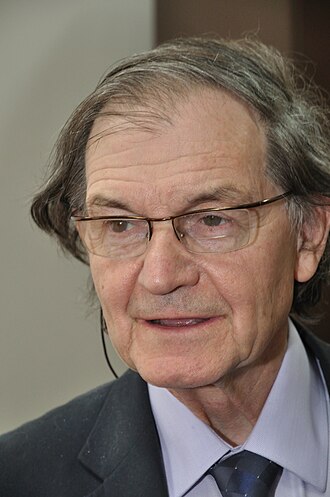
图:Kenneth C. Zirkel · CC BY-SA 3.0 · Wikimedia Commons
利昂·库珀1930—2024
Leon Cooper
物理学家, 美国
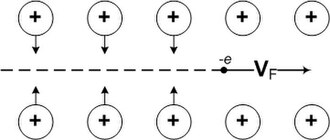
利昂·N·库珀 是一名美国物理学家,因与约翰·巴丁和约翰·施里弗一起提出BCS超导理论,而于1972年获得诺贝尔物理学奖。他的名字也与库珀对和突触可塑性的BCM理论的共同开发者有关。
摘自维基百科「利昂·库珀」,CC BY-SA 4.0
- 出生
- 1930 年 2 月 28 日,纽约
- 逝世
- 2024 年 10 月 23 日,普罗维登斯
- 国籍
- 美国
- 学科
- 物理学、博物与综合
- 职业
- 物理学家、大学教师
- 母语 / 工作语言
- 英语
- 母校
- 哥伦比亚大学(物理和数学博士,1954 年)、布朗克斯科学高级中学
- 工作单位
- 布朗大学、伊利诺伊大学厄巴纳-香槟分校
研究领域
主要贡献
代表成就
本站收录的发现与发明
以他 / 她命名
师承
博士导师1
博士生5
来自 Wikidata 的「博士导师」「师从」「博士生」「学生」记录,可能不全。
所获奖项(6)
- 1965古根海姆学者奖
- 1968科姆斯托克物理学奖
- 1972诺贝尔物理学奖
- 1977doctor honoris causa from the Pierre and Marie Curie University
- —美国物理学会会士
- —约翰·杰奖
学会与院士
百科正文
生平
库珀于1947年毕业于布朗克斯科学高中,1951年于哥伦比亚大学获得学士学位,1953年获得硕士学位,1954年获得博士学位
。他在高级研究学院学习了一年,并在伊利诺伊大学和俄亥俄州立大学任教,1958年来到布朗大学。1974年起,他担任布朗大学的Thomas J. Watson Sr.科学教授,也是他在1973年创立的大脑和神经系统研究所(Institute for Brain and Neural Systems)的主任。他与同事查尔斯·埃尔鲍姆一起创立了科技公司Nestor,致力于为人工神经网络寻找商业应用。1994年,Nestor与英特尔一起开发了Ni1000神经网络计算机芯片。
1969年,库珀与凯·阿拉德(Kay Allard)结婚,并育有两个孩子。
库珀曾在多个机构进行研究,包括普林斯顿高等研究院和瑞士日内瓦的欧洲核子研究组织。
CBS喜剧《生活大爆炸》中的角色谢尔顿·库珀,其姓氏即取自利昂·库珀。
以上内容摘自维基百科「利昂·库珀」,按 CC BY-SA 4.0 使用,去掉了参考文献、外部链接等尾部小节,公式改写成了纯文本。全文、配图和出处见原文。
英文维基百科补充中文条目比较短,下面是英文条目「Leon Cooper」的原文
Leon N. Cooper (né Kupchik; February 28, 1930 – October 23, 2024) was an American theoretical physicist and neuroscientist who shared the 1972 Nobel Prize in Physics for his work on superconductivity. Cooper developed the concept of Cooper pairs and collaborated with John Bardeen and John Robert Schrieffer to develop the BCS theory of conventional superconductivity. In neuroscience, Cooper co-developed the BCM theory of synaptic plasticity.
Early life and education
Leon N. Kupchick was born on February 28, 1930 in The Bronx, New York City. His father, Irving Kupchik, was from Belarus and moved to the United States after the Russian Revolution in 1917. His mother, Anna Zola, was from Poland; she died when Leon was seven. His father changed the family's surname from Kupchick to Cooper when he remarried.
Leon attended the Bronx High School of Science, graduating in 1947.
He then studied at Columbia University, where he graduated with a Bachelor of Arts in 1951. He remained at Columbia for graduate school, receiving a Master of Arts in 1953 and a Doctor of Philosophy the following year. His doctoral thesis was on the subject of muonic atoms and the charge radius.
Career
Cooper spent one year as a postdoctoral researcher at the Institute for Advanced Study in Princeton. New Jersey. He then taught at the University of Illinois and Ohio State University before joining Brown University in 1958. He would remain at Brown for the rest of his career.
Cooper founded Brown's Institute for Brain and Neural Systems in 1973, becoming its first director. In 1974 he was appointed Professor of Science at Brown, an endowed chair funded by Thomas J. Watson Sr. Cooper held visiting research positions at various institutions including the Institute for Advanced Study in Princeton, New Jersey, and at CERN (European Organization for Nuclear Research) in Geneva, Switzerland.
Along with colleague Charles Elbaum, he founded the tech company Nestor in 1975, which sought commercial applications for artificial neural networks. Nestor partnered with Intel to develop the Ni1000 neural network computer chip in 1994.
Research
Superconductivity
While Cooper was a postdoc at Princeton, he was approached by John Bardeen, a professor at the University of Illinois, and Bardeen's graduate student John Robert Schrieffer. Bardeen and Schrieffer were working on superconductivity, a topic which was new to Cooper, but he agreed to collaborate with them. Superconductivity had been experimentally discovered in 1911, but there was no theoretical explanation for the phenomenon. Cooper moved to Illinois as a postdoc to work with Bardeen.
After a year of theoretical investigation, Cooper developed the idea of a quasiparticle composed of two bound electrons, now known as a Cooper pair. Cooper published his concept of Cooper pairs in Physical Review in September 1956. The movement of Cooper pairs through a low-temperature metal would be almost unimpeded, producing a very low electrical resistance. After further development, Bardeen, Cooper and Schrieffer showed how this could produce superconductivity, publishing their theory in Physical Reviews in two papers during 1957. This theory became known as the BCS theory, after the authors' initials, and is widely accepted as the explanation for conventional superconductivity. Bardeen, Schrieffer and Cooper were awarded the Nobel Prize in Physics in 1972 for their theory.
Neuroscience
After joining Brown University, Cooper became interested in neuroscience, particularly the process of learning. In 1982, Cooper and two doctoral students, Elie Bienenstock and Paul Munro, published their theory of synaptic plasticity in The Journal of Neuroscience. They estimated the weakening and strengthening of synapses that could occur without saturation of the connections. As synapses saturate, electrical connections become less effective, thereby reducing the saturation. Connections therefore oscillate between saturation and unsaturation without reaching their limits. Their theory explained how the visual cortex works and how people learn to see. It became known as the BCM theory, after the authors' initials.
Personal life
Cooper first married Martha Kennedy, with whom he had two daughters. In 1969, he married for a second time, to Kay Allard. He died at his home in Providence, Rhode Island, on October 23, 2024, at the age of 94.
以上内容摘自英文维基百科「Leon Cooper」,按 CC BY-SA 4.0 使用,去掉了参考文献、外部链接等尾部小节,公式改写成了纯文本。全文、配图和出处见原文。
同年获同一奖项
同一学科、同时代的科学家




同一学科的科学家
更多 ›