格物
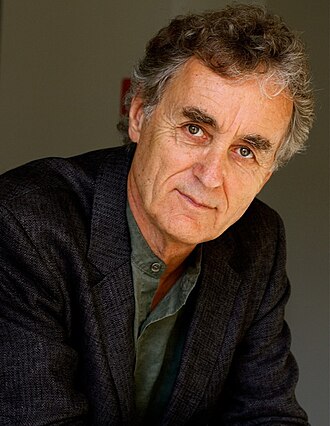
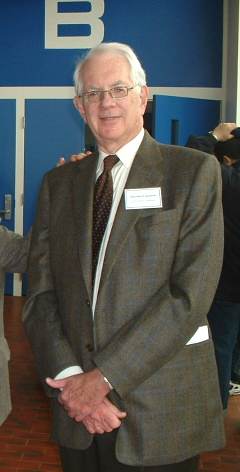
图:Zenobia Barlow · CC BY-SA 3.0 · Wikimedia Commons
弗里肖夫·卡普拉1939—
Fritjof Capra
American physicist (1939-)
Fritjof Capra is an Austrian-born American author, physicist, systems theorist and deep ecologist. In 1995, he became a founding director of the Center for Ecoliteracy in Berkeley, California. He was on the faculty of Schumacher College, which was disestablished in 2024.
摘自英文维基百科「Fritjof Capra」(英文维基百科,暂无中文条目),CC BY-SA 4.0
- 出生
- 1939 年 2 月 1 日,维也纳
- 国籍
- 奥地利
- 学科
- 物理学、博物与综合
- 职业
- 物理学家、作家、环保人士、纪录片参与者
- 母语 / 工作语言
- 英语
- 母校
- 维也纳大学
研究领域
主要贡献
代表成就
师承
博士导师1
来自 Wikidata 的「博士导师」「师从」「博士生」「学生」记录,可能不全。
所获奖项(1)
- 1992美国图书奖
百科正文
本条目暂无中文维基百科条目,下面是英文维基百科原文。
Capra is the author of several books, including The Tao of Physics (1975), The Turning Point (1982), Uncommon Wisdom (1988), The Web of Life (1996), and The Hidden Connections (2002), and co-author of The Systems View of Life (2014).
Life and work
Born in Vienna, Austria, Capra attended the University of Vienna, where he earned his PhD in theoretical physics in 1966. He conducted research in particle physics and systems theory at the University of Paris (1966–1968), the University of California, Santa Cruz (1968–1970), the Stanford Linear Accelerator Center (1970), Imperial College, London (1971–1974) and the Lawrence Berkeley Laboratory (1975–1988). While at Berkeley, he was a member of the Fundamental Fysiks Group, founded in May 1975 by Elizabeth Rauscher and George Weissmann, which met weekly to discuss philosophy and quantum physics. He also taught at U.C. Santa Cruz, U.C. Berkeley, and San Francisco State University.
He has written popular books on the implications of science, notably The Tao of Physics (1975), subtitled An Exploration of the Parallels Between Modern Physics and Eastern Mysticism. The Tao of Physics asserts that both physics and metaphysics lead inexorably to the same knowledge. After touring Germany in the early 1980s, Capra co-wrote Green Politics with author Charlene Spretnak in 1984.
Capra contributed to the screenplay for the 1990 movie Mindwalk, starring Liv Ullmann, Sam Waterston and John Heard. The film is loosely based on his book, The Turning Point.
In 1991 Capra co-authored Belonging to the Universe with David Steindl-Rast, a Benedictine monk. Using Thomas Kuhn's The Structure of Scientific Revolutions as a stepping stone, the book explores parallels between new paradigm thinking in science and in religion; the authors posit that, together, these new paradigms offer remarkably compatible views about the universe.
He is a founding director of the Center for Ecoliteracy located in Berkeley, California, which promotes ecology and systems thinking in primary and secondary education.
Capra is an Earth Charter International Council member. [3]
Intellectual influence of Geoffrey Chew and Bootstrap Theory
Although Capra received his PhD under Walter Thirring, he identifies physicist Geoffrey Chew as his primary scientific mentor. During his fourteen years associated with Chew’s research group at the Lawrence Berkeley National Laboratory (1975–1988), Capra became a proponent of the S-matrix bootstrap theory.
The bootstrap model, which posits that the universe is a self-consistent "web" of interrelated events rather than a collection of fundamental building blocks, served as the scientific foundation for Capra's philosophy. Capra has stated that his discussions with Chew served as his "training in systemic thinking," allowing him to transition from particle physics to broader systems theory.
Year later, in a memoriam about Geoffrey Chew published on his own blog, Capra acknowledged that bootstrap theory was eclipsed by the success of the Standard Model and largely disappeared from mainstream physics. However, he also said that since "the standard model does not include gravity, and hence fails to integrate all known particles and forces into a single mathematical framework [...], the bootstrap idea may well be revived someday, in some mathematical formulation or other."
Reception
Physicist Peter Woit criticized Capra in his 2006 book Not even wrong for continuing to adhere to the bootstrap philosophy in later editions of The Tao of Physics, even after the theory was largely superseded in the mid-1970s by the discovery of quarks and the development of the Standard Model:
The Tao of Physics was completed in December 1974 and the implications of the November Revolution one month before this
that led to the dramatic confirmations of the standard model quantum field theory clearly had not sunk in for Capra (like many others at that time). What is harder to understand is that the book has now gone through several editions, and in each of them Capra has left intact the now out-of-date physics, and now included new forewords and afterwords that with a straight face deny what has happened.
以上内容摘自英文维基百科「Fritjof Capra」,按 CC BY-SA 4.0 使用,去掉了参考文献、外部链接等尾部小节,公式改写成了纯文本。全文、配图和出处见原文。
同一学科、同时代的科学家


同一学科的科学家
更多 ›