格物
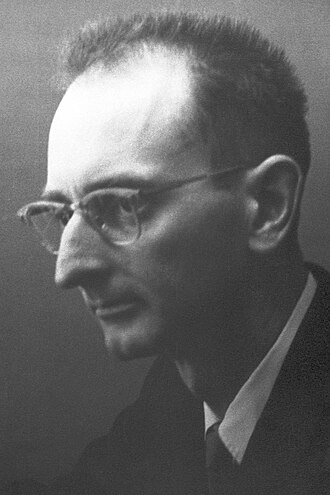
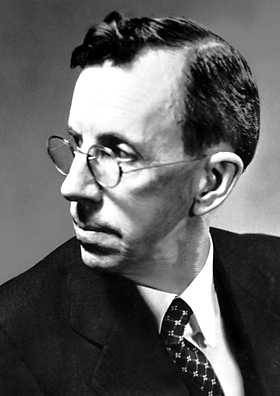
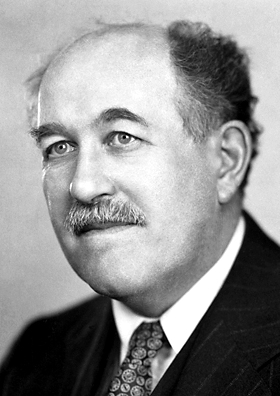
图:Nobel foundation · Public domain · Wikimedia Commons
欧文·张伯伦1920—2006
Owen Chamberlain
物理学家, 美国
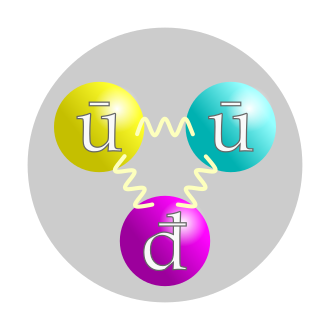
欧文·张伯伦,是一名出生在旧金山的美国物理学家,因与埃米利奥·塞格雷发现反质子而共同获得1959年诺贝尔物理学奖。
摘自维基百科「欧文·张伯伦」,CC BY-SA 4.0
- 出生
- 1920 年 7 月 10 日,旧金山
- 逝世
- 2006 年 2 月 28 日,伯克利
- 国籍
- 美国
- 学科
- 物理学、博物与综合
- 职业
- 物理学家、大学教师
- 母语 / 工作语言
- 英语
- 母校
- 达特茅斯学院、芝加哥大学、Germantown Friends School
- 工作单位
- 哈佛大学、加州大学伯克利分校
研究领域
主要贡献
本站收录的发现与发明
师承
博士导师1
来自 Wikidata 的「博士导师」「师从」「博士生」「学生」记录,可能不全。
所获奖项(3)
- 1959诺贝尔物理学奖
- —古根海姆学者奖
- —美国物理学会会士
学会与院士
百科正文
生平
于1920年生于旧金山,1937年毕业于费城的Germantown Friends School。之后他在达特茅斯学院研读物理。
第二次世界大战结束后,张伯伦在知名物理学家恩里科·费米的指导下于芝加哥大学继续他的博士研究。
张伯伦在1985年被诊断出罹患帕金森氏症,之后于1989年离开教职。张伯伦最后因帕金森氏症所产生的并发症而于2006年2月28日死亡,享寿85岁。
以上内容摘自维基百科「欧文·张伯伦」,按 CC BY-SA 4.0 使用,去掉了参考文献、外部链接等尾部小节,公式改写成了纯文本。全文、配图和出处见原文。
英文维基百科补充中文条目比较短,下面是英文条目「Owen Chamberlain」的原文
Owen Chamberlain (July 10, 1920 – February 28, 2006) was an American physicist who shared with Emilio Segrè the Nobel Prize in Physics for the discovery of the antiproton, a sub-atomic antiparticle.
Biography
Born in San Francisco, California, Chamberlain graduated from Germantown Friends School in Philadelphia in 1937. He studied physics at Dartmouth College, where he was a member of Alpha Theta chapter of Theta Chi fraternity, and at the University of California, Berkeley. He remained in school until the start of World War II, and joined the Manhattan Project in 1942, where he worked with Segrè, both at Berkeley and in Los Alamos, New Mexico. He married Beatrice Babette Copper (d. 1988) in 1943, with whom he had four children.
In 1946, after the war, Chamberlain continued with his doctoral studies at the University of Chicago under physicist Enrico Fermi. Fermi acted as an important guide and mentor for Chamberlain, encouraging him to leave behind theoretical physics for experimental physics, for which Chamberlain had a particular aptitude. Chamberlain received his PhD from the University of Chicago in 1949.
In 1948, having completed his experimental work, Chamberlain returned to Berkeley as a member of its faculty. There he, Segrè, and other physicists investigated proton-proton scattering. In 1955, a series of proton scattering experiments at Berkeley's Bevatron led to the discovery of the anti-proton, a particle like a proton but negatively charged. Chamberlain's later research work included the time projection chamber (TPC), and work at the Stanford Linear Accelerator Center (SLAC).
Chamberlain was politically active on issues of peace and social justice, and outspoken against the Vietnam War. He was a member of Scientists for Sakharov, Orlov, and Shcharansky, three physicists of the former Soviet Union imprisoned for their political beliefs. In the 1980s, he helped found the nuclear freeze movement. In 2003 he was one of 22 Nobel Laureates who signed the Humanist Manifesto.
After the death of his first wife in 1988, Chamberlain married artist June Steingart Greenfield, who died in 1991. His third wife, Senta Pugh-Chamberlain (née Gaiser) was the widow of physicist Howell Pugh.
Chamberlain was diagnosed with Parkinson's disease in 1985, and retired from teaching in 1989. He died of complications from the disease on February 28, 2006, in Berkeley at the age of 85. He was survived by his third wife, his four children from his first marriage, and two step-daughters from his third marriage.
Chamberlain plays a central role in Jacob M. Appel's Sherwood Anderson Award-winning short story, "Measures of Sorrow".
以上内容摘自英文维基百科「Owen Chamberlain」,按 CC BY-SA 4.0 使用,去掉了参考文献、外部链接等尾部小节,公式改写成了纯文本。全文、配图和出处见原文。
同年获同一奖项
同一学科、同时代的科学家


同一学科的科学家
更多 ›