格物
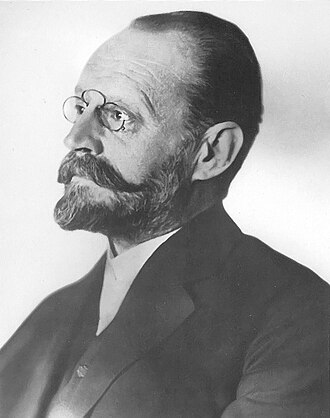
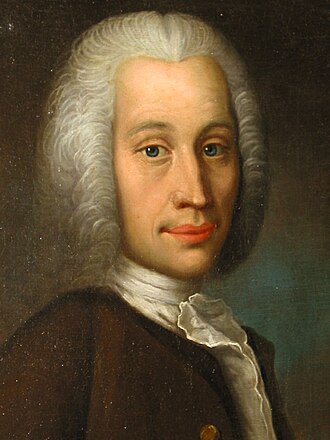
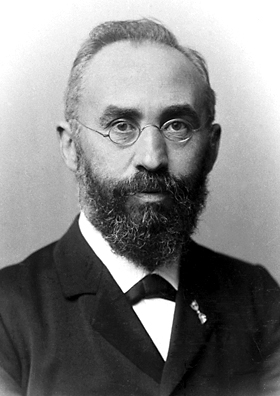
图:作者不详 · Public domain · Wikimedia Commons
- 出生
- 1858 年 9 月 1 日,维也纳
- 逝世
- 1929 年 8 月 4 日,默布灵
- 国籍
- 奥地利
- 学科
- 物理学、化学、工程与发明、博物与综合
- 职业
- 物理学家、化学家、发明家
- 母语 / 工作语言
- 德语
- 母校
- 海德堡大学
- 工作单位
- 海德堡大学
研究领域
主要贡献
发现的元素
师承
博士导师1
来自 Wikidata 的「博士导师」「师从」「博士生」「学生」记录,可能不全。
所获奖项(4)
- 1900埃利奥特·克雷森奖章
- 1920魏纳奖
- 1921威廉·埃斯内奖章
- 2011美国发明家名人堂
学会与院士
百科正文
英文维基百科补充中文条目比较短,下面是英文条目「Carl Auer von Welsbach」的原文
Carl Auer von Welsbach (1 September 1858 – 4 August 1929), who received the Austrian noble title of Freiherr Auer von Welsbach in 1901, was an Austrian scientist and inventor, who separated didymium into the elements neodymium and praseodymium in 1885. He was also one of three scientists to independently discover the element lutetium (which he named cassiopeium), separating it from ytterbium in 1907, setting off the longest priority dispute in the history of chemistry.
He had a talent not only for making scientific advances, but also for turning them into commercially successful products. His work on rare-earth elements led to the development of the ferrocerium "flints" used in modern lighters, the gas mantle that brought light to the streets of Europe in the late 19th century, and the metal-filament light bulb. He took the phrase plus lucis, meaning "more light", as his motto.
Early life
Carl Auer was born in Vienna on 1 September 1858 to Alois Auer and his wife, Therese Neuditschka. He was the youngest of four children, his elder siblings being Leopoldine, Alois and Amalie. His father, ennobled in 1860 (as Alois Ritter Auer von Welsbach), was director of the Imperial printing office (K.-k. Hof- und Staatsdruckerei) in the days of the Austrian Empire.
Carl went to high schools in Mariahilf and Josefstadt. He attended the Realschule Josefstadt from 1873 to 1877, matriculating on July 16, 1877.
Next, he joined the Austro-Hungarian Army for one year of voluntary military service. He was commissioned as a Second Lieutenant.
Rare earths
Neodymium and praseodymium
In 1885, Auer von Welsbach used a method of fractional crystallization that he had developed himself to separate the alloy didymium into its two parts, for the first time. It had previously been believed to be an element. After 167 crystallizations, Auer von Welsbach differentiated it into two colored salts: he named the green colored salt "praseodymium" and the pink one "neodidymium".
He announced his achievement to the Vienna Academy of Sciences on 18 June 1885. His achievement was approved by Bunsen, but met with considerable skepticism from others.
Lighting innovations
Gas mantle
On 23 September 1885, Auer von Welsbach received a patent on his development of the gas mantle, which he called Auerlicht, using a chemical mixture of 60% magnesium oxide, 20% lanthanum oxide and 20% yttrium oxide, which he called Actinophor. To produce a mantle, guncotton is impregnated with a mixture of Actinophor and then heated, the cotton eventually burns away, leaving a solid (albeit fragile) ash, which glows brightly when heated. These original mantles gave off a green-tinted light and were not very successful, and his first company formed to sell them failed in 1889.
Radium research
For the rest of his life Auer von Welsbach turned again to "pure" chemistry. He worked largely on his estate at Welsbach Castle (Schloß Welsbach) near Treibach near Althofen. In addition to his work on elements and minerals, he made advances in the development of photographic techniques. He was also a devoted gardener, carefully supporting rare and difficult-to-grow plants in his garden, and breeding new varieties of roses and apple trees.
He published a number of papers on chemical separation and spectroscopy, working on radioactive elements as early as 1904.
Commemoration
In 2008 (150 years after his birth), Auer von Welsbach was selected as a main motif for a high-value collectors' coin: the Austrian €25 Fascination Light. The reverse has a partial portrait of Auer on the left-hand side. The sun shines in the middle of the green niobium pill, while several methods of illumination from the gas light from incandescent light bulbs and neon lamps to modern light-emitting diodes spread out around the silver ring.
He was also depicted on postage stamps of 1936, 1954 and 2012.
Awards and honors
1900, Elliott Cresson Medal, The Franklin Institute Awards, Philadelphia, PA, USA
1901, raised to the hereditary nobility by Franz Joseph I of Austria, with the title of Freiherr Auer von Welsbach
- 1920, Werner von Siemens Ring
- 1921, Wilhelm Exner Medal, inaugural awardee, Austrian Industry Association, Austria
- 1988, the Welsbach Museum at Althofen was opened in April, 1998
- 2011, National Inventors Hall of Fame, North Canton, Ohio, USA
以上节选摘自英文维基百科「Carl Auer von Welsbach」,按 CC BY-SA 4.0 使用,去掉了参考文献、外部链接等尾部小节,公式改写成了纯文本。篇幅所限,较长的小节只摘了开头一部分,有的小节没有收;全文、配图和出处见原文。
同一学科、同时代的科学家

同一学科的科学家
更多 ›