格物
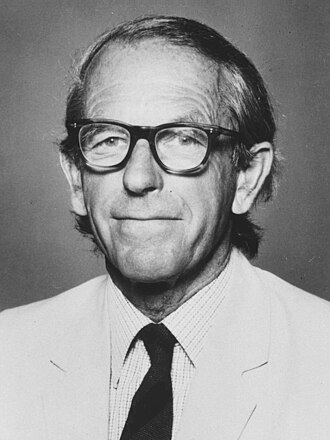
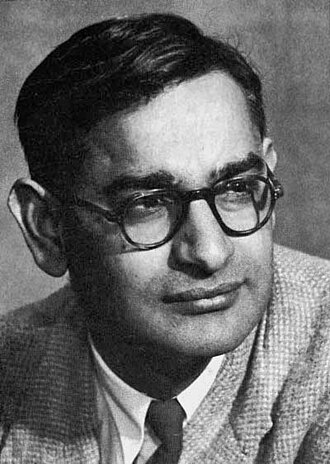
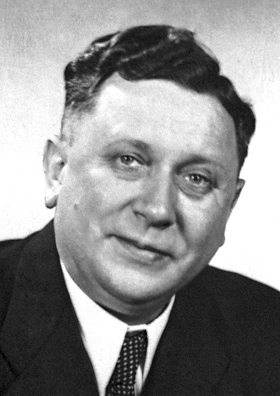
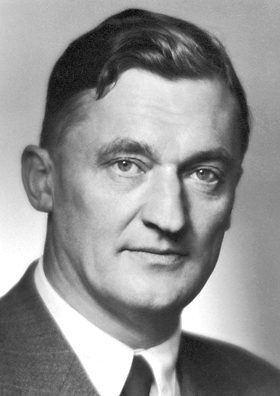
弗兰克·韦斯特海默1912—2007
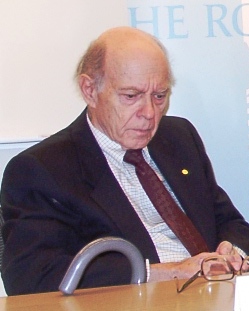
Frank Westheimer
American chemist (1912–2007)
Frank Henry Westheimer was an American chemist. He taught at the University of Chicago from 1936 to 1954, and at Harvard University from 1953 to 1983, becoming the Morris Loeb Professor of Chemistry in 1960, and Professor Emeritus in 1983. The Westheimer medal was established in his honor in 2002.
摘自英文维基百科「Frank Westheimer」(英文维基百科,暂无中文条目),CC BY-SA 4.0
- 出生
- 1912 年 1 月 15 日,巴尔的摩
- 逝世
- 2007 年 4 月 14 日,剑桥
- 国籍
- 美国
- 学科
- 化学、生物学
- 职业
- 化学家、生物化学家、大学教师
- 母校
- 达特茅斯学院(文学士,1932 年)、哈佛大学(哲学博士,1935 年)
- 工作单位
- 哈佛大学
师承
博士生1
来自 Wikidata 的「博士导师」「师从」「博士生」「学生」记录,可能不全。
所获奖项(15)
- 1962Centenary Prize
- 1970威拉德·吉布斯奖
- 1970James Flack Norris Award in Physical Organic Chemistry
- 1973Remsen Award
- 1980美国国家科学院化工科学奖
- 1980罗森斯特尔奖
- 1982亚瑟·科普奖
- 1982韦尔奇化学奖
- 1982威廉·H·尼克尔斯奖
- 1983英国皇家学会外籍会员
- 1986美国国家科学奖章
- 1988普里斯特利奖章
- 1988Paracelsus Prize
- 1997中西奖
- —古根海姆学者奖
学会与院士
百科正文
本条目暂无中文维基百科条目,下面是英文维基百科原文。
Westheimer did pioneering work in physical organic chemistry,
applying techniques from physical to organic chemistry and integrating the two fields.
He explored the mechanisms of chemical and enzymatic reactions,
and made fundamental theoretical advances.
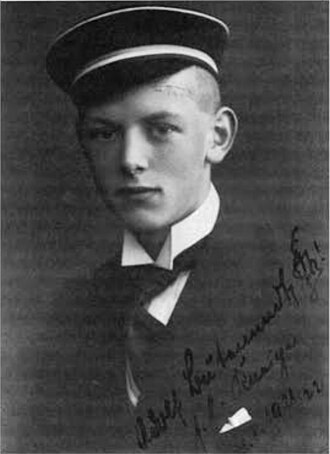
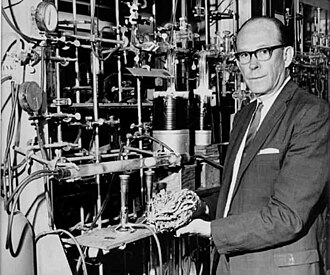
Westheimer worked with John Gamble Kirkwood on the Bjerrum electrostatic analysis of carboxylic acids;
with Joseph Edward Mayer on the calculation of molecular mechanics;
explored the mechanisms of enzyme catalysis with Birgit Vennesland
and determined the mechanisms of chromic acid oxidations and kinetic isotope effects.
He received the National Medal of Science in 1986 "For his series of extraordinary, original and penetrating investigations of the mechanisms of organic and enzymic reactions, which have played an unequaled role in the advancement of our knowledge of the ways in which chemical and biochemical processes proceed."
Early life and education
Frank Henry Westheimer was born on January 15, 1912, to Henry F. Westheimer (1870–1960) and Carrie C (Burgunder) Westheimer (1887–1972) of Baltimore, Maryland.
He graduated from Dartmouth College in 1932. He went on to Harvard University, where he earned his masters in chemistry in 1933 and his doctorate in chemistry in 1935.
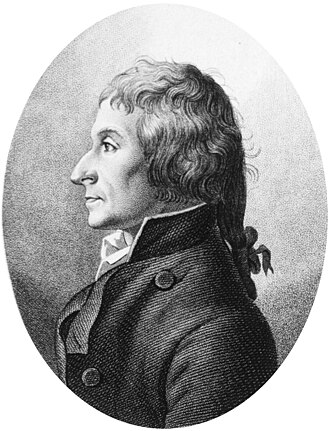
Westheimer came to Harvard hoping to do research with James Bryant Conant. When told that Conant would not take on new students, Westheimer outwaited him and was finally accepted as his last graduate student. Westheimer did some work on semicarbazone at Conant's suggestion. Conant also suggested that Westheimer work during the summer with Alsoph Corwin at Johns Hopkins University. By doing porphyrin synthesis with Corwin, Westheimer gained needed laboratory experience.
In 1933, Conant became president of Harvard in 1933 and ceased doing research. Nonetheless, Conant's interactions with Westheimer had a lasting effect, impressing Westheimer with the need "to do important things".
"The notion that Conant essentially was saying, 'Well, that problem is all right, but good God, you can do better,' was very important to me. From then on, I tried to ask myself about problems, whether they were really worth the investment of time."
Westheimer completed his Ph.D. with E.P. Kohler. Although Westheimer described Kohler's organic chemistry class as "marvelous", Kohler gave Westheimer little direction or feedback about his research, which was largely self-directed. Another of Kohler's students, Max Tishler, expanded upon some of Westheimer's research, leading to a co-publication on the derivation of a furanol.
In 1935 and 1936, as a National Research Council Fellow, Westheimer worked with physical chemist Louis P. Hammett at Columbia University. Hammett was a founder of the field of physical organic chemistry.
Career
Westheimer taught at the University of Chicago from 1936 to 1954, and at Harvard University from 1953 to 1983.
He served as chairman of the chemistry department at Harvard from 1959 to 1962.
He became the Morris Loeb Professor of Chemistry at Harvard in 1960. He retired from teaching to become Professor Emeritus in 1983, and retired from research in 1988.
University of Chicago
Westheimer's first academic appointment was an independent Research Associateship at the University of Chicago, from 1936 to 1937. He became an instructor in 1937 and a Professor in 1948. As a lecturer in chemistry he taught the university's first course in physical organic chemistry.
During Westheimer's second year at Chicago, John Gamble Kirkwood taught there. Westheimer worked with Kirkwood on problems in organic chemistry involving electrostatics. Westheimer related electrostatics to their effects on the properties of organic compounds. Kirkwood and Westheimer published four classical papers developing fundamental ideas in enzymology about the theory of the electrostatic influence of substituents on the dissociation constants of organic acids. They developed a Bjerrum electrostatic analysis of carboxylic acids.
Their Kirkwood-Westheimer model for an ellipsoid cavity reconciles the work of Niels Bjerrum on dibasic acids with that of Arnold Eucken on dipole substituted acids, showing that they could coexist in the same physical world. Elaborations and fuller testing of their ideas have required forty years and the development of computers.
During World War II, from 1943 to 1945, Westheimer worked for the National Defense Research Committee. He was a supervisor at the Explosives Research Laboratory in Bruceton, Pennsylvania. He did research on nitric acid, discovering a new acidity function for nitration reactions.
Awards and honors
Westheimer became a member of the National Academy of Sciences in 1954, a member of the American Philosophical Society in 1976, and a foreign member of the Royal Society of London in 1983.
He chaired the National Academy of Sciences Committee for the Survey of Chemistry from 1964 to 1965. Chemistry: Opportunities and Needs, also known as the "Westheimer Report", encouraged the federal government to increase spending on fundamental research in chemistry, to achieve parity with other physical sciences.
It identified biochemistry as a promising and overlooked area for medical and pharmaceutical research.
The report's recommendations were implemented, and it is still considered to be "comprehensive, definitive, and forward-looking".
Westheimer was a member of President Lyndon Johnson's science advisory committee from 1967 to 1970.
Westheimer served on the Council of the National Academy of Sciences for two terms, from 1973 to 1975 and 1976-1978, as well as being a Councillor of the American Philosophical Society (1981-1984), and Secretary of the American Academy of Arts and Sciences (1985-1990).
As well as emphasizing the need for fundamental research, Westheimer was concerned about other political issues. He argued against wars in Vietnam and Iraq. He was aware of environmental issues, supporting measures to decrease pollution, combat global warming, increase energy conservation, and develop alternative energy sources. He advocated that science needed to be taught in new ways, to better educate nonscientists about scientific issues.
Among Westheimer's many honors are the U.S. National Academy Award in Chemical Sciences in 1980, the Robert A. Welch Foundation Award in 1982, the Golden Plate Award of the American Academy of Achievement in 1981, the U.S.
Family
Frank H. Westheimer was married in 1937 to Jeanne E. Friedman. They had two children, Ellen Westheimer and Ruth Susan Westheimer.
以上节选摘自英文维基百科「Frank Westheimer」,按 CC BY-SA 4.0 使用,去掉了参考文献、外部链接等尾部小节,公式改写成了纯文本。篇幅所限,较长的小节只摘了开头一部分,有的小节没有收;全文、配图和出处见原文。