格物
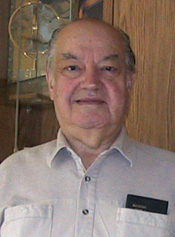
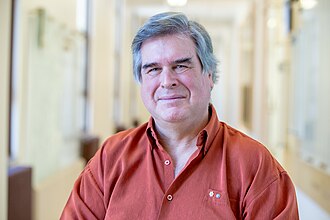
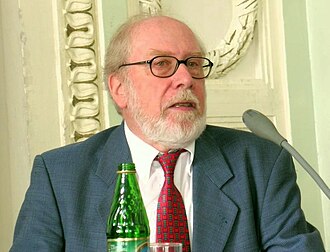
图:Andreu Veà, WiWiW.org · CC BY-SA 3.0 · Wikimedia Commons
- 出生
- 1926 年 4 月 29 日,格罗德诺
- 逝世
- 2011 年 3 月 26 日,帕洛阿尔托
- 国籍
- 美国、波兰
- 学科
- 计算机科学、工程与发明、博物与综合
- 职业
- 发明家、商人、计算机科学家、工程师
- 母语 / 工作语言
- 波兰语
- 母校
- 加州大学洛杉矶分校(硕士,1959 年)、德雷克塞尔大学(执业学位,1949 年)
- 工作单位
- 兰德公司(1959—1970)
研究领域
主要贡献
代表成就
所获奖项(12)
- 1987Edwin Howard Armstrong Achievement Award
- 1989SIGCOMM Award
- 1990贝尔奖
- 1991马可尼奖
- 1993电子前哨基金会先锋奖
- 2000互联网奖章
- 2001Bower Award and Prize for Achievement in Science
- 2003美国文理科学院院士
- 2007国家技术奖章
- 2007美国发明家名人堂
- 2012互联网名人堂
- —Computer History Museum Fellow
学会与院士
百科正文
生平
保罗·巴兰生于波兰的犹太人家庭中,是家中三个小孩中排行最小的,他的意第绪语名字为波瑟曲(Pesach)。他们全家在1928年5月11日移民至美国,先居住在波士顿,后搬到费城。他的父亲莫里斯·巴兰(Morris "Moshe" Baran)开设了一间杂货店,以此为生。
1949年,保罗·巴兰自卓克索大学电机工程学系毕业后,加入埃克特-莫奇莱电脑公司(Eckert–Mauchly Computer Corporation),担任电子数值积分计算器(ENIAC)研发工作。
1955年,他与艾芙琳·墨菲(Evelyn Murphy)结婚,搬到洛杉矶。在休斯飞机公司担任雷达系统工程师。1959年,他参与夜间课程,取得洛杉矶加利福尼亚大学(UCLA)的电机工程学硕士学位,他的论文是关于单字识别。
1959年,加入兰德公司,他的主要工作在于研究,当面临核子武器威胁时,如何建立一个能够保持资讯连结的系统。
2011年3月26日,因肺癌病逝。
以上内容摘自维基百科「保羅·巴蘭」,按 CC BY-SA 4.0 使用,去掉了参考文献、外部链接等尾部小节,公式改写成了纯文本。全文、配图和出处见原文。
英文维基百科补充中文条目比较短,下面是英文条目「Paul Baran」的原文
Paul Baran (born Pesach Baran; April 29, 1926 – March 26, 2011) was a Polish-American engineer who was a pioneer in the development of computer networks. He was one of the two independent inventors of packet switching, which is today the dominant basis for data communications in computer networks worldwide, and went on to start several companies and develop other technologies that are an essential part of modern digital communication.
Early life
He was born in Grodno (then in the Second Polish Republic, and since 1945 part of Belarus) on April 29, 1926. He was the youngest of three children in his Lithuanian Jewish family, with the Yiddish given name "Pesach". His family moved to the United States on May 11, 1928, settling in Boston and later in Philadelphia, where his father, Morris "Moshe" Baran (1884–1979), opened a grocery store. He graduated from Drexel University (then called Drexel Institute of Technology) in 1949, with a degree in electrical engineering. He then joined the Eckert-Mauchly Computer Company, where he did technical work on UNIVAC models, the first brand of commercial computers in the United States. In 1955 he married Evelyn Murphy, moved to Los Angeles, and worked for Hughes Aircraft on radar data processing systems.
Packet switched network design
After joining the RAND Corporation in 1959, Baran took on the task of designing a "survivable" communications system that could maintain communication between end points in the face of damage from nuclear weapons during the Cold War. Then, most American military communications used high-frequency connections, which could be put out of action for many hours by a nuclear attack. Baran decided to automate RAND Director Franklin R. Collbohm's previous work with emergency communication over conventional AM radio networks and showed that a distributed relay node architecture could be survivable. The Rome Air Development Center soon showed that the idea was practicable.
Using the minicomputer technology of the day, Baran and his team developed a simulation suite to test basic connectivity of an array of nodes with varying degrees of linking.
Later work
In 1968, Baran was a founder of the Institute for the Future and was then involved in other networking technologies developed in Silicon Valley. He wrote on the subject of computer systems and privacy. Baran participated in a review of the NBS proposal for a Data Encryption Standard in 1976, along with Martin Hellman and Whitfield Diffie of Stanford University.
In 1971, he predicted the development of household email. He estimated potential revenue for such services to be $707 million by 1989.
In the early 1980s, Baran founded PacketCable, Inc, "to support impulse-pay television channels, locally generated videotex, and packetized voice transmission." PacketCable, also known as Packet Technologies, spun off StrataCom to commercialize his packet voice technology for the telephony market. That technology led to the first commercial pre-standard Asynchronous Transfer Mode product.
Death
Baran died in Palo Alto, California, at the age of 84 on March 26, 2011 from complications caused by lung cancer. Upon his death, RAND President James Thomson, stated, "Our world is a better place for the technologies Paul Baran invented and developed, and also because of his consistent concern with appropriate public policies for their use."
One of the fathers of the Internet, Vinton Cerf, stated, "Paul wasn't afraid to go in directions counter to what everyone else thought was the right or only thing to do." According to Paul Saffo, Baran also believed that innovation was a "team process" and avoided seeking credit for himself. On hearing news of his death, Robert Kahn, co-inventor of the Internet, said: "Paul was one of the finest gentlemen I ever met and creative to the very end."
Awards and honors
- IEEE Alexander Graham Bell Medal (1990)
- Marconi Prize (1991)
- Nippon Electronics Corporation C&C Prize (1996)
- Bower Award and Prize for Achievement in Science (2001)
- Fellow of the American Academy of Arts and Sciences (2003)
Fellow of the Computer History Museum (2005) "for fundamental contributions to the architecture of the Internet and for a lifetime of entrepreneurial activity."
- National Inventors Hall of Fame (2007)
- National Medal of Technology and Innovation (2007)
- UCLA Engineering Alumnus of the Year (2009)
- Internet Hall of Fame (2012)
以上节选摘自英文维基百科「Paul Baran」,按 CC BY-SA 4.0 使用,去掉了参考文献、外部链接等尾部小节,公式改写成了纯文本。篇幅所限,较长的小节只摘了开头一部分,有的小节没有收;全文、配图和出处见原文。
同一学科、同时代的科学家


同一学科的科学家
更多 ›