格物

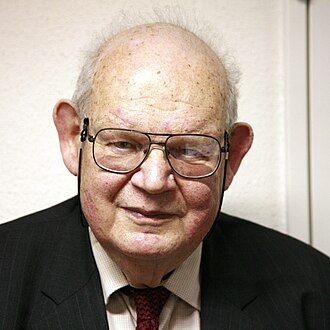
图:Rob Hodgkinson · CC BY-SA 4.0 · Wikimedia Commons
- 出生
- 1920 年 12 月 17 日,卡姆罗斯
- 逝世
- 2004 年 10 月 19 日,多伦多
- 国籍
- 加拿大
- 学科
- 数学、计算机科学、博物与综合
- 职业
- 数学家、计算机科学家
- 母校
- 哈佛大学(哲学博士,1954 年)、皇后大学、哈佛大学工程与应用科学学院
- 工作单位
- IBM、哈佛大学
研究领域
师承
博士导师2
来自 Wikidata 的「博士导师」「师从」「博士生」「学生」记录,可能不全。
所获奖项(5)
- 1970IBM院士
- 1975亨利·h·古德纪念奖
- 1979图灵奖
- 1982计算机先驱奖
- 1991国家技术奖章
学会与院士
百科正文
在哈佛大学当助理教授时,他发展了一套数学表达式来操作阵列,以便教授学生。1960年,他开始在IBM跟阿丁·法尔科夫工作,按他开发的数学表达式建立了APL语言。
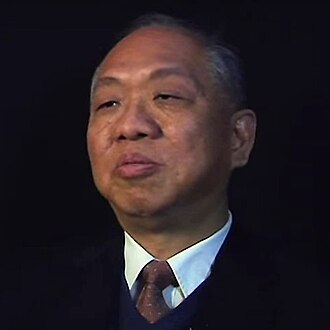
其后他和许国华(出生于香港后去加拿大)发明了J语言。
书籍
A Programming Language (1962年)
以上内容摘自维基百科「肯尼斯·艾佛森」,按 CC BY-SA 4.0 使用,去掉了参考文献、外部链接等尾部小节,公式改写成了纯文本。全文、配图和出处见原文。
英文维基百科补充中文条目比较短,下面是英文条目「Kenneth E. Iverson」的原文
Kenneth Eugene Iverson (17 December 1920 – 19 October 2004) was a Canadian computer scientist noted for the development of the programming language APL. He was honored with the Turing Award in 1979 "for his pioneering effort in programming languages and mathematical notation resulting in what the computing field now knows as APL; for his contributions to the implementation of interactive systems, to educational uses of APL, and to programming language theory and practice".
Life
Ken Iverson was born on 17 December 1920 near Camrose, a town in central Alberta, Canada. His parents were farmers who came to Alberta from North Dakota; his ancestors came from Trondheim, Norway.
During World War II, he served first in the Canadian Army and then in the Royal Canadian Air Force. He received a B.A. degree from Queen's University and the M.Sc. and Ph.D. degrees from Harvard University. In his career, he worked for Harvard, IBM, I. P. Sharp Associates, and Jsoftware Inc. (Originally "Iverson Software Inc.").
Iverson suffered a stroke while working at the computer on a new J lab on 16 October 2004, and died in Toronto on 19 October 2004 at age 83.
Education
Iverson began school on 1 April 1926 in a one-room school, initially in Grade 1, promoted to Grade 2 after 3 months and to Grade 4 by the end of June 1927.
He left school after Grade 9 because it was the depths of the Great Depression and there was work to do on the family farm, and because he thought further schooling only led to becoming a schoolteacher and he had no desire to become one. At age 17, while still out of school, he enrolled in a correspondence course on radios with De Forest Training in Chicago, and learned calculus by self-study from a textbook.
During World War II, while serving in the Royal Canadian Air Force, he took correspondence courses toward a high school diploma.
After the war, Iverson enrolled in Queen's University in Kingston, Ontario, taking advantage of government support for ex-servicemen and under threat from an Air Force buddy who said he would "beat his brains out if he did not grasp the opportunity". He graduated in 1950 as the top student with a bachelor's degree in mathematics and physics.
Continuing his education at Harvard University, he began in the Department of Mathematics and received a master's degree in 1951. He then switched to the Department of Engineering and Applied Physics, working with Howard Aiken and Wassily Leontief.
Kenneth Iverson has recalled graduate study under Aiken as "like an apprenticeship" in which the student "learned the tools of the scholarship trade".
Work
Harvard (1955–1960)
Iverson stayed on at Harvard as an assistant professor to implement the world's first graduate program in "automatic data processing".
Many people think that Aiken was interested only in scientific computers. This was simply not so. During one coffee hour, Aiken turned to Ken Iverson, who had just finished his Ph.D., and said: "These machines are going to be immensely important for business, and I want you to prepare and teach a course in business data processing next fall." There had never been such a course anywhere in the world. Ken was qualified only because he was a mathematician. I was so excited by the prospect that I immediately volunteered to be Ken's graduate teaching assistant.
It was in this period that Iverson developed notation for describing and analyzing various topics in data processing, for teaching classes, and for writing (with Brooks) Automatic Data Processing. He was "appalled" to find that conventional mathematical notation failed to fill his needs, and began work on extensions to the notation that were more suitable. In particular, he adopted the matrix algebra used in his thesis work, the systematic use of matrices and higher-dimensional arrays in tensor analysis, and operators in the sense of Heaviside in his treatment of Maxwell's equations, higher-order functions on function argument(s) with a function result. The notation was also field-tested in the business world in 1957 during a 6-month sabbatical spent at McKinsey & Company.
Awards and honors
- IBM Fellow, IBM, 1970
- Harry H. Goode Memorial Award, IEEE Computer Society, 1975
- Member, National Academy of Engineering (USA), 1979
- Turing Award, Association for Computing Machinery, 1979
- Computer Pioneer Award (Charter recipient), IEEE Computer Society, 1982
- Honorary doctorate, York University, 1998
In 2015, a new moth species, Agdistis iversoni, was named after him.
以上节选摘自英文维基百科「Kenneth E. Iverson」,按 CC BY-SA 4.0 使用,去掉了参考文献、外部链接等尾部小节,公式改写成了纯文本。篇幅所限,较长的小节只摘了开头一部分,有的小节没有收;全文、配图和出处见原文。
同一学科、同时代的科学家