格物
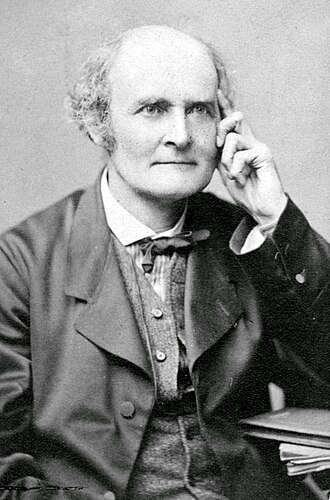
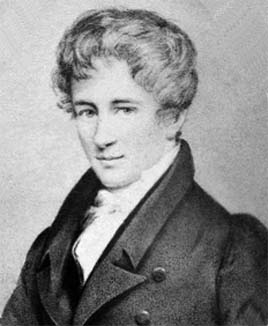
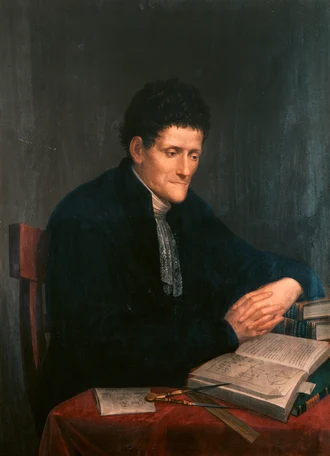
图:Herbert Beraud (1845–1896) · Public domain · Wikimedia Commons
- 出生
- 1821 年 8 月 16 日,里士满
- 逝世
- 1895 年 1 月 26 日,剑桥
- 国籍
- 大不列颠及爱尔兰联合王国
- 学科
- 数学、博物与综合
- 职业
- 数学家、律师、大学教师、大律师
- 母语 / 工作语言
- 英语
- 母校
- 国王学院学校(1838 年)、剑桥大学三一学院(1842 年)、林肯思皇家律师所(1849 年)
- 工作单位
- 剑桥大学(1863—1895)、剑桥大学三一学院(1842—1846)、林肯思皇家律师所(1849—1863)
研究领域
主要贡献
代表成就
以他 / 她命名
师承
博士导师1
来自 Wikidata 的「博士导师」「师从」「博士生」「学生」记录,可能不全。
所获奖项(12)
- 1842史密斯奖
- 1852英国皇家学会院士
- 1859皇家奖章
- 1866美国文理科学院院士
- 1882科普利奖章
- 1884德摩根奖章
- 1890法国荣誉军团军官勋章
- —Honorary doctor of the Heidelberg University
- —honorary doctor of the University of Edinburgh
- —Honorary doctor of the University of Bologna
- —Honorary doctor of the University of Oxford
- —Honorary doctor of Leiden University
学会与院士
百科正文
生平
凯莱自小即喜欢解决复杂的数学问题。后来进入剑桥大学三一学院,在希腊语、法语、德语、意大利语以及数学方面成绩优异。
凯莱就读大学时已发表了3篇论文。为了谋生,他在1849年起正式执业为律师。到了1863年,他才正式进入学术圈,成为剑桥大学的教授。在他当律师的14年间,他发表了约二百五十篇论文。他一生发表了过九百篇论文,包括关于非欧几何、线性代数、群论和高维几何。
荣誉
- 数学上以凯莱命名的有:
- 八元数,又称Cayley数
- 凯莱定理
- 凯莱表
- 凯莱图
- 凯莱公式
- 凯莱-哈密顿定理
- Grassmann-凯莱代数
以上内容摘自维基百科「阿瑟·凱萊」,按 CC BY-SA 4.0 使用,去掉了参考文献、外部链接等尾部小节,公式改写成了纯文本。全文、配图和出处见原文。
英文维基百科补充中文条目比较短,下面是英文条目「Arthur Cayley」的原文
Arthur Cayley (; 16 August 1821 – 26 January 1895) was an English mathematician who worked mostly on algebra. He helped found the modern British school of pure mathematics, and was a professor at Trinity College, Cambridge for 35 years.
He postulated what is now known as the Cayley–Hamilton theorem—that every square matrix is a root of its own characteristic polynomial, and verified it for matrices of order 2 and 3. He was the first to define the concept of an abstract group, a set with a binary operation satisfying certain laws, as opposed to Évariste Galois' concept of permutation groups. In group theory, Cayley tables, Cayley graphs, and Cayley's theorem are named in his honour, as well as Cayley's formula in combinatorics.
Early life
Arthur Cayley was born in Richmond, London, England, on 16 August 1821. His father, Henry Cayley, was a distant cousin of George Cayley, the aeronautics engineer innovator, and descended from an ancient Yorkshire family. He settled in Saint Petersburg, Russia, as a merchant. His mother was Maria Antonia Doughty, daughter of William Doughty. According to some writers she was Russian, but her father's name indicates an English origin. His brother was the linguist Charles Bagot Cayley. Arthur spent his first eight years in Saint Petersburg.
Education
At the age of 17 Cayley began residence at Trinity College, Cambridge, where he excelled in Greek, French, German, and Italian, as well as mathematics. The cause of the Analytical Society had now triumphed, and the Cambridge Mathematical Journal had been instituted by Gregory and Robert Leslie Ellis. To this journal, at the age of twenty, Cayley contributed three papers, on subjects that had been suggested by reading the Mécanique analytique of Joseph Louis Lagrange and some of the works of Laplace.
Law career
Because of the limited tenure of his fellowship it was necessary to choose a profession; like De Morgan, Cayley chose law, and was admitted to Lincoln's Inn, London on 20 April 1846 at the age of 24. He made a specialty of conveyancing. It was while he was a pupil at the bar examination that he went to Dublin to hear William Rowan Hamilton's lectures on quaternions.
His friend J. J. Sylvester, his senior by five years at Cambridge, was then an actuary, resident in London; they used to walk together round the courts of Lincoln's Inn, discussing the theory of invariants and covariants.
Professorship
Around 1860, Cambridge University's Lucasian Professor of Mathematics (Newton's chair) was supplemented by the new Sadleirian professorship, using funds bequeathed by Lady Sadleir, with the 42-year-old Cayley as its first holder. His duties were "to explain and teach the principles of pure mathematics and to apply himself to the advancement of that science." He gave up a lucrative legal practice for a modest salary, but never regretted the exchange, since it allowed him to devote his energies to the pursuit that he liked best.
British Association presidency
In 1883, Cayley was President of the British Association for the Advancement of Science. The meeting was held at Southport, in the north of England. As the President's address is one of the great popular events of the meeting, and brings out an audience of general culture, it is usually made as little technical as possible. Cayley (1996) took for his subject the Progress of Pure Mathematics.
The Collected Papers
In 1889, the Cambridge University Press began the publication of his collected papers, which he appreciated very much. He edited seven of the quarto volumes himself, though suffering from a painful internal malady. He died 26 January 1895 at age 73. His funeral at Trinity Chapel was attended by the leading scientists of Britain, with official representatives from as far as Russia and America.
The remainder of his papers were edited by Andrew Forsyth, his successor as Sadleirian professor, in total thirteen quarto volumes and 967 papers.
Legacy
Cayley is buried in the Mill Road cemetery, Cambridge.
An 1874 portrait of Cayley by Lowes Cato Dickinson and an 1884 portrait by William Longmaid are in the collection of Trinity College, Cambridge.
A number of mathematical terms are named after him:
The crater Cayley on the Moon (and consequently the Cayley Formation, a geological unit named after the crater) is named after him.
以上节选摘自英文维基百科「Arthur Cayley」,按 CC BY-SA 4.0 使用,去掉了参考文献、外部链接等尾部小节,公式改写成了纯文本。篇幅所限,较长的小节只摘了开头一部分,有的小节没有收;全文、配图和出处见原文。
同一学科、同时代的科学家



同一学科的科学家
更多 ›