格物
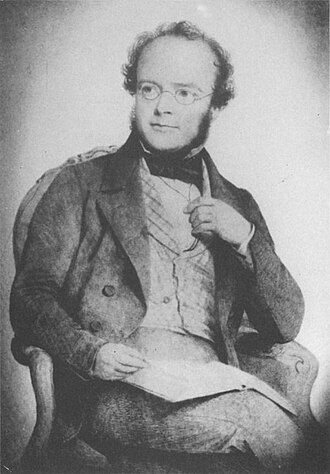
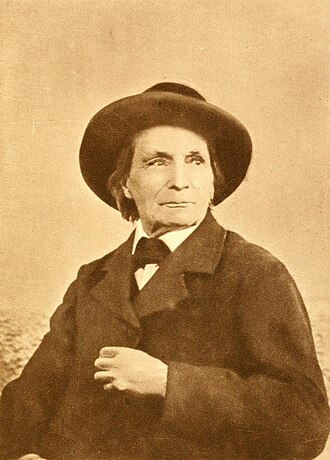
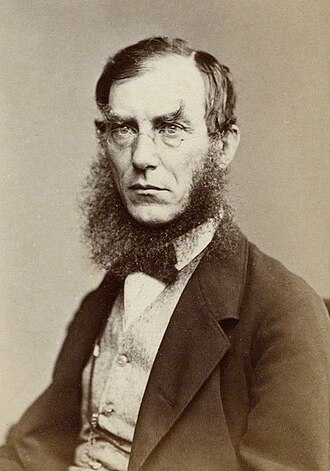
图:Unidentified engraver / Unidentified photographer · Public domain · Wikimedia Commons
普罗比·寇特利1802—1871
Proby Thomas Cautley
British palaeontologist (1802-1871)
Sir Proby Thomas Cautley, KCB, was an English engineer and palaeontologist who is best known for having conceived and supervised the construction of the Ganges Canal during East India Company rule in India. The canal stretches some 350 miles between its headworks at Haridwar and, after bifurcation near Aligarh, its confluences with the Ganges river mainstem in Kanpur and the Yamuna river in Etawah. At the time of completion, it had the greatest discharge of any irrigation canal in the world.
摘自英文维基百科「Proby Cautley」(英文维基百科,暂无中文条目),CC BY-SA 4.0
- 出生
- 1802 年 1 月 3 日,萨福克郡
- 逝世
- 1871 年 1 月 25 日,刘易舍姆区
- 国籍
- 大不列颠及爱尔兰联合王国
- 学科
- 生物学、地球科学、工程与发明、博物与综合
- 职业
- 古生物学家、工程师、士兵
- 母语 / 工作语言
- 英语
- 母校
- 查特豪斯公学
所获奖项(3)
- 1837沃拉斯顿奖章
- —英国皇家学会院士
- —Knight Commander of the Order of the Bath
学会与院士
百科正文
本条目暂无中文维基百科条目,下面是英文维基百科原文。
Proby Cautley was educated at Charterhouse School (1813–18), followed by the East India Company's Military Seminary at Addiscombe (1818–19). After less than a year, he was commissioned as a second lieutenant and dispatched to India, joining the Bengal Presidency artillery in Calcutta. In 1825, he assisted Captain Robert Smith, the engineer in charge of constructing the Eastern Yamuna canal, also called the Doab canal. He was in charge of this canal for 12 years between 1831 and 1843. By 1836, he had become Superintendent-General of Canals.
Cautley is also known for his research on fossils found in India, particularly those found in the Siwalik Hills, which he conducted in collaboration with Hugh Falconer. In 1846, he was made a fellow of the Royal Society for this work.
Parents and childhood
Proby Cautley was born in Raydon, Suffolk on 3 January 1802 to Catherine, née Proby (c. 1772–1830), and Thomas Cautley (c. 1756–1817). Proby Cautley's grandfathers on both sides were clergymen. His father, Thomas, was an erudite man who had spent most of his life at the University of Cambridge. Thomas had entered Trinity College in 1772. He was chosen Second Wrangler in the B. A. examination. He went on to receive the M.A. and B.D. degrees.
Education
Proby Cautley was sent away to boarding school at age 11, entering Charterhouse School in January 1813, and remaining a pupil there until July 1818. The school, founded in 1614 and not far from St Paul's School, London, had approximately 200 pupils. The annual fees was £80, putting the school outside the reach of all but the somewhat affluent. During that time, the headmaster was the Reverend John Russell, who was in office from 1811 until 1832.
Military career in India, 1819–1825
On 19 April 1819 Cautley was commissioned as a second lieutenant. His passage to India was assigned on Marquis of Wellington, an East India Company vessel laid down in 1811. Very likely, it is what Cautley boarded at the Downs on 23 May 1819. An older ship with the same name was wrecked in 1818. The ship's fare amounted to between £55 and £95, depending on whether the newly-commissioned cadets ate with third mates in their mess or at the officers' dining table. An additional £15 had to be paid to the ship's owners.
Doab Canal
The Doab Canal was one of two old Mughul era canals which took off (i.e. split off) at nearly opposite points high up in the course of the River Jumna (Yamuna), a right bank tributary of the Ganges river. The Western Jumna Canal was begun in the 14th century. The canal was lengthened in the 17th century. The eastern canal, also called the Doab Canal, was constructed at this time. However, a lack of maintenance had made both unusable by the mid-18th century.
Fossil work
Hugh Falconer was a Scottish surgeon in the Bengal Presidency of the East India Company. His avocation, the enthusiastic pursuit of geological topics, especially fossils, had led to his appointment as superintendent of the Company's botanical gardens in Saharanpur, then in the Ceded and Conquered Provinces of the western Presidency. Cautley, who was living nearby at the time, was also interested in the topic. In 1832 a new aspect was added to Cautley's career through his friendship with Falconer.
Marriage
At Landour, in the foothills of the Himalayas, Cautley was married to Frances Bacon on 20 September 1838. The bride was the third daughter of Anthony Bacon of Saharanpur. Walter George Cautley, their only child, was born on 30 July 1840. Early in 1843, Frances, who had begun to worry about the child's health, left with him for England.
Ganges Canal I
Planning for Cautley's major project, the Ganges Canal, had begun in 1836. The proposed canal took off from the Ganges' right bank a short distance above Hardwar (now Haridwar), where the river debouches onto the plains of northern India. It flowed past Roorkee and down the upper Doab, the interfluve between the Ganges and its major tributary, the Yamuna River.
Furlough and end of marriage
Cautley took a three-year furlough in England in 1845. Upon arriving in London in October, he discovered his wife, Frances, was having an affair with an army officer. The affair was to result in the birth of twins in July 1846. Cautley felt bound to pursue the time-consuming and costly action of obtaining a mensa et thoro separation in the consistory court. In 1850 he received a complete divorce from Frances by a private act of parliament. To add to his distress, his biological son, Walter George, died in October 1846.
Ganges Canal II
For his work in palaeontology and on the Ganges Canal, Cautley was elected Fellow of the Royal Society on 2 April 1846. During his return journey to India after his furlough, he stopped in northern Italy to observe its celebrated canals, though nothing he saw matched in scale what he was attempting in India. His next stop was in Egypt to observe the barrage works under construction at the head of the Nile Delta. He arrived ashore in Bombay in December 1947.
Retirement and controversy
After the suppression of the Indian rebellion of 1857, the British parliament enacted the Government of India Act 1858, transferring the administration of British India from the East India Company to the Crown. Power was exercised in London by a Secretary of State for India in Council. Cautley was one of the first appointed members of the council of 15. Cautley did not consider it a position with an attached stipend but little responsibility; he took on committee work and attended weekly meetings.
Last years
In his remaining years, Cautley participated actively in London's social life. He was a member of the Athenaeum and kept a seat at the opera. From 1855 to 1857, he served on the council of the Geological Society of London. On 11 February 1865, he married again at St John's Wood. His bride was Julia Susannah Richards (1831/2–1916), who had a son and a daughter from a previous marriage. Cautley adopted the daughter, a toddler, and gave her his last name.
Honour
The plant genus Cautleya is named in his honour.
以上节选摘自英文维基百科「Proby Cautley」,按 CC BY-SA 4.0 使用,去掉了参考文献、外部链接等尾部小节,公式改写成了纯文本。篇幅所限,较长的小节只摘了开头一部分,有的小节没有收;全文、配图和出处见原文。
同年获同一奖项
同一学科、同时代的科学家





同一学科的科学家
更多 ›