格物
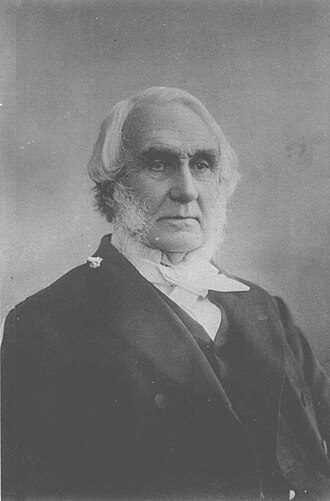
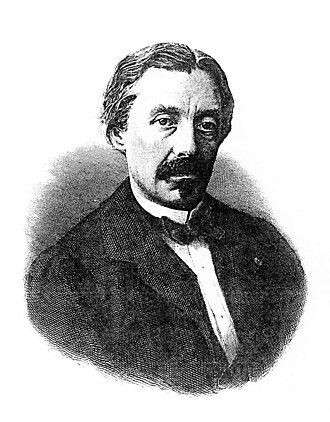
图:R.H. Lord · Public domain · Wikimedia Commons
Osmond Fisher1817—1914
English geologist and geophysicist (1817-1914)
Reverend Osmond Fisher was an English clergyman, geologist and geophysicist. He was one of the first geologists to propose the idea that the Earth consisted of a solid crust floating above a fluid core.
摘自英文维基百科「Osmond Fisher」(英文维基百科,暂无中文条目),CC BY-SA 4.0
- 出生
- 1817 年 11 月 17 日,多塞特郡
- 逝世
- 1914 年 7 月 12 日,亨廷登
- 国籍
- 大不列颠及爱尔兰联合王国
- 学科
- 物理学、地球科学
- 职业
- 地质学家、地球物理学家、神职人员
- 母语 / 工作语言
- 英语
所获奖项(2)
- 1893Murchison Medal
- 1913沃拉斯顿奖章
百科正文
本条目暂无中文维基百科条目,下面是英文维基百科原文。
Early life and education
Fisher was born in Osmington, Dorset, the son of clergyman John Fisher (1788–1832) who was Vicar of Osmington and Canon of Salisbury. Young Fisher was named after Saint Osmond, the patron saint of the church where his father served.
He took an interest in geology from an early age, collecting fossils at Dorset and Wiltshire with his uncle, Reverend George Cookson. He studied at Eton under John Keate, then under his uncle Reverend W. Fisher in Poulshot, Wiltshire and then with his grandfather, Rev. Philip Fisher, Master of the Charterhouse. Fisher also attended King's College London, where he listened to the lectures of Charles Lyell and John Frederic Daniell.
In 1836, Fisher joined Jesus College, Cambridge, studying mathematics. While in Cambridge, he also attended lectures by prominent geologist Adam Sedgwick. He graduated 18th Wrangler in 1841.
Career
Fisher was ordained as a deacon in 1844, succeeding his uncle Cookson at Writhlington, Somerset. In 1845, he was ordained as a priest. In 1853, he became a tutor at Jesus College, Cambridge.
Fisher worked on the geomorphology of Norfolk, as well as the stratigraphy and invertebrate fossils of Dorset.
In 1881, he published The Physics of the Earth’s Crust, in which he postulated a non-homogenous composition of the Earth. He speculated that the crust may sit atop a liquid layer. This was the most prominent work on the topic since Alexander von Humboldt, but it went largely ignored until the work of Alfred Wegener. Much of his work into continental drift was ridiculed, as other geologists of the time clung to Solid State Theory. However, Fisher's observations were based on careful scientific deductions rather than speculation.
Fisher recognized and supported Thomas Jamieson's observation that ice could press down upon the crust and that the land could rise after glacial melt. He also published theories on the moon, proposing that the Pacific Ocean was the mark left where the moon split from the earth. This theory turned out to be incorrect: the Pacific Ocean is chemically dissimilar and much younger than the moon.
Fisher has been called the author of the first geophysics textbook. He was the recipient of the Murchison Medal in 1893 and the Wollaston Medal in 1913. In 1852, he was proposed as a Fellow of the Geological Society by Sedgwick. Fisher was elected Honorary Fellow of King's College in 1878 and of Jesus College in 1893.
Fisher married Maria Louisa, daughter of Hastings N. Middleton of Dorchester, in 1857.
以上内容摘自英文维基百科「Osmond Fisher」,按 CC BY-SA 4.0 使用,去掉了参考文献、外部链接等尾部小节,公式改写成了纯文本。全文、配图和出处见原文。
同一学科、同时代的科学家



同一学科的科学家
更多 ›