 格物
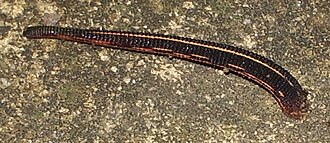
图:Angela · Public domain · Wikimedia Commons
- 学名
- Euhirudinea
- 分类等级
- 总纲
- 上级类群
- 蛭亚纲
- 大类
- 其他动物
- 数据库
- GBIF
下级类群(1)
- 无吻蛭目 Arhynchobdellida 目
百科正文
本条目暂无中文维基百科条目,下面是英文维基百科原文。
Taxonomy
These clitellate annelids are of somewhat unclear relationships; namely the relationships of Hirudinea with oligochaetes are in need of revision. It may be that the presumed sister taxon of the Euhirudinea, the Acanthobdellidea, turns out to be more distantly related, as was already the case with the Branchiobdellida. Thus, eventually Euhirudinea might become a junior synonym of Hirudinea.
True leeches are subdivided into two groups, the Arhynchobdellida or Arhynchobdellae (proboscisless leeches), and the Rhynchobdellida or Rhynchobdellae (jawless leeches). Note that the lack of jaws is a plesiomorphy, while the presence of a proboscis is an apomorphy – not all Arhynchobdellida have jaws, but all Rhynchobdellida have a proboscis. The best-known leech species, Hirudo medicinalis (European Medical Leech), belongs to the Arhynchobdellida.
Ecology
Euhirudinea leeches tend to hunt for nutrients in the morning or afternoon. Leeches that hunt in the morning are found in larger sizes than those who hunt in the afternoon. Therefore, feeding in the morning seems to be more nutritious for the leeches than in the afternoon. Terrestrial Euhirudinea leeches, which inhabit tropical or subtropical environments have been found a greater number on-trails compared to off-trail numbers.
以上内容摘自英文维基百科「Euhirudinea」,按 CC BY-SA 4.0 使用,去掉了参考文献、外部链接等尾部小节,公式改写成了纯文本。全文、配图和出处见原文。