格物
- 学名
- Fibrobacterota
- 分类等级
- 门
- 上级类群
- 假单胞菌界
- 大类
- 细菌
- 命名
- 2021 年
- 异名
- 纤维杆菌门
- 数据库
- NCBI 分类 · GBIF
百科正文
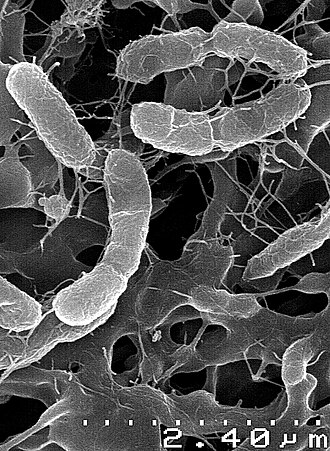
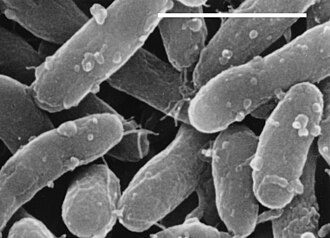
纤维杆菌属生活在反刍动物的瘤胃中,在其细胞周质中有纤维素酶可以分解纤维素使动物能够吸收。
纲
- Chitinispirillia Sorokin et al. 2016
- Chitinivibrionia Sorokin et al. 2014
- 纤维杆菌纲 Fibrobacteria Spain et al. 2012
以上内容摘自维基百科「纖維桿菌門」,按 CC BY-SA 4.0 使用,去掉了参考文献、外部链接等尾部小节,公式改写成了纯文本。全文、配图和出处见原文。
英文维基百科补充中文条目比较短,下面是英文条目「Fibrobacterota」的原文
Fibrobacterota is a small bacterial phylum which includes many of the major rumen bacteria, allowing for the degradation of plant-based cellulose in ruminant animals. Members of this phylum were categorized in other phyla. The genus Fibrobacter was removed from the genus Bacteroides in 1988.
Phylogeny and comparative genomic studies
Although Fibrobacterota is currently recognized as a distinct phylum, phylogenetic studies based RpoC and Gyrase B protein sequences, indicate that Fibrobacter succinogenes is closely related to the species from the phyla Bacteroidetes and Chlorobi. The species from these three phyla also branch in the same position based upon conserved signature indels in a number of important proteins. Lastly and most importantly, comparative genomic studies have identified two conserved signature indels (a 5-7 amino acid insert in the RpoC protein and a 13-16 amino acid insertion in serine hydroxymethyltransferase) and one signature protein (PG00081) that are uniquely shared by all of the species from these three phyla. All of these results provide compelling evidence that the species from these three phyla shared a common ancestor exclusive of all other bacteria and it has been proposed that they should all recognized as part of a single “FCB”superphylum.
Phylogeny
Phylogeny of Fibrobacterota.
Taxonomy
The currently accepted taxonomy is based on the List of Prokaryotic names with Standing in Nomenclature (LSPN) and National Center for Biotechnology Information (NCBI).
- Class Chitinispirillia Sorokin et al. 2016
- Order Chitinispirillales Sorokin et al. 2016]
- Family Chitinispirillaceae Sorokin et al. 2016
- Genus "Cellulosispirillum" Sorokin, Merkel & Khizhniak 2025
- Species "C. alkaliphilum" Sorokin, Merkel & Khizhniak 2025
- Genus Chitinispirillum Sorokin et al. 2016
- Species C. alkaliphilum Sorokin et al. 2016
- Class Chitinivibrionia Sorokin et al. 2014
- Order Chitinivibrionales Sorokin et al. 2014
- Family Chitinivibrionaceae Sorokin et al. 2014
- Genus Chitinivibrio Sorokin et al. 2014
- Species C. alkaliphilus Sorokin et al. 2014
- Class Fibrobacteria Spain et al. 2012
- Order Fibrobacterales Spain et al. 2012 ["Fibromonadales" Abdul Rahman et al. 2016]
- Family Fibrobacteraceae Spain et al. 2012 [Fibromonadaceae" Abdul Rahman et al. 2016]
- Genus Fibrobacter Montgomery et al. 1988
- Species F. intestinalis Montgomery et al. 1988
- Species F. succinogenes (Hungate 1950) Montgomery et al. 1988
- Subspecies F. s. elongatus Montgomery et al. 1988
- Subspecies F. s. succinogenes (Hungate 1950) Montgomery et al. 1988
- Genus "Candidatus Fibromonas" Abdul Rahman et al. 2016
- Species "Ca. F. termitidis" Abdul Rahman et al. 2016
- Genus "Hallerella" Wylensek et al. 2020
- Species "H. porci" Wylensek et al. 2021
- Species "H. succinigenes" Wylensek et al. 2020
Distribution
The phylum Fibrobacterota is considered to be closely related to the CFB [Cytophaga-Flavibacterium-Bacteroidota]. It contains the genus Fibrobacter, which has strains present in the guts of many mammals including cattle and pigs. The two described species in this genus namely, Fibrobacter succinogenes and Fibrobacter intestinalis are important members of fibrolytic communities in mammalian guts and have received a lot of attention in recent decades due to the long-standing interest microbes capable of degrading plant fiber.
Molecular evidence based on the amplification of 16rRNA genes from various environments suggest that the phylum is much more widespread than previously thought. Most of the clones from mammalian environments group along with the known isolates in what has been called subphylum 1. Members of subphylum 2 however, have so far been found only in the gut of termites. and in some litter-feeding cockroaches. The predominance of subphylum 2 in cellulolytic fibre-associated bacterial communities in hindguts of wood-feeding Nasutitermes corniger suggests that they play an important role in the breakdown of plant material in higher termites.
以上内容摘自英文维基百科「Fibrobacterota」,按 CC BY-SA 4.0 使用,去掉了参考文献、外部链接等尾部小节,公式改写成了纯文本。全文、配图和出处见原文。