 格物
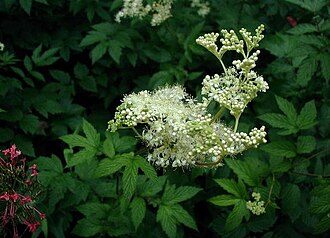
图:Sten Porse · CC BY-SA 3.0 · Wikimedia Commons
- 学名
- Filipendula
- 分类等级
- 属
- 上级类群
- 蔷薇亚科
- 大类
- 被子植物
- 命名
- 菲利普·米勒
- 数据库
- NCBI 分类 · GBIF
下级类群(2)

百科正文
英文维基百科补充中文条目比较短,下面是英文条目「Filipendula」的原文
Filipendula is a genus of 12 species of perennial herbaceous flowering plants in the family Rosaceae, native to the temperate regions of the Northern Hemisphere. Well-known species include meadowsweet (Filipendula ulmaria) and dropwort (Filipendula vulgaris), both native to Europe, and queen-of-the-forest (Filipendula occidentalis) and queen-of-the-prairie (Filipendula rubra), native to North America.
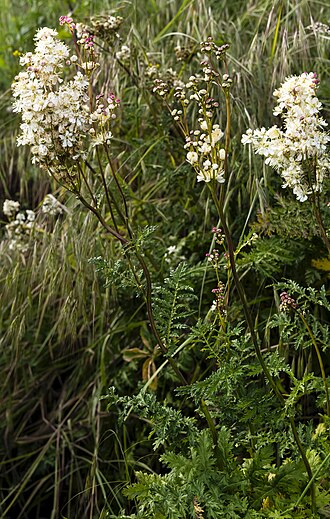
The species grow to between 0.5–2 m tall, with large inflorescences of small five-petalled flowers, creamy-white to pink-tinged in most species, dark pink in F. rubra. Filipendula fruit are unusual, sometimes described as an indehiscent follicle, or as an achene.
Filipendula species are used as food plants by the larvae of some Lepidoptera species: emperor moth, grey pug, grizzled skipper, Hebrew character, lime-speck pug, mottled beauty and the satellite have all been recorded on meadowsweet.
The species were in the past sometimes treated in a broad view of the genus Spiraea, but genetic research has shown that they are less closely related than previously considered.
The genus name Filipendula derives from the Latin words filum "thread" and pendulus "hanging", referring to the tubers of F. vulgaris, which are attached to one other by thread-like roots.
以上内容摘自英文维基百科「Filipendula」,按 CC BY-SA 4.0 使用,去掉了参考文献、外部链接等尾部小节,公式改写成了纯文本。全文、配图和出处见原文。