 格物

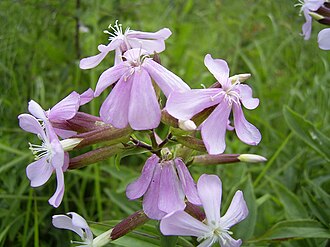
图:Victor M. Vicente Selvas · Public domain · Wikimedia Commons
- 学名
- Saponaria
- 分类等级
- 属
- 上级类群
- 石竹科
- 大类
- 被子植物
- 命名
- 卡尔·林奈,1753 年
- 数据库
- NCBI 分类 · GBIF
下级类群(2)
百科正文
英文维基百科补充中文条目比较短,下面是英文条目「Saponaria」的原文
Saponaria (commonly known as soapworts) is a genus of flowering plants in the family Caryophyllaceae. It is usually characterized by pink or white flowers.
Description
The plants are herbaceous perennials and annuals, some with woody bases. The flowers are abundant, five-petalled and usually in shades of pink or white.
Taxonomy
The genus is closely related to the genus Silene, being distinguished from these by having only two (not three or five) styles in the flower.
It is also related to Gypsophila, but its calyx is cylindrical rather than bell-shaped.
Species
The most familiar species might be common soapwort (S. officinalis), which is native to Eurasia but is known in much of the world as an introduced species, often a weed, and sometimes a cultivated ornamental plant.
There are thirty to forty species in the genus overall.
Etymology
The genus name Saponaria derives from the Latin sapo ("soap") and -aria ("pertaining to"), with at least one species, S. officinalis, being used to make soap.
Ecology
Saponaria species are eaten by the larvae of some butterflies and moths, including the Lychnis and Coleophora saponariella, which is exclusive to the genus.
Uses
The plants contain saponins and a liquid soap can be produced by soaking the leaves in water. This soap is still used to clean delicate antique tapestries.
以上内容摘自英文维基百科「Saponaria」,按 CC BY-SA 4.0 使用,去掉了参考文献、外部链接等尾部小节,公式改写成了纯文本。全文、配图和出处见原文。