格物
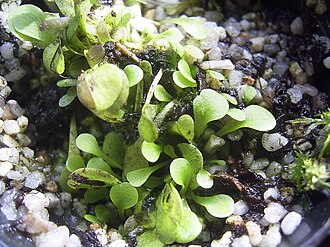
图:No machine-readable author provided. Denis Barthel assumed (… · CC BY-SA 3.0 · Wikimedia Commons
- 学名
- Lentibulariaceae
- 分类等级
- 科
- 上级类群
- 唇形目
- 大类
- 被子植物
- 命名
- 路易·克洛德·里夏尔,1808 年
- 数据库
- NCBI 分类 · GBIF
下级类群(3)
百科正文
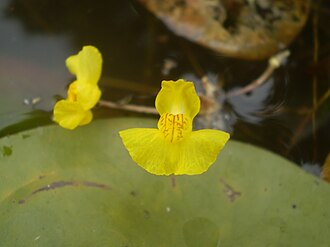
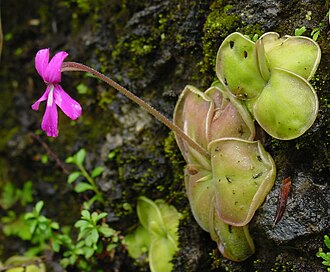
在中国或台湾,该科草本植物有2属19种,无根性,冬芽不明显,捕虫囊通常生于叶片上,如台湾的黄花狸藻、挖耳草。
分类
截至2026年7月 (2026-07),世界植物在线数据库共承认了三个狸藻科的属:
- 螺旋狸藻属(Genlisea)
- 捕虫堇属(Pinguicula)
- 狸藻属(Utricularia)
四萼狸藻属与双瓣狸藻属曾经是狸藻科下的两个属,目前已经将这两个属并入狸藻属内。狸藻科先前是分类为玄参目下的一个科,而APG分类法主张应将玄参目下的科合并至唇形目内。
以上内容摘自维基百科「狸藻科」,按 CC BY-SA 4.0 使用,去掉了参考文献、外部链接等尾部小节,公式改写成了纯文本。全文、配图和出处见原文。
英文维基百科补充中文条目比较短,下面是英文条目「Lentibulariaceae」的原文
Lentibulariaceae is a family of carnivorous plants containing three genera: Genlisea, the corkscrew plants; Pinguicula, the butterworts; and Utricularia, the bladderworts.
The genera Polypompholyx (two species of pink petticoats or fairy aprons) and Biovularia used to be regarded as fourth and fifth members of this family. Biovularia has been subsumed into Utricularia, and Polypompholyx has been relegated to a subgenus of Utricularia. Placement of the family used to be in the Scrophulariales, which has been merged with Lamiales in the Angiosperm Phylogeny Group system.
Evolution
Carnivory in plants appears to have evolved independently in five major angiosperm lineages and six orders: Poales, Caryophyllales, Oxalidales, Ericales, Alismatales and Lamiales.
One common trait found in several Lamiales families that may have led to carnivory is the secretion of proteinase mucilage through leaf surfaces. This mucilage is generally used to prevent insect predation by trapping and degrading potentially harmful insects. Some research suggests these glands can quite easily shift their function from secretion to absorption. This shift may have first occurred in the most recent common ancestor (MRCA) of the Lentibulariaceae, introducing absorptive glands that provided additional macronutrients through trapped insects. The additional source of nutrients may have increased fitness of plants growing in low-nutrient habitats which eventually caused an embrace of carnivory. Further mapping of traits also suggests the MRCA was terrestrial and possessed a basal rosette composed of flat leaves and a primary root. Phylogenetics also confirmed that the Pinguicula are sister to the other two genera.
以上内容摘自英文维基百科「Lentibulariaceae」,按 CC BY-SA 4.0 使用,去掉了参考文献、外部链接等尾部小节,公式改写成了纯文本。全文、配图和出处见原文。