 格物
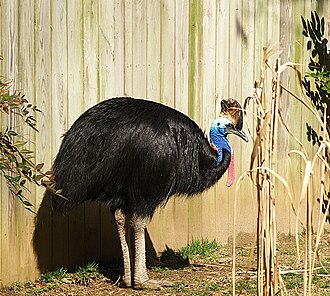
图:Jim Kuhn · CC BY 2.0 · Wikimedia Commons
生命之树 › 真核生物 › 动物界 › 真后生动物亚界 › 两侧对称动物 › 后口动物总门 › 脊索动物门 › 脊椎动物亚门 › 有颌下门 › 肉鳍鱼总纲 › 四足形类 › 希望螈目 › 四足总纲 › 爬行动物 › 坚尾龙类 › 鸟纲
古颚类总纲
Palaeognathae
古颚下纲,又名平胸小纲或平胸总目(Ratitae),是鸟纲下的两个演化支之一。这个下纲目前下属五个现存的目及两个已绝灭的目:
鸵鸟目 Struthionformes
美洲鸵目 Rheiformes
鹤鸵目 Casuariiformes
无翼鸟目 Apterygiformes
𮭥形目 Tinamiformes
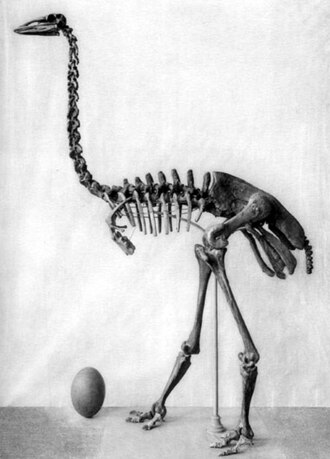
†隆鸟目 Aepyornithiformes
†恐鸟目 Dinornithiformes
摘自维基百科「古颚类」,CC BY-SA 4.0
- 学名
- Palaeognathae
- 分类等级
- 总纲
- 上级类群
- 鸟纲
- 大类
- 鸟类
- 命名
- 威廉·普莱恩·皮克拉夫特,1900 年
- 数据库
- NCBI 分类
下级类群(6)


百科正文
- 鸵鸟目 Struthionformes
- 美洲鸵目 Rheiformes
- 鹤鸵目 Casuariiformes
- 无翼鸟目 Apterygiformes
- 𮭥形目 Tinamiformes
- †隆鸟目 Aepyornithiformes
- †恐鸟目 Dinornithiformes
古颚下纲下现存的鸟类被统称为“走禽”,在分布上局限于南半球的非洲、南美洲和大洋洲地区,其代表性物种包含鸵鸟、鸸鹋和奇异鸟等。它们相当适应于地面上的生活,身材较为高大、双脚有力、相当善于奔跑。走禽大多较为健壮,可忍耐相对不良的饲养环境。
古颚下纲在鸟类中是较早演化出的一种鸟类,其胸骨扁平、不具龙骨突,附着于上的动翼肌亦退化,锁骨退化或消失,也不具有尾综骨及尾脂腺。脚趾数目则较为不定,自二趾至四趾皆有。其羽毛较为蓬松,除𮭥形目外都不具有飞行功能,提起便常被说成是一类不会飞行的鸟。
以上内容摘自维基百科「古颚类」,按 CC BY-SA 4.0 使用,去掉了参考文献、外部链接等尾部小节,公式改写成了纯文本。全文、配图和出处见原文。
英文维基百科补充中文条目比较短,下面是英文条目「Palaeognathae」的原文
Palaeognathae (; from Ancient Greek παλαιός (palaiós) 'old' and γνάθος (gnáthos) 'jaw') is an infraclass of birds, called paleognaths or palaeognaths. It is one of the two infraclasses of birds, the other being Neognathae, both of which form Neornithes (equivalent to the class Aves in a narrow sense). Palaeognathae contains five extant orders consisting of four flightless lineages (plus two that are extinct), termed ratites, and one flying lineage, the Neotropic tinamous. There are 47 species of tinamous, five of kiwis (Apteryx), three of cassowaries (Casuarius), one of emus (Dromaius) (another became extinct in historic times), two of rheas (Rhea) and two of ostriches (Struthio). Recent research has indicated that paleognaths are monophyletic but the traditional taxonomic split between flightless and flighted forms is incorrect; tinamous are within the ratite radiation, meaning flightlessness arose independently multiple times via parallel evolution.
There are three extinct groups that are undisputed members of Palaeognathae: the Lithornithiformes, the Dinornithiformes (moas) and the Aepyornithiformes (elephant birds), the latter two of which became extinct in the last 1250 years. There are other extinct birds which have been allied with the Palaeognathae by at least one author, but their affinities are a matter of dispute.
The word paleognath is derived from the Ancient Greek for 'old jaws' in reference to the skeletal anatomy of the palate, which was historically considered more primitive than other birds, though it has recently been argued the ancestor of all living birds had a neognath-type palate. Paleognathous birds retain some basal morphological characters but are by no means living fossils as their genomes continued to evolve at the DNA level under selective pressure at rates comparable to the Neognathae branch of living birds, though there is some controversy about the precise relationship between them and the other birds. There are also several other scientific controversies about their evolution (see below).
Origin and evolution
No unambiguously paleognathous fossil birds are known until the Cenozoic (though birds occasionally interpreted as lithornithids occur in Albian appalachian sites), but there have been many reports of putative paleognaths, and it has long been inferred that they may have evolved in the Cretaceous. Given the Northern Hemisphere location of the morphologically most basal fossil forms (such as Lithornis, Pseudocrypturus, Paracathartes and Palaeotis), a Laurasian origin for the group can be inferred.
Description
Paleognaths are named for a characteristic, complex architecture of the bones in the bony palate. Cracraft (1974) defined it with five characters.
The vomer is large and articulates with the premaxillae and maxillopalatines anteriorly. Posteriorly the vomer fuses to the ventral surface of the pterygoid, and the palatines fuse to the ventral surface of this pterygovomer articulation.
The pterygoid prevents the palatine from articulating medially with the basisphenoid.
The palatine and pterygoid fuse into a rigid joint.
Biogeography
Today, the ratites are largely restricted to the Southern Hemisphere, though across the Cenozoic they were also present in Europe, North America and Asia. In the Cretaceous, these southern continents were connected, forming a single continent called Gondwana. Gondwana is the crucial territory in a major scientific question about the evolution of Palaeognathae, and thus about the evolution of all of the Neornithes.
There are two theories regarding the evolution of paleognaths.
Relationship to humans
The human lineage evolved in Africa in sympatry with ostriches. After Homo appeared and left Africa for other continents, they continued to encounter ostriches in Arabia and much of southern and central Asia. No contact was made with other palaeognath genera until the Papuan and Aboriginal Australian peoples populated New Guinea and Australia. Subsequently, Paleo-Indians encountered tinamous and rheas in Central and South America, Austronesian settlers encountered and exterminated the elephant birds of Madagascar, and the Maori did likewise to the moa of New Zealand.
以上节选摘自英文维基百科「Palaeognathae」,按 CC BY-SA 4.0 使用,去掉了参考文献、外部链接等尾部小节,公式改写成了纯文本。篇幅所限,较长的小节只摘了开头一部分,有的小节没有收;全文、配图和出处见原文。