 格物
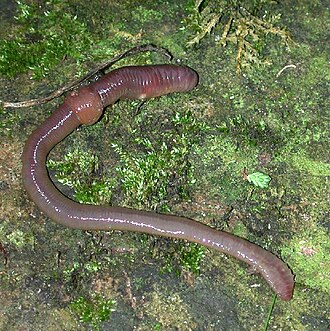
图:Michael Linnenbach · CC BY-SA 3.0 · Wikimedia Commons
- 学名
- Oligochaeta
- 分类等级
- 纲
- 上级类群
- 环节动物门
- 大类
- 其他动物
- 中文别名
- 寡毛菊属
- 数据库
- NCBI 分类 · GBIF
下级类群(2)
百科正文
分类
- 过去,人们依据雄性生殖孔在精巢体节隔膜的位置,分为三个目:
- 近孔目
- 前孔目
- 后孔目
- 近年来,有学者根据生殖腺、环带及刚毛等结构将寡毛类分为以下三目:
- 带丝蚓目(Lumbriculida)
- 颤蚓目(Tubificida)
- 颤蚓亚目(Tubificina) - 颤蚓、水丝蚓、仙女虫、尾盘虫
- 线蚓亚目(Enchytraeina) - 白丝蚓
- 单向蚓目(Haplotaxida)
- 单向蚓亚目(Haplotaxina) - 单向蚓
链胃蚓亚目(Moniligastrina) - 链胃蚓、杜拉蚓(Drawida)
正蚓亚目(Lumbricina) - 正蚓、爱胜蚓、异唇蚓
以上内容摘自维基百科「寡毛类」,按 CC BY-SA 4.0 使用,去掉了参考文献、外部链接等尾部小节,公式改写成了纯文本。全文、配图和出处见原文。
英文维基百科补充中文条目比较短,下面是英文条目「Oligochaeta」的原文
Oligochaeta is a subclass of soft-bodied animals in the phylum Annelida, which is made up of many types of aquatic and terrestrial worms, including all of the various earthworms. Specifically, oligochaetes comprise the terrestrial megadrile earthworms (some of which are semiaquatic or fully aquatic), and freshwater or semiterrestrial microdrile forms, including the tubificids, pot worms and ice worms (Enchytraeidae), blackworms (Lumbriculidae) and several interstitial marine worms.
With around 10,000 known species, the Oligochaeta make up about half of the phylum Annelida. These worms usually have few setae (chaetae) or "bristles" on their outer body surfaces, and lack parapodia, unlike polychaeta.
Diversity
Oligochaetes are well-segmented worms and most have a spacious body cavity (coelom) used as a hydroskeleton. They range in length from less than 0.5 mm (0.02 in) up to 2 to 3 metres (6.6 to 9.8 ft) in the 'giant' species such as the giant Gippsland earthworm (Megascolides australis) and the Mekong worm (Amynthas mekongianus).
Terrestrial oligochaetes are commonly known as earthworms and burrow into the soil. The four main families with large numbers of species are Glossoscolecidae, Lumbricidae, Megascolecidae and Moniligastridae. Earthworms are found in all parts of the world except for deserts.
Anatomy
The first segment, or prostomium, of oligochaetes is usually a smooth lobe or cone without sensory organs, although it is sometimes extended to form a tentacle. The remaining segments have no appendages, but they do have a small number of bristles, or chaetae. These tend to be longer in aquatic forms than in the burrowing earthworms, and can have a variety of shapes.
Each segment has four bundles of chaetae, with two on the underside, and the others on the sides. The bundles can contain one to 25 chaetae, and include muscles to pull them in and out of the body. This enables the worm to gain a grip on the soil or mud as it burrows into the substrate.
Distribution and habitat
Oligochaetes occur in every continent in the world occupying terrestrial, freshwater and marine habitats. Of the 1700 known aquatic species, about 600 are marine and 100 inhabit groundwater. Aquatic oligochaetes occur in most groups, with the Naididae being the most speciose.
Locomotion
Movement and burrowing of earthworms is performed by peristalsis, with the alternation of contraction and relaxation of the circular and longitudinal muscles. To move forward, the anterior portion of the worm is extended forward by the contraction of the circular muscles, while the portion just behind this is made shorter and fatter by the contraction of longitudinal muscles. Next the anterior circular muscles relax, and a wave of circular contraction moves posteriorly along the worm. At the same time, the cheatae expand to grip the ground as the body shortens and are retracted as it lengthens.
Reproduction
Whereas in general, polychaetes are marine and have separate sexes, external sperm transfer and external fertilisation, oligochaetes live on land or in fresh water, are hermaphrodites, have no external sperm transfer and fertilisation takes place in the clitellum or cocoon. However there are exceptions to this, with some polychaetes inhabiting non-marine environments and a few species of oligochaetes being marine. Development of the offspring also differs between the two subclasses.
Evolution and taxonomy
With their soft bodies, earthworms do not fossilize well, though they may form trace fossils. The name Protoscolex was given to a genus of segmented worms without bristles found in the Upper Ordovician of Kentucky, United States. Another species placed in the same genus was found in Herefordshire, England, but it is unclear whether these worms are in fact oligochaetes. Stephenson postulated in 1930 that the common ancestor of oligochaetes came from the primitive aquatic family Lumbriculidae. The more advanced families such as Glossoscolecidae, Hormogastridae, Lumbricidae and Microchaetidae may have evolved later than the other families.
以上节选摘自英文维基百科「Oligochaeta」,按 CC BY-SA 4.0 使用,去掉了参考文献、外部链接等尾部小节,公式改写成了纯文本。篇幅所限,较长的小节只摘了开头一部分,有的小节没有收;全文、配图和出处见原文。