格物
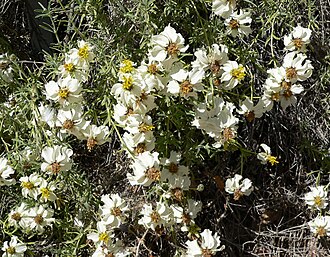
图:Stan Shebs · CC BY-SA 3.0 · Wikimedia Commons
- 学名
- Zinnia
- 分类等级
- 属
- 上级类群
- 向日葵族
- 大类
- 被子植物
- 命名
- 卡尔·林奈
- 数据库
- NCBI 分类 · GBIF
下级类群(1)
- 百日草 Zinnia elegans 种
百科正文
物种
- 本属包括以下物种:
- 小百日草 Zinnia angustifolia
- 小百日菊 Zinnia baageana
- 大花百日菊 Zinnia grandiflora
- 百日菊 Zinnia elegans
- 多花百日菊 Zinnia peruviana
- 鱼尾菊 Zinnia violacea
以上内容摘自维基百科「百日菊属」,按 CC BY-SA 4.0 使用,去掉了参考文献、外部链接等尾部小节,公式改写成了纯文本。全文、配图和出处见原文。
英文维基百科补充中文条目比较短,下面是英文条目「Zinnia」的原文
Zinnia is a genus of plants of the tribe Heliantheae within the family Asteraceae. Members of the genus are notable for their solitary long-stemmed 12-petal flowers that come in a variety of bright colors. The genus name honors 18th-century German scientist Johann Gottfried Zinn.
The genus is native to scrub and dry grassland in an area stretching from the Southwestern United States to South America, with a centre of diversity in Mexico.
Description
Zinnias are annuals, shrubs, and sub-shrubs native primarily to North America, with a few species in South America. Most species have upright stems but some have a lax habit with spreading stems that mound over the surface of the ground. They typically range in height from 10 to 100 cm tall (4" to 40"). The leaves are opposite and usually stalkless (sessile), with a shape ranging from linear to ovate, and a color ranging from pale to medium green. Zinnia's composite flowers consist of ray florets that surround disk florets, which may be a different color than the ray florets and mature from the periphery inward. The flowers have a range of appearances, from a single row of petals to a dome shape. Zinnias may be white, chartreuse, yellow, orange, red, purple, or lilac.
Etymology
The genus name honors the German scientist Johann Gottfried Zinn (1727–1759), who collected Z. elegans seeds in Mexico.
Cultivation
Zinnias are easy to grow with potential heavy, brightly colored blooms. Their petals can take different forms as single row with a visible center (single-flowered zinnia), numerous rows with a center that is not visible (double-flowered) and petals that are somewhere in-between with numerous rows but visible centers (semi-double-flowered zinnia). Their flowers can also take several shapes.
Zinnias are an annual plant usually grown in situ from seed. They dislike being transplanted due to having a fragile root system, but can be started indoors 4-6 weeks before planting and moved before their roots fully develop. Much like daisies, zinnias prefer to have full sunlight and adequate water. In the preferred conditions they will grow quickly but are sensitive to frost and therefore will die after the first frost of autumn.
Species
Accepted species
Zinnia acerosa (syn. pumila) – Arizona, New Mexico, Texas, and Utah in the United States; Coahuila, Durango, Michoacán, Nuevo León, San Luis Potosí, Sonora, and Zacatecas in Mexico.
Zinnia americana – Chiapas, Guerrero, Honduras, Jalisco, Michoacán, México State, Nayarit, Nicaragua, Oaxaca, and Veracruz.
Zinnia angustifolia – Chihuahua, Durango, Jalisco, San Luis Potosí, and Sinaloa.
Zinnia anomala – Texas; Coahuila, and Nuevo León.
Zinnia bicolor – Chihuahua, Durango, Guanajuato, Jalisco, Nayarit, and Sinaloa.
Zinnia citrea – Chihuahua, Coahuila, and San Luis Potosí.
Zinnia coahuilana – Coahuila.
Zinnia elegans – from Jalisco to Paraguay; naturalized in parts of United States.
Zinnia flavicoma – Guerrero, Jalisco, Michoacán, and Oaxaca.
Uses
Zinnias are popular garden flowers because they come in a wide range of flower colors and shapes, and they can withstand hot summer temperatures and are easy to grow from seeds. They bloom all summer long. They are grown in fertile, humus-rich, and well-drained soil, in an area with full sun. They will reseed themselves each year. Over 100 cultivars have been produced since selective breeding started in the 19th century.
Zinnia peruviana was introduced to Europe in the early 1700s. Around 1790 Z. elegans (Zinnia violacea) was introduced. Those plants had a single row of ray florets, which were violet. In 1829, scarlet flowering plants were available under the name "Coccinea". Double flowering types were available in 1858, coming from India, and they were in a range of colors, including shades of reds, rose, purple, orange, buff, and rose striped.
Cultivation in microgravity
Zinnias were the first plants grown as part of a formal NASA experiment using the Veggie plant-growth system aboard the International Space Station, helping researchers study how more complex flowering crops could be cultivated in microgravity.
Companion plants
In the Americas their ability to attract hummingbirds is also seen as useful as a defense against whiteflies, and therefore zinnias are a desirable companion plant, benefiting plants that are inter-cropped with it.
以上节选摘自英文维基百科「Zinnia」,按 CC BY-SA 4.0 使用,去掉了参考文献、外部链接等尾部小节,公式改写成了纯文本。篇幅所限,较长的小节只摘了开头一部分,有的小节没有收;全文、配图和出处见原文。