 格物
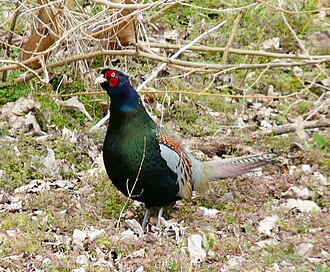
图:conifer · CC BY 2.0 · Wikimedia Commons
生命之树 › 真核生物 › 动物界 › 真后生动物亚界 › 两侧对称动物 › 后口动物总门 › 脊索动物门 › 脊椎动物亚门 › 有颌下门 › 肉鳍鱼总纲 › 四足形类 › 希望螈目 › 四足总纲 › 爬行动物 › 坚尾龙类 › 鸟纲 › 鸡形目 › Phasianoidea
雉科科
Phasianidae
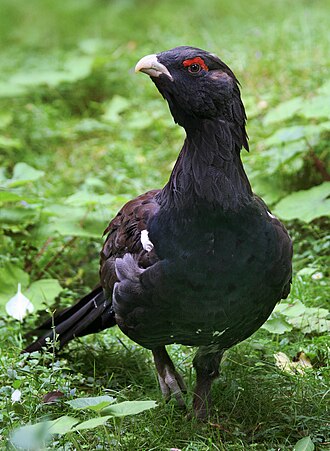
雉科 是鸟纲鸡形目下的一个科,包括原鸡、雉鸡、松鸡、榛鸡、竹鸡、旧大陆鹑、火鸡和孔雀等体躯粗壮、毛色艳丽的陆禽,现生共54个属185个物种。其中,红原鸡的被驯化亚种——家鸡是世界上最常见的禽畜,也是个体数量最多的单一鸟类物种;其余的雉科鸟类则通常是休闲狩猎喜欢针对的猎物。
摘自维基百科「雉」,CC BY-SA 4.0
- 学名
- Phasianidae
- 分类等级
- 科
- 上级类群
- Phasianoidea
- 大类
- 鸟类
- 命名
- 托马斯·霍斯菲尔德,1821 年
- 数据库
- NCBI 分类 · GBIF
下级类群(15)

百科正文
分类
- 吐绶鸡亚科 Meleagridinae
- 火鸡属 Meleagris
- 鹑亚科 Perdicinae
- 石鸡属 Alectoris
- 沙鹑属 Ammoperdix
- 雪山鹑属 Anurophasis
- 山鹧鸪属 Arborophila
- 竹鸡属 Bambusicola
- 红林鹧鸪属 Caloperdix
- 鹑属 Coturnix
- 鹧鸪属 Francolinus
- 彩鹧鸪属 Galloperdix
- 红头山鹑属 Haematortyx
- 雪鹑属 Lerwa
- 马岛鹑属 Margaroperdix
- 黑鹑属 Melanoperdix
- 高山鹑属 Ophrysia
- 丛林鹑属 Perdicula
- 山鹑属 Perdix
- 石鹑属 Ptilopachus
- 长嘴山鹑属 Rhizothera
- 冕鹧鸪属 Rollulus
- 雪鸡属 Tetraogallus
- 雉鹑属 Tetraophasis
- 林鹧鸪属 Xenoperdix
- 雉亚科 Phasianinae
- 非洲孔雀属 Afropavo
- 青鸾属 Argusianus
- 彩雉属 Catreus
- 锦鸡属 Chrysolophus
- 马鸡属 Crossoptilon
- 原鸡属 Gallus
- 血雉属 Ithaginis
- 虹雉属 Lophophorus
- 鹇属 Lophura
- 孔雀属 Pavo
- 雉属 Phasianus
- 灰孔雀雉属 Polyplectron
- 勺鸡属 Pucrasia
- 冠鸾属 Rheinardia
- 长尾雉属 Syrmaticus
- 角雉属Tragopan
- †山西雉属 Shanxiornis
以上内容摘自维基百科「雉」,按 CC BY-SA 4.0 使用,去掉了参考文献、外部链接等尾部小节,公式改写成了纯文本。全文、配图和出处见原文。
英文维基百科补充中文条目比较短,下面是英文条目「Phasianidae」的原文
Phasianidae is a family of heavy-bodied, ground-living birds that includes junglefowls, pheasants, grouse, partridges, turkeys, Old World quail and peafowl, with 185 extant species divided into 54 genera. It was formerly broken up into two subfamilies, the Phasianinae and the Perdicinae, but this arrangement is now known to be paraphyletic and polyphyletic, respectively, and more recent evidence supports breaking it up into two subfamilies: Rollulinae and Phasianinae, with the latter containing two clades with multiple tribes. The New World quail (Odontophoridae) and guineafowl (Numididae) were formerly included in this family, but are now typically placed in families of their own; conversely, grouse and turkeys, formerly often treated as distinct families (Tetraonidae and Meleagrididae, respectively), are now known to be deeply nested within Phasianidae, so they are now included in the present family.
Phasianids include many of the most popular upland game birds. Domesticated red junglefowl (Gallus gallus domesticus) — commonly known as the chicken — is the most widespread poultry and the most abundant bird subspecies in the world, with global population exceeding 26.5 billion under husbandry by humans as of 2023.
Description
Phasianids are terrestrial. They range in weight from 43 g (1.5 oz) in the case of the king quail to 6 kg (13 lb) in the case of the Indian peafowl. If turkeys are included, rather than classified as a separate family, then the considerably heavier wild turkey capably reaches a maximum weight of more than 17 kg (37 lb). Length in this taxonomic family can vary from 12.5 cm (4.9 in) in the king quail up to 300 cm (120 in) (including the elongated train) in green peafowl, thus they beat even the true parrots in length diversity within a family of birds. Generally, sexual dimorphism is greater in larger-sized birds, with males tending to be larger than females.
Distribution and habitat
The Phasianidae are mostly an Old World family, with a distribution that includes most of Europe and Asia (except the far north), all of Africa except the driest deserts, and south into much of eastern Australia and (formerly) New Zealand. The Meleagridini (turkeys) are native to the New World, while the Tetraonini (grouse) are circumpolar; both of these are members of Phasianinae. The greatest diversity of species is in Southeast Asia and Africa. The Congo peacock is specific to the African Congo.
Behaviour and ecology
The phasianids have a varied omnivorous diet, with foods consumed ranging from purely herbivorous selections of seeds, nuts, stems, leaves, shoots, flowers, fruits, bulbs, tubers, and roots, to carnivory including insects, larvae, slugs, spiders, reptiles, and even small mammals. Most species specialize either in feeding on plant matter or predating on tiny vertebrates, although the chicks of most species are insectivorous, preying on small invertebrates.
In addition to the variation in diet, a considerable amount of variation exists in breeding strategies among the Phasianidae.
Relationship with humans
The red junglefowl of Southeast Asia is the wild ancestor of the domesticated chicken, the most important bird in agriculture, and the wild turkey similarly is the ancestor of the domestic turkey. Several species of pheasants and partridges are extremely important to humans. Ring-necked pheasants, several partridge and quail species, and some francolins have been widely introduced and managed as game birds for hunting. Several species are threatened by human activities.
Systematics and evolution
The clade Phasianidae is the largest of the branch Galliformes, comprising 185 species divided into 54 genera. This group includes the pheasants and partridges, junglefowl chickens, quail, and peafowl. Turkeys and grouse have also been recognized as having their origins in the pheasant- and partridge-like birds.
The family name comes from the genus Phasianus, its name comes from the Latin name for "pheasant" deriving from Ancient Greek φἀσιἀνος phāsiānos, meaning "(bird) of the Phasis", Phasis was the old name for the Rioni flowing downstream the east Colchian coast of the Black Sea (now western Georgia), where Argonauts set foot on its banks and found such birds there.
以上节选摘自英文维基百科「Phasianidae」,按 CC BY-SA 4.0 使用,去掉了参考文献、外部链接等尾部小节,公式改写成了纯文本。篇幅所限,较长的小节只摘了开头一部分,有的小节没有收;全文、配图和出处见原文。