格物
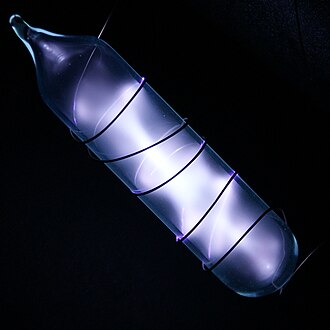
图:en:User:Jurii (Transfered by Lanthanum-138/Original uploaded… · CC BY 3.0 · Wikimedia Commons
- 类型
- 稳定同位素、氢的同位素
- 发现 / 发明时间
- 1931 年
- 发现者 / 提出者
- 哈罗德·克莱顿·尤里
- 属于
- 第1周期元素
- 学科
- 物理学
- 上级概念
- 氢、玻色子、单质
- 前一项
- 氕
- 后一项
- 氚
相关科学家
百科正文
氘氢比目前仍是天文学与气候学中重要的研究课题。
简介
氘是氢的非放射性同位素,符号是 (公式略)。自然界的氢气中含极小量的氘,约0.016%,但它同时也是太阳进行核聚变的原料。
性质
常温常压下为无色无味的气体。
历史
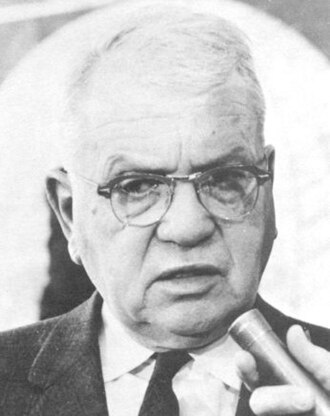
1931年底,美国科学家哈罗德·尤里在蒸发了大量液体氢之后,利用光谱检测的方法发现了重氢。尤里因此在1934年获得诺贝尔化学奖。
根据尤里的提议,重氢被命名为Deuterium。这个单词来自deúteros,在希腊语中是“第二”的意思。
反氘
氘的对应反物质是反氘,其原子核拥有一颗反质子及反中子,反氘核于1965年最先由欧洲核子研究委员会及美国布鲁克黑文国家实验室制成,但至今仍未曾成功制造到一颗拥有正电子的完整反氘原子。
制备
用重水电解。
由液氢低温蒸镥。
以上内容摘自维基百科「氘」,按 CC BY-SA 4.0 使用,去掉了参考文献、外部链接等尾部小节,公式改写成了纯文本。全文、配图和出处见原文。
英文维基百科补充中文条目比较短,下面是英文条目「Deuterium」的原文
Deuterium (hydrogen-2, symbol 2H or D, also known as heavy hydrogen) is one of two stable isotopes of hydrogen; the other is protium, or hydrogen-1, 1H. The deuterium nucleus (deuteron) contains one proton and one neutron, whereas the far more common 1H has no neutrons.
The name deuterium comes from Greek deuteros, meaning "second". American chemist Harold Urey discovered deuterium in 1931. Urey and others produced samples of heavy water in which the 2H had been highly concentrated. The discovery of deuterium won Urey a Nobel Prize in 1934.
Nearly all deuterium found in nature was synthesized in the Big Bang 13.8 billion years ago, forming the primordial ratio of 2H to 1H (~26 deuterium nuclei per 106 hydrogen nuclei). Deuterium is subsequently produced by the slow stellar proton–proton chain, but rapidly destroyed by exothermic fusion reactions. The deuterium–deuterium reaction has the second-lowest energy threshold, and is the most astrophysically accessible, occurring in both stars and brown dwarfs.
The gas giant planets display the primordial ratio of deuterium. Comets show an elevated ratio similar to Earth's oceans (156 deuterium nuclei per 106 hydrogen nuclei). This reinforces theories that much of Earth's ocean water is of cometary origin. The deuterium ratio of comet 67P/Churyumov–Gerasimenko, as measured by the Rosetta space probe, is about three times that of Earth water. This figure is the highest yet measured in a comet, thus deuterium ratios continue to be an active topic of research in both astronomy and climatology.
Deuterium is used in most nuclear weapons, many fusion power experiments, and as the most effective neutron moderator, primarily in heavy water nuclear reactors. It is also used as an isotopic label, in biogeochemistry, NMR spectroscopy, and deuterated drugs.
Differences from common hydrogen (protium)
Chemical symbol
Deuterium is often represented by the chemical symbol D. Since it is an isotope of hydrogen with mass number 2, it is also represented by 2H. IUPAC allows both D and 2H, though 2H is preferred. A distinct chemical symbol is used for convenience because of the isotope's common use in various scientific processes. Also, its large mass difference with protium (1H) confers non-negligible chemical differences with 1H compounds.
Properties
Data for molecular deuterium
Formula: D2 or 21H2
Density: 0.180 kg/m3 at STP (0 °C, 101325 Pa).
Atomic weight: 2.0141017926 Da.
Mean abundance in ocean water (from VSMOW) 155.76 ± 0.1 atoms of deuterium per million atoms of all isotopes of hydrogen (about 1 atom of in 6420); that is, about 0.015% of all atoms of hydrogen (any isotope)
- Data at about 18 K for 2H2 (triple point):
- Density:
- Liquid: 162.4 kg/m3
- Gas: 0.452 kg/m3
- Liquefied 2H2O: 1105.2 kg/m3 at STP
- Viscosity: 12.6 μPa·s at 300 K (gas phase)
- Specific heat capacity at constant pressure cp:
- Solid: 2950 J/(kg·K)
- Gas: 5200 J/(kg·K)
Applications
Nuclear reactors
Deuterium is used in heavy water moderated fission reactors, usually as liquid 2H2O, to slow neutrons without the high neutron absorption of ordinary hydrogen. This is a common commercial use for larger amounts of deuterium.
In research reactors, liquid 2H2 is used in cold sources to moderate neutrons to very low energies and wavelengths appropriate for scattering experiments.
History
Before the search
The earliest mention of some matter with the properties of deuterium was a passing mention in Ernest Rutherford's 1919 Bakerian lecture.
In this theory, the deuterium nucleus with mass two and charge one would contain two protons and one nuclear electron.
Also in 1919, Otto Stern and Max Volmer reported on diffusion experiments with water which they claimed disproved the existence of isotopes of hydrogen; their conclusions were assumed to be correct throughout the 1920s.
Antideuterium and the antideuteron
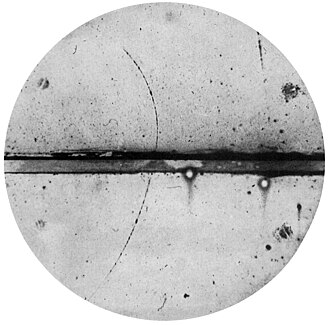
An antideuteron is the antimatter counterpart of the deuteron, consisting of an antiproton and an antineutron. The antideuteron was first produced in 1965 at the Proton Synchrotron at CERN and the Alternating Gradient Synchrotron at Brookhaven National Laboratory. A complete atom, with a positron orbiting the nucleus, would be called antideuterium, but as of 2019 antideuterium has not yet been created. The symbol used for antideuterium is D, that is, D with an overbar.
以上节选摘自英文维基百科「Deuterium」,按 CC BY-SA 4.0 使用,去掉了参考文献、外部链接等尾部小节,公式改写成了纯文本。篇幅所限,较长的小节只摘了开头一部分,有的小节没有收;全文、配图和出处见原文。