格物
- 类型
- 科学理论
- 命名来源
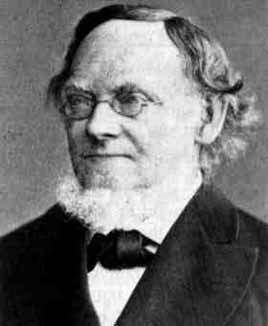
- 赫尔曼·格拉斯曼
- 学科
- 物理学
相关科学家
百科正文
叙述
若两单色光组合成一测试色光,则观测者感知到的三原色数值为两单色光分别被单独观测的三原色数值之和。换句话说,如果光束一及光束二为单色光,而 (R₁,G₁,B₁) 与 (R₂,G₂,B₂) 分别为观测者对光束一及光束二的感知三原色数值,当此二光束合并时,观测者感知的三原色数值为 (R,G,B),其中: R=R₁+R₂
G=G₁+G₂
B=B₁+B₂
更一般的来说,格拉斯曼定律说明了任一光束的三原色坐标为 R=∫ ₀^(∞)I(λ) r(λ) dλ
G=∫ ₀^(∞)I(λ) g(λ) dλ
B=∫ ₀^(∞)I(λ) b(λ) dλ
I(λ) 为该光束对波长的强度分布; r(λ), g(λ), b(λ) 则分别为人眼中三种锥状细胞对不同波长的反应强度。
以上内容摘自维基百科「格拉斯曼定律 (色彩)」,按 CC BY-SA 4.0 使用,去掉了参考文献、外部链接等尾部小节,公式改写成了纯文本。全文、配图和出处见原文。
英文维基百科补充中文条目比较短,下面是英文条目「Grassmann's laws (color science)」的原文
Grassmann's laws describe empirical results about how the perception of mixtures of colored lights (i.e., lights that co-stimulate the same area on the retina) composed of different spectral power distributions can be algebraically related to one another in a color matching context. Discovered by Hermann Grassmann these "laws" are actually principles used to predict color match responses to a good approximation under photopic and mesopic vision. A number of studies have examined how and why they provide poor predictions under specific conditions.
The original laws
Grassmann's original laws were set out in his 1853 paper "Zur Theorie der Farbenmischung". The translations here are from 1854.
Every impression of colour of this kind may be analysed into three mathematically determinable elements,--the tint, the intensity of the colour, and the intensity of the intermixed white.
If one of two mingling lights be continuously altered (whilst the other remains unchanged), the impression of the mixed light also is continuously changed.
Two colours, each of which has a constant tint and a constant intensity of the intermixed white, also give constant mixed colours, no matter of what homogeneous colours they may be composed.
The total intensity of the mixture is the sum of the intensities of the lights mixed.
Modern interpretation
The four laws are described in modern texts with varying degrees of algebraic notation and are summarized as follows (the precise numbering and corollary definitions can vary across sources):
First law
Two colored lights appear different if they differ in either dominant wavelength, luminance or purity. Corollary: For every colored light there exists a light with a complementary color such that a mixture of both lights either desaturates the more intense component or gives uncolored (grey/white) light.
Second law
The appearance of a mixture of light made from two components changes if either component changes. Corollary: A mixture of two colored lights that are non-complementary result in a mixture that varies in hue with relative intensities of each light and in saturation according to the distance between the hues of each light.
Third law
There are lights with different spectral power distributions but appear identical. First corollary: such identical appearing lights must have identical effects when added to a mixture of light. Second corollary: such identical appearing lights must have identical effects when subtracted (i.e., filtered) from a mixture of light.
Fourth law
The intensity of a mixture of lights is the sum of the intensities of the components. This is also known as Abney's law.
These laws entail an algebraic representation of colored light. Assuming beam 1 and 2 each have a color, and the observer chooses (R₁,G₁,B₁) as the strengths of the primaries that match beam 1 and (R₂,G₂,B₂) as the strengths of the primaries that match beam 2, then if the two beams were combined, the matching values will be the sums of the components. Precisely, they will be (R,G,B), where (公式略)
Grassmann's laws can be expressed in general form by stating that for a given color with a spectral power distribution I(λ) the RGB coordinates are given by (公式略)
Observe that these are linear in I; the functions r(λ),g(λ),b(λ) are the color-matching functions with respect to the chosen primaries.
以上内容摘自英文维基百科「Grassmann's laws (color science)」,按 CC BY-SA 4.0 使用,去掉了参考文献、外部链接等尾部小节,公式改写成了纯文本。全文、配图和出处见原文。