格物
- 类型
- 物理现象
- 发现 / 发明时间
- 1913 年
- 发现者 / 提出者
- 约翰内斯·斯塔克、安东尼诺·洛苏尔多
- 命名来源
- 约翰内斯·斯塔克、安东尼诺·洛苏尔多
- 学科
- 物理学
相关科学家
百科正文
斯塔克效应对应于带电粒子谱线的压力增宽(斯塔克增宽)。当谱线的分裂或位移在吸收线发生时则称为逆斯塔克效应(Inverse Stark effect)。
由电场造成的斯塔克效应与由磁场造成谱线分裂成数个部分的塞曼效应相似。
斯塔克效应可使用全量子力学的方式解释,但也有许多基于半经典物理的方式。
以上内容摘自维基百科「斯塔克效应」,按 CC BY-SA 4.0 使用,去掉了参考文献、外部链接等尾部小节,公式改写成了纯文本。全文、配图和出处见原文。
英文维基百科补充中文条目比较短,下面是英文条目「Stark effect」的原文
The Stark effect is the shifting and splitting of spectral lines of atoms and molecules due to the presence of an external electric field. It is the electric-field analogue of the Zeeman effect, where a spectral line is split into several components due to the presence of the magnetic field. Although initially coined for the static case, it is also used in the wider context to describe the effect of time-dependent electric fields. In particular, the Stark effect is responsible for the pressure broadening (Stark broadening) of spectral lines by charged particles in plasmas. For most spectral lines, the Stark effect is either linear (proportional to the applied electric field) or quadratic with a high accuracy.
The Stark effect can be observed both for emission and absorption lines. The latter was sometimes called the inverse Stark effect, but this term is no longer used in the modern literature.
History
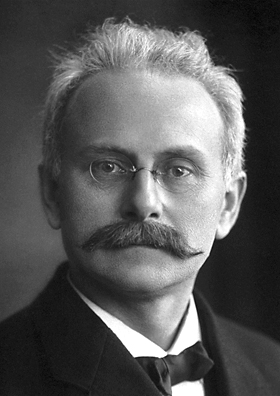
The effect is named after the German physicist Johannes Stark, who discovered it in 1913. It was independently discovered in the same year by the Italian physicist Antonino Lo Surdo, and in Italy, the effect is named Stark–Lo Surdo. The discovery of this effect contributed significantly to the development of quantum theory, and Stark was awarded the Nobel Prize in Physics in 1919.
Inspired by the magnetic Zeeman effect, and especially by Hendrik Lorentz's explanation of it, Woldemar Voigt performed classical mechanical calculations of quasi-elastically bound electrons in an electric field. Using experimental indices of refraction, he estimated the expected effect. This estimate was a few orders of magnitude too low. Not deterred by this prediction, Stark undertook measurements on excited states of the hydrogen atom and succeeded in observing splittings.
By the use of the Bohr–Sommerfeld ("old") quantum theory, Paul Epstein and Karl Schwarzschild were independently able to derive equations for the linear and quadratic Stark effect in hydrogen. Four years later, Hendrik Kramers derived formulas for intensities of spectral transitions. Kramers also included the effect of fine structure, with corrections for relativistic kinetic energy and coupling between electron spin and orbital motion. The first quantum mechanical treatment (in the framework of Werner Heisenberg's matrix mechanics) was by Wolfgang Pauli.
Mechanism
Overview
Imagine an atom with occupied 2s and 2p electron states. In the Bohr model, these states are degenerate. However, in the presence of an external electric field, these electron orbitals will hybridize into eigenstates of the perturbed Hamiltonian (where each perturbed hybrid state can be written as a superposition of unperturbed states). Since the 2s and 2p states have opposite parity, these hybrid states will lack inversion symmetry and will possess a time-averaged electric dipole moment. If this dipole moment is aligned with the electric field, the energy of the state will shift down; if this dipole moment is anti-aligned with the electric field, the energy of the state will shift up. Thus, the Stark effect causes a splitting of the original degeneracy.
Other things being equal, the effect of the electric field is greater for outer electron shells because the electron is more distant from the nucleus, resulting in a larger electric dipole moment upon hybridization.
Multipole expansion
The Stark effect originates from the interaction between a charge distribution (atom or molecule) and an external electric field.
The interaction energy V_(int) of a continuous charge distribution ρ (r), confined within a finite volume V, with an external electrostatic potential φ (r) V_(int)=∫ _(V)φ (r)ρ (r) d ³r
This expression is valid classically and quantum-mechanically alike.
If the potential varies weakly over the charge distribution, the multipole expansion converges fast, so only a few first terms give an accurate approximation. Namely, keeping only the zeroth- and first-order terms, φ (r)≈ φ (0)-∑ ᵢ₌₁³Fᵢ rᵢ
Applications
The Stark effect is at the basis of the spectral shift measured for voltage-sensitive dyes used for imaging of the firing activity of neurons.
The Stark effect is used to slow down and manipulate molecular beams.
以上节选摘自英文维基百科「Stark effect」,按 CC BY-SA 4.0 使用,去掉了参考文献、外部链接等尾部小节,公式改写成了纯文本。篇幅所限,较长的小节只摘了开头一部分,有的小节没有收;全文、配图和出处见原文。