格物
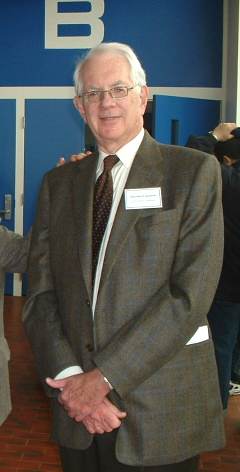
赫伯特·瓦格纳1935—
Herbert Wagner
German physicist
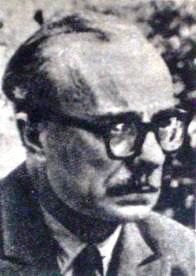
赫伯特·瓦格纳,德国理论物理学家,主要研究领域为统计力学。他是慕尼黑大学的荣誉退休教授。
摘自维基百科「赫伯特·瓦格纳」,CC BY-SA 4.0
- 出生
- 1935 年 4 月 6 日
- 国籍
- 德国
- 学科
- 物理学、博物与综合
- 职业
- 物理学家、大学教师、理论物理学家
- 母语 / 工作语言
- 德语
- 母校
- 慕尼黑工业大学
- 工作单位
- 慕尼黑大学
师承
博士导师1
博士生3
来自 Wikidata 的「博士导师」「师从」「博士生」「学生」记录,可能不全。
所获奖项(2)
- 1992honorary doctor of the University of Duisburg-Essen
- 2016马克斯·普朗克奖章
百科正文
英文维基百科补充中文条目比较短,下面是英文条目「Herbert Wagner (physicist)」的原文
Herbert Wagner (born 6 April 1935) is a German theoretical physicist, who mainly works in statistical mechanics. He is a professor emeritus of LMU Munich.
Biography
Wagner was one of the last students of German theoretical physicist and Nobel Prize winner Werner Heisenberg, with whom he worked on magnetism.
As a postdoc at Cornell University, he and David Mermin (and independently of Pierre Hohenberg) proved a "no-go theorem", otherwise known as the Mermin–Wagner theorem. The theorem states that continuous symmetries cannot be spontaneously broken at finite temperature in systems with sufficiently short-range interactions in dimensions d≤ 2.
Wagner is the academic father of a generation of statistical physicists. Many of his students and junior collaborators now occupy chairs in German universities, including
- Hans Werner Diehl (Essen),
- Siegfried Dietrich (Wuppertal, then Max-Planck-Institut für Metallforschung Stuttgart),
- Gerhard Gompper (Forschungszentrum Jülich),
- Reinhard Lipowsky (Max Planck Institute of Colloids and Interfaces, Berlin),
- Hartmut Löwen (Düsseldorf),
- Klaus Mecke (Erlangen),
and Udo Seifert (Stuttgart).
Awards
In 1992, Wagner was awarded an honorary degree by the University of Essen (now University of Duisburg-Essen). In 2016 he received the Max Planck Medal for his fundamental works on the statistical physics of low-dimensional systems.
以上内容摘自英文维基百科「Herbert Wagner (physicist)」,按 CC BY-SA 4.0 使用,去掉了参考文献、外部链接等尾部小节,公式改写成了纯文本。全文、配图和出处见原文。
同一学科、同时代的科学家




同一学科的科学家
更多 ›