格物
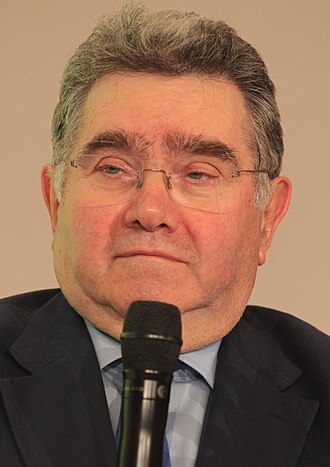
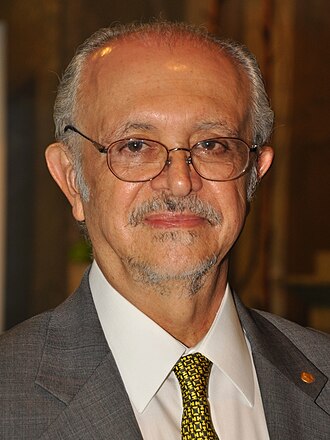
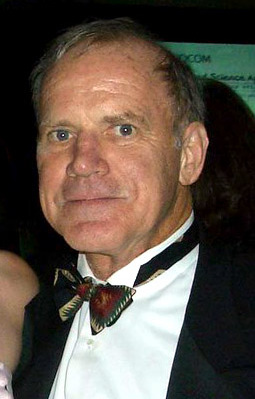
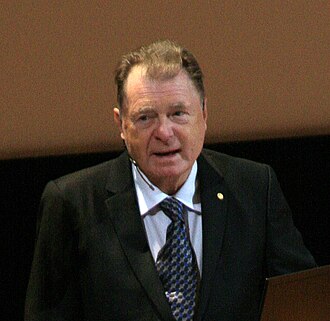
图:fondapol · CC BY-SA 2.0 · Wikimedia Commons
- 出生
- 1937 年 3 月 31 日,巴黎十三区
- 逝世
- 2025 年 1 月 4 日,巴黎十二区
- 国籍
- 法国
- 学科
- 化学、地球科学
- 职业
- 政治人物、地质学家、地球化学家
- 母语 / 工作语言
- 法语、英语
- 母校
- 查理曼高中、圣路易中学、巴黎科学学院(哲学博士,1967 年)
- 工作单位
- 快报、巴黎第七大学(1970—1976)、法国国家科学研究中心、巴黎地球物理研究所(1976—1986)
研究领域
师承
博士导师1
博士生5
来自 Wikidata 的「博士导师」「师从」「博士生」「学生」记录,可能不全。
所获奖项(14)
- 1986V·M·戈耳斯密特奖
- 1986Crafoord Prize in Geosciences
- 1987沃拉斯顿奖章
- 1988Arthur L. Day Medal
- 1994CNRS金奖
- 1995威廉·鲍伊奖章
- 1995Arthur Holmes Medal
- 2002英国皇家学会外籍会员
- 2010grand prix de la Société de géographie
- 2011Grand Officer of the National Order of Merit
- —学术棕榈勋章司令级
- —荣誉军团司令
- —美国文理科学院院士
- —Commander of the Order of the Southern Cross
学会与院士
百科正文
奖项
- 美国国家科学院外国研究员(1985)
- 与杰拉尔德·J·瓦瑟堡同获克拉福德奖(1986)
- 美国艺术与科学研究院外国名誉会员(1987)
- 伦敦地质学会沃拉斯顿勋章,(1987年)
- 国家科研中心金奖,(1994)
- 法国科学院院士(1995)
- 威廉·鲍伊奖章(1995)
- 亚瑟·霍姆斯奖章(1995)
以上内容摘自维基百科「克洛德·阿莱格尔」,按 CC BY-SA 4.0 使用,去掉了参考文献、外部链接等尾部小节,公式改写成了纯文本。全文、配图和出处见原文。
英文维基百科补充中文条目比较短,下面是英文条目「Claude Allègre」的原文
Claude Jean Allègre (French: [klod alɛɡʁ]; 31 March 1937 – 4 January 2025) was a French politician and scientist. His work in the field of isotope geochemistry was recognised with the award of many senior medals, including the Crafoord Prize for geosciences in 1986 and the William Bowie Medal of the American Geophysical Union in 1995. His political service included a three-year term as Minister of Education in France, from 1997 to 2000.
Early life
Allègre was born in Paris on 31 March 1937, and was the eldest of four children. His father was a professor of natural sciences, and his mother was a school headteacher. Allègre's family was from the Hérault region of France.
Background and scientific work
Allègre's main area of research was in geochemistry. He started work in this field for his doctoral research, where he focussed on ways of dating rocks using isotope geochemistry; specifically radiometric dating. After realising that there was no laboratory in France where he could make measurements with the accuracy he was seeking, Allègre received a NATO grant and spent the summer of 1965 working at the California Institute of Technology in Pasadena, California. Here, Allègre began working with Jerry Wasserburg, and learned the techniques required for rubidium-strontium dating of rocks by mass spectrometry. Allègre returned to France, and over the next three years built a laboratory and began making isotopic measurements.
Scientific controversies
In 1976, Allègre and volcanologist Haroun Tazieff became involved in an intense and public quarrel about whether inhabitants should evacuate the areas surrounding the la Soufrière volcano on the Caribbean island of Guadeloupe, which had begun to show signs of unrest, including steam explosions. Allègre held that inhabitants should be evacuated, while Tazieff held that the Soufrière was harmless because all analyses pointed to a purely phreatic eruption with no sign of fresh magma. In part out of caution, the authorities decided to follow Allègre's advice and evacuate. The eruptive crisis did not result in any damage, but the evacuation had very significant negative consequences.
Political career
A one time member of the French Socialist Party, Allègre is better known to the general public for his political responsibilities, which included serving as Minister of Education of France in the Jospin cabinet from 4 June 1997 to March 2000, when he was replaced by Jack Lang. His outpourings of critiques against teaching personnel, as well as his reforms, made him increasingly unpopular in the teaching world. In 1996, Allegre published La Défaite de Platon ("The defeat of Plato"), described by mathematician Pierre Schapira in the Spring 1997 edition of Mathematical Intelligencer as "one of the most savage broadsides against conceptual thought."
Views on global warming
In an article in 2006 entitled "The Snows of Kilimanjaro" in L'Express, a French weekly, Allègre cited evidence that Antarctica's gaining ice and that Mount Kilimanjaro's retreating snow caps, among other global-warming concerns, might be due to natural causes. He said that "[t]he cause of this climate change is unknown". This represented a change of mind, since Allègre wrote in 1987 that "By burning fossil fuels, man increased the concentration of carbon dioxide in the atmosphere which, for example, has raised the global mean temperature by half a degree in the last century".
Later life and death
Allègre suffered a heart attack while at a scientific conference in Chile in 2013. He was hospitalised, but survived. He died in Paris on 4 January 2025, at the age of 87.
Awards and honors
- Foreign Associate of the National Academy of Sciences (1985)
- V. M. Goldschmidt Award, (1986)
- Crafoord Prize for geology along with Gerald J. Wasserburg, (1986)
- Foreign Honorary Member of the American Academy of Arts and Sciences, (1987)
- Wollaston Medal of the Geological Society of London, (1987)
- Member of the American Philosophical Society (1992)
- Gold Medal of the CNRS, (1994)
- French Academy of Sciences, (1995)
- William Bowie Medal, American Geophysical Union (1995)
- Arthur Holmes Medal, European Geosciences Union (1995)
- Honorary Doctorate, Université Libre de Bruxelles (1998)
- Foreign Member, Royal Society (2002)
- Atoms for Peace prize (2011)
National honours
Commander, Legion of Honour (2000)
Commander, Ordre des Palmes académiques (2000)
以上节选摘自英文维基百科「Claude Allègre」,按 CC BY-SA 4.0 使用,去掉了参考文献、外部链接等尾部小节,公式改写成了纯文本。篇幅所限,较长的小节只摘了开头一部分,有的小节没有收;全文、配图和出处见原文。