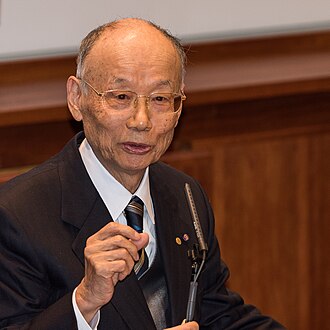
格物

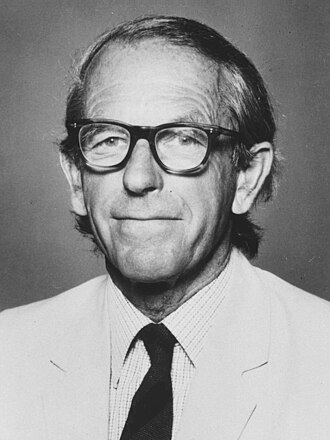
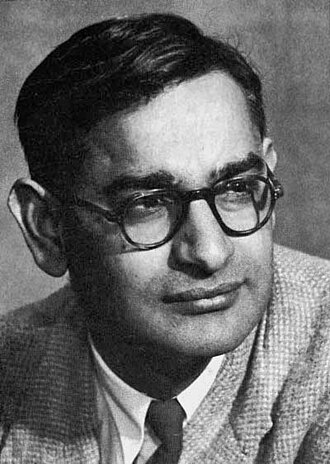
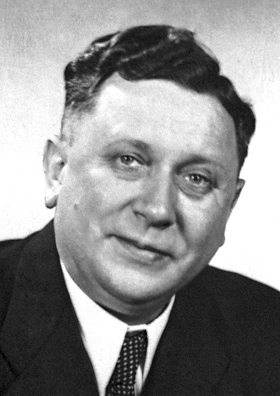
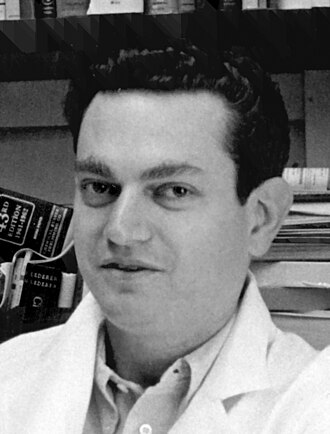
图:ENERGY.GOV · Public domain · Wikimedia Commons
亨利·陶布1915—2005
Henry Taube
化学家, 美国
亨利·陶布,加拿大化学家。他的研究兴趣是氧化还原反应,其中对金属配位化合物电子转移机理的研究更使得他获1983年诺贝尔化学奖。
摘自维基百科「亨利·陶布」,CC BY-SA 4.0
- 出生
- 1915 年 11 月 30 日,诺伊多夫 (加拿大)
- 逝世
- 2005 年 11 月 16 日,帕洛阿尔托
- 国籍
- 美国
- 学科
- 化学
- 职业
- 化学家、大学教师
- 母语 / 工作语言
- 英语
- 母校
- 萨斯喀彻温大学、加州大学伯克利分校(哲学博士,1940 年)、Luther College
- 工作单位
- 康奈尔大学、芝加哥大学、斯坦福大学
研究领域
师承
博士生1
来自 Wikidata 的「博士导师」「师从」「博士生」「学生」记录,可能不全。
所获奖项(20)
- 1949古根海姆学者奖
- 1955古根海姆学者奖
- 1955Glenn T. Seaborg Award for Nuclear Chemistry
- 1965Golden Plate Award
- 1971威拉德·吉布斯奖
- 1971威廉·H·尼克尔斯奖
- 1975Remsen Award
- 1976美国国家科学奖章
- 1979Centenary Prize
- 1980莱纳斯·鲍林奖
- 1981American Chemical Society Award in Inorganic Chemistry
- 1983诺贝尔化学奖
- 1983美国国家科学院化工科学奖
- 1983韦尔奇化学奖
- 1985普里斯特利奖章
- 1986Oesper Award
- 1988英国皇家学会外籍会员
- 1991澳大利亚科学院院士
- —National Order of Scientific Merit
- —加拿大皇家学会院士
学会与院士
百科正文
生平
父母源自德国,生于俄罗斯,后来迁到加拿大,因此他生于加拿大。父母均为农夫。童年时他就读单室学校,中学时,他对英国文学甚感兴趣,化学成绩虽然不错,但起初他对化学没特别大的热忱。当他在柏克莱加州大学修读时,他感受到那里的人对化学的热诚、勇于承认不足和诚恳向人学习的态度,这深深了感动了他。
以上内容摘自维基百科「亨利·陶布」,按 CC BY-SA 4.0 使用,去掉了参考文献、外部链接等尾部小节,公式改写成了纯文本。全文、配图和出处见原文。
英文维基百科补充中文条目比较短,下面是英文条目「Henry Taube」的原文
Henry Taube (November 30, 1915 – November 16, 2005) was a Canadian-born American chemist who was awarded the 1983 Nobel Prize in Chemistry for "his work in the mechanisms of electron-transfer reactions, especially in metal complexes." He was the second Canadian-born chemist to win the Nobel Prize, and remains the only Saskatchewanian-born Nobel laureate. Taube completed his undergraduate and master's degrees at the University of Saskatchewan, and his PhD from the University of California, Berkeley. After finishing graduate school, Taube worked at Cornell University, the University of Chicago and Stanford University.
In addition to the Nobel Prize, Taube also received many other major scientific awards, including the Priestley Medal in 1985 and two Guggenheim Fellowships early in his career (1949 and 1955), as well as numerous honorary doctorates. His research focused on redox reactions, transition metals and the use of isotopically labeled compounds to follow reactions. He had over 600 publications including one book, and had mentored over 200 students during his career. Taube and his wife Mary had three children; his son Karl is an anthropologist at the University of California Riverside.
Education
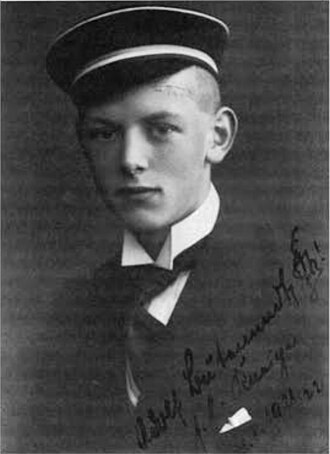
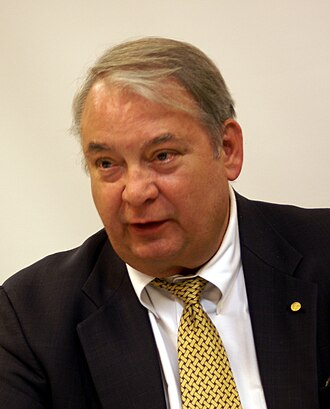
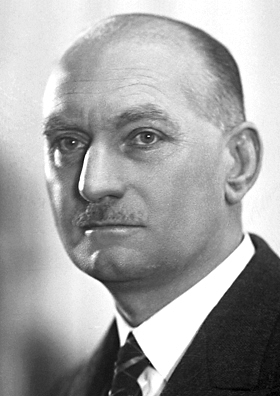
At 12, Taube left his hometown and moved to Regina to attend Luther College where he completed high school. After graduating, Taube stayed at Luther College and worked as laboratory assistant for Paul Liefeld, allowing him to take first year university classes. Taube attended the University of Saskatchewan, receiving his BSc in 1935 and his MSc in 1937. His thesis advisor at the University of Saskatchewan was John Spinks. While at the University of Saskatchewan, Taube studied with Gerhard Herzberg, who would be awarded the 1971 Nobel Prize in Chemistry. He moved to University of California, Berkeley, where he completed his PhD studies in 1940. His PhD mentor was William C. Bray. Taube's graduate research focused on the photodecomposition of chlorine dioxide and hydrogen peroxide in solution.
Research and academic career
Academic posts
After completing his education, Taube remained in the United States, becoming an instructor in chemistry at Berkeley until 1941. He initially wanted to return to Canada to work, but did not receive a response when he applied for jobs at the major Canadian universities. From Berkeley, he served as an instructor and assistant professor at Cornell University until 1946. During World War II, Taube served on the National Defense Research Committee. Taube spent time at the University of Chicago as an assistant professor, associate professor and as a full professor from 1946 to 1961. He served as chair of the chemistry department in Chicago from 1956 to 1959, but did not enjoy administrative work. After leaving Chicago, Taube worked as a professor at Stanford University until 1986, a position that allowed him to focus on research, while also teaching classes at the undergraduate and graduate levels. He became a Professor Emeritus at Stanford in 1986, but he continued to perform research until 2001, and visited his labs every day until his death in 2005. In addition to his academic duties, Taube also served as a consultant at Los Alamos National Laboratory from 1956 until the 1970s.
Personal life
Taube was born November 30, 1915, in Neudorf, Saskatchewan, as the youngest of four boys. His parents were ethnic Germans from Ukraine who had immigrated to Saskatchewan from Ukraine in 1911. Growing up, his first language was Low German. In the 18th century, Catherine the Great encouraged Central European farmers to settle in Russia. As the rights afforded to these settlers by Catherine were gradually diminished, many of the settlers headed to North America, with Saskatchewan offering good farmland, and other incentives for immigrants. Taube reflected fondly on his experiences growing up in Saskatchewan, noting: "Certainly, there is nothing about my first 21 years in Saskatchewan, taken in the context of those times that I would wish to be changed. The advantages that I enjoyed include: the marvelous experience of growing up on a farm, which taught me an appreciation of nature, and taught me also to discipline myself to get necessary jobs done..."
After completing his graduate studies, Taube became a naturalized citizen of the United States in 1942. Taube married his wife Mary in 1952. They had three children, Karl, Heinrich, and Linda. His stepdaughter Marianna died of cancer in 1998.
以上节选摘自英文维基百科「Henry Taube」,按 CC BY-SA 4.0 使用,去掉了参考文献、外部链接等尾部小节,公式改写成了纯文本。篇幅所限,较长的小节只摘了开头一部分,有的小节没有收;全文、配图和出处见原文。