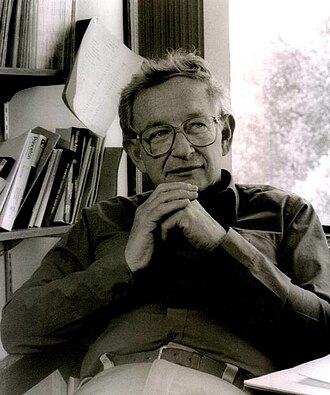
格物

图:作者不详 · Public domain · Wikimedia Commons
- 出生
- 1901 年 12 月 20 日,塔斯卡卢萨
- 逝世
- 1967 年 1 月 16 日,波士顿
- 国籍
- 美国
- 学科
- 物理学、博物与综合
- 职业
- 物理学家、大学教师
- 母校
- 阿拉巴马大学、普林斯顿大学、巴黎大学、牛津大学王后学院
- 工作单位
- 普林斯顿大学、麻省理工学院
研究领域
主要贡献
本站收录的发现与发明
师承
博士导师1
来自 Wikidata 的「博士导师」「师从」「博士生」「学生」记录,可能不全。
所获奖项(5)
- 1925罗德奖学金
- 1936埃利奥特·克雷森奖章
- 1947嘉宝勋章和奖金
- 1966博纳奖
- —美国物理学会会士
学会与院士
百科正文
生平
范德格拉夫在塔斯卡卢萨获得了学士与硕士学位。
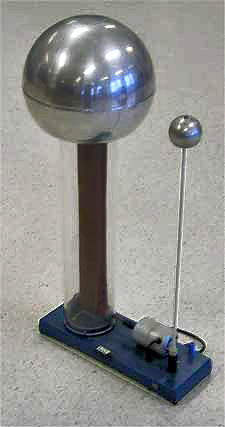
1929年,范德格拉夫在普林斯顿大学发明了第一台范德格拉夫起电机。1931年,他制作了一台更大的起电机,电压可达100万伏。
以上内容摘自维基百科「罗伯特·杰米森·范德格拉夫」,按 CC BY-SA 4.0 使用,去掉了参考文献、外部链接等尾部小节,公式改写成了纯文本。全文、配图和出处见原文。
英文维基百科补充中文条目比较短,下面是英文条目「Robert J. Van de Graaff」的原文
Robert Jemison Van de Graaff (December 20, 1901 – January 16, 1967) was an American physicist and inventor. He is best known for developing the Van de Graaff generator, a high-voltage electrostatic machine that became a fundamental tool in nuclear physics research.
Raised in Tuscaloosa, Alabama, Van de Graaff earned his DPhil degree at Oxford as a Rhodes Scholar. In Europe, lectures by Marie Curie and Ernest Rutherford encouraged him to develop methods for accelerating particles to nuclear energies. He built his first electrostatic generator at Princeton University in 1929 and demonstrated a 1.5-million-volt model in 1931, more than twice the highest direct current voltage previously achieved. After joining the Massachusetts Institute of Technology he constructed the 5-megavolt Round Hill generator. He collaborated with John G. Trump, his former student, on creating compact, gas-insulated machines, which became the first accelerators used in clinical medicine. During World War II, he directed development of high-voltage X-ray equipment for the U.S. Navy.
A high school football injury, aggravated by wartime overwork and later accidents, left Van de Graaff with chronic health problems in his later career. Nevertheless, in 1946 he joined Trump and Denis M. Robinson in organizing the High Voltage Engineering Corporation (HVEC), the first company to manufacture particle accelerators. As Chief Scientist, he guided development of commercial accelerators. In the 1950s, he invented the insulating-core transformer and was instrumental in commercializing HVEC's tandem accelerators. By 1967, more than 500 high-voltage Van de Graaff generators were operating worldwide, and HVEC had installed accelerators in hospitals and labs in 30 countries. He received the Tom W. Bonner Prize in 1966 for his contributions to electrostatic accelerator development.
Early life and education
Robert Jemison Van de Graaff was born on December 20, 1901, at the Jemison–Van de Graaff Mansion in Tuscaloosa, Alabama, the youngest of four sons of Minnie Cherokee (née Jemison) and Adrian Sebastian Van de Graaff. The family had deep roots in Alabama: his great-grandfather was Robert Jemison Jr., a slaveholder planter and former state senator, and his father, a circuit judge, had been a substitute on Yale's first 11-man football team. The elder Van de Graaff became a professor of law at the University of Alabama in 1891.
Career
Princeton (1929–1931)
In September 1929, Van de Graaff returned to the United States as a National Research Fellow at Princeton University, expressly to develop a high-voltage source. That fall, he built a rudimentary proof-of-concept from "a tin can, a silk ribbon, and a small motor, at no expense." This simple model could sustain 80 kV, limited by discharge from the can's edges. With encouragement from Karl Compton, head of the physics department, he developed this concept further.
On March 20, 1931, after a sleepless night and many preliminary drafts, Van de Graaff wrote to Compton outlining his vision for the scientific applications of his generator.
Inventions
Van de Graaff generator
Van de Graaff built his first working model at Princeton in 1929 using a tin can, a silk ribbon, and a small motor. The device produced 80 kV, limited by corona discharge from the edges of the can. In his search for suitable belt material, Van de Graaff visited local hat shops seeking pure silk; at one shop, he began "calmly setting fire to a sample to determine whether it was pure or 'loaded' with tin salts."
The generator works by using a motorized insulating belt to transport electrical charge to the interior of a hollow metal sphere; since charge resides on the outer surface, it accumulates to produce potentials far exceeding the source voltage.
Death
Van de Graaff's last public appearance was on October 5, 1966, at the dedication of the MP tandem accelerator at Yale University's Wright Nuclear Structure Laboratory. At the ceremony, he reminisced about his early experiences in Paris and his 1926 conversations with Robert Oppenheimer at Leiden about proton scattering and electrostatic accelerators.
On the morning of January 16, 1967, Van de Graaff suffered a fatal heart attack at his home in Lexington, Massachusetts. He died at Massachusetts General Hospital in Boston at the age of 65. He was survived by his wife Catherine and two sons, John and William.
以上节选摘自英文维基百科「Robert J. Van de Graaff」,按 CC BY-SA 4.0 使用,去掉了参考文献、外部链接等尾部小节,公式改写成了纯文本。篇幅所限,较长的小节只摘了开头一部分,有的小节没有收;全文、配图和出处见原文。
同一学科、同时代的科学家



同一学科的科学家
更多 ›