格物
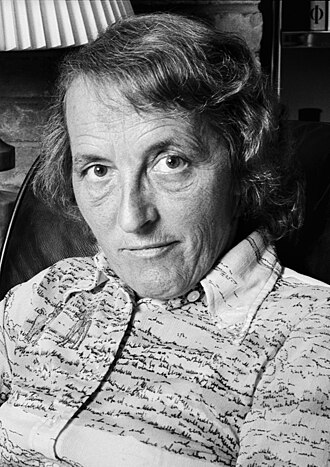
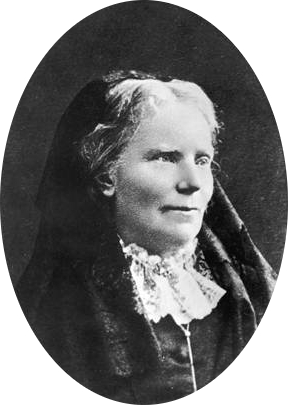
图:Lynn Gilbert · CC BY-SA 4.0 · Wikimedia Commons
- 出生
- 1926 年 7 月 8 日,苏黎世
- 逝世
- 2004 年 8 月 24 日,斯科茨代尔
- 国籍
- 美国、瑞士
- 学科
- 医学
- 职业
- 精神科医师、散文家、作家、安宁病房
- 母语 / 工作语言
- 英语、瑞士德语、法语
- 母校
- 苏黎世大学、University of Colorado Denver Department of Medicine
- 工作单位
- 芝加哥大学
研究领域
主要贡献
代表成就
所获奖项(3)
- 1976honorary doctor of the University of Miami
- 1977Ladies' Home Journal Women of the Year
- 2007全国女性名人堂
百科正文
英文维基百科补充中文条目比较短,下面是英文条目「Elisabeth Kübler-Ross」的原文
Elisabeth Kübler-Ross (born Elisabeth Kübler, Swiss Standard German: [ˈkyːblər]; July 8, 1926 – August 24, 2004) was a Swiss and American psychiatrist, a pioneer in near-death studies, author, and developer of the five stages of grief, also known as the "Kübler-Ross model".
In 1970, Kübler-Ross delivered the Ingersoll Lecture at Harvard University, focusing on her book, On Death and Dying (1969). By July 1982, Kübler-Ross had taught 125,000 students in death and dying courses in colleges, seminaries, medical schools, hospitals, and social-work institutions. In 1999, the New York Public Library named On Death and Dying one of its "Books of the Century", and Time magazine recognized her as one of the "100 Most Important Thinkers" of the 20th century. Throughout her career, Kübler-Ross received over 100 awards, including twenty honorary degrees, and was inducted into the National Women's Hall of Fame in 2007. In 2024, Simon & Schuster released a list of their 100 most notable books, including Kübler-Ross's On Death & Dying.
Early life and education
Elisabeth Kübler was born on July 8, 1926, in Zurich, Switzerland, into a Protestant Christian family. She was one of a set of triplets, two of whom were identical. Her life was jeopardized due to complications, weighing only 2 pounds at birth, but she said she survived due to her mother's love and attentiveness.
During World War II, at only thirteen years of age, Kübler-Ross worked as a laboratory assistant for refugees in Zurich. From a young age, she was determined to become a doctor, despite her father's efforts to force her to become a secretary for his business. She refused him and left home at 16. On May 8, 1945, at the age of eighteen, she joined the International Voluntary Service as an activist.
In 1947, Kübler visited the Majdanek concentration camp in Poland, an experience that profoundly affected her understanding of compassion and the resilience of the human spirit. The harrowing stories of survivors left an indelible mark on her, inspiring her life's mission to assist and heal others.
Career
Academic career
After graduating from the University of Zurich in 1957, Kübler-Ross moved to New York in 1958 to work and continue her studies.
She commenced her psychiatric residency in the Manhattan State Hospital on July 6, 1959, marking the beginning of her career working by creating her own treatments for those who were schizophrenic along with those faced with the title "hopeless patient", a term used at the time to reference terminal patients. These treatment programs would work to restore the patient's sense of dignity and self-respect. Kübler-Ross also intended to reduce the medications that kept these patients overly sedated, and found ways to help them relate to the outside world. During this time, Ross was horrified by the neglect and abuse of psychiatric patients as well as the imminently dying. She found that the patients were often treated with little care or completely ignored by the hospital staff. This realization made her strive to make a difference in the lives of these individuals.
Personal life
In 1958, she married a fellow medical student and classmate from the United States, Emanuel "Manny" Ross, and moved to New York. Together, they completed their internships at Long Island's Glen Cove Community Hospital in New York. After they married, she had their first child in 1960, a son named Kenneth, and in 1963, a daughter named Barbara. The marriage ended in 1979. They remained friends until his death on December 9, 1992.
Final years and death
Kübler-Ross endured a sequence of strokes from 1987 to 1994, none of which imposed lasting physical limitations upon her. Following a Virginia house fire on October 6, 1994, and subsequent transient ischemic attack (TIA), she relocated to Scottsdale, Arizona. During this period, the Healing Waters Farm and the Elisabeth Kübler-Ross Center ceased operations in Headwaters, Virginia. The following month, she acquired a residence in the desert near Carefree, Arizona.
Legacy
In 2005 Kübler-Ross's son, Ken Ross, founded the Elisabeth Kübler-Ross Foundation in Scottsdale, Arizona. The trademark 'Elisabeth Kübler-Ross,' along with all associated copyrights, is managed by her children through the Elisabeth Kübler-Ross Family Limited Partnership.
Stanford University's Green Library currently houses Kübler-Ross's remaining archives, which are available for study.
以上节选摘自英文维基百科「Elisabeth Kübler-Ross」,按 CC BY-SA 4.0 使用,去掉了参考文献、外部链接等尾部小节,公式改写成了纯文本。篇幅所限,较长的小节只摘了开头一部分,有的小节没有收;全文、配图和出处见原文。