格物

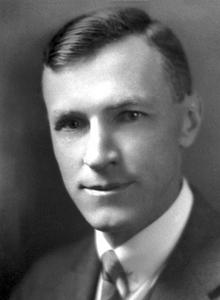
图:作者不详 · Public domain · Wikimedia Commons
尼尔斯·吕贝里·芬森1860—1904
Niels Ryberg Finsen
医生, 丹麦王国
尼尔斯·吕贝里·芬森 是一位来自法罗群岛的医师与科学家。他曾在1903年获得诺贝尔生理学或医学奖,是丹麦的第一座诺贝尔奖。获奖原因是:“认同他在治疗疾病方面的贡献,尤其是以光线放射治疗寻常狼疮,开启了新的医学方法。”
摘自维基百科「尼尔斯·吕贝里·芬森」,CC BY-SA 4.0
- 出生
- 1860 年 12 月 15 日,托尔斯港
- 逝世
- 1904 年 9 月 24 日,哥本哈根
- 国籍
- 丹麦王国
- 学科
- 医学、博物与综合
- 职业
- 医生、大学教师、科学家
- 母语 / 工作语言
- 丹麦语
- 母校
- 哥本哈根大学
- 工作单位
- 哥本哈根大学
研究领域
所获奖项(3)
- 1903诺贝尔生理学或医学奖
- —Cameron Prize of the University of Edinburgh
- —Grand Cross of the Order of the Dannebrog
百科正文
尼尔斯·吕贝里·芬森是光学疗法发明者。生于法罗群岛首府托尔斯豪恩的官吏之家。1882年入丹麦哥本哈根大学医学院。毕业后终生负病,仍致力于光学治疗疾病的研究。1893年发明用红光治疗天花。1895年发明化学性光线治疗狼疮。1898年被授予教授职称,次年被国王封为勋爵。1899年出版《光线治疗》,总结了多年来的研究成果。1903年荣获生理学和医学诺贝尔奖金。
以上内容摘自维基百科「尼尔斯·吕贝里·芬森」,按 CC BY-SA 4.0 使用,去掉了参考文献、外部链接等尾部小节,公式改写成了纯文本。全文、配图和出处见原文。
英文维基百科补充中文条目比较短,下面是英文条目「Niels Ryberg Finsen」的原文
Niels Ryberg Finsen (15 December 1860 – 24 September 1904) was a physician and scientist. In 1903, he was awarded the Nobel Prize in Medicine and Physiology "in recognition of his contribution to the treatment of diseases, especially lupus vulgaris, with concentrated light radiation, whereby he has opened a new avenue for medical science."
Biography
Niels Finsen was born in Tórshavn, Faroe Islands, as the second-oldest of four children. His father was Hannes Finsen, who belonged to an Icelandic family with traditions reaching back to the 10th century, and his mother was Johanne Formann from Falster, Denmark.
The family moved to Tórshavn from Iceland in 1858 when his father was given the position of Landfoged. When Niels was four years old his mother died, and his father married her cousin Birgitte Kirstine Formann, with whom he had six children. In 1871 his father was made Amtmand of the Faroe Islands. His father was a member of the Faroese parliament for 12 years, and his older brother Olaf Finsen similarly became a member of parliament, for five years, as well as the first mayor of the capital, Tórshavn.
Finsen got his early education in Tórshavn, but in 1874 was sent to the Danish boarding school Herlufsholm, where his older brother Olaf was also a student. Unlike Olaf, Niels had a difficult stay at Herlufsholm, culminating with a statement from the principal which claimed Niels was "a boy of good heart but low skills and energy". As a consequence of his low grades and difficulties with the Danish language, he was sent to Iceland in 1876 to enroll in his father's old school, Lærði skólinn, in Reykjavík. By the time he graduated he was 21 years old and finished 11 out of 15 students.
Studies in medicine
In 1882, Finsen moved to Copenhagen to study medicine at the University of Copenhagen, from which he graduated in 1890. Because he had studied in Iceland before moving to Copenhagen to study, he enjoyed privileged admission to Regensen, which is the most prestigious college dormitory in Denmark. Prioritisation of Icelandic and Faroese individuals in the admission process was official Danish government policy that had been put in place in order to integrate the educated elites of its colonies with the university population in Copenhagen. Following graduation, he became a prosector of anatomy at the university. After three years, he quit the post to devote himself fully to his scientific studies. In 1898 Finsen was given a professorship and in 1899 he became a Knight of the Order of Dannebrog.
The Finsen Institute was founded in 1896, with Finsen serving as its first director. It was later merged into Copenhagen University Hospital and currently serves as a cancer research laboratory that specializes in proteolysis.
Finsen suffered from Niemann–Pick disease, which inspired him to sunbathe and investigate the effects of light on living things. As a result, Finsen developed a theory of phototherapy, stating that certain wavelengths of light have beneficial medical effects. His most important writings were Finsen Om Lysets Indvirkninger paa Huden ("On the effects of light on the skin"), published in 1893 and Om Anvendelse i Medicinen af koncentrerede kemiske Lysstraaler ("The use of concentrated chemical light rays in medicine"), published in 1896. The papers were soon translated into both German and French.
Memorials
The Finsen Laboratory at Copenhagen University Hospital is named in his honor. Finsensvej in Frederiksberg is also named in his honor and so was the Finsen Power Station, which was located on its north side.
A large memorial to Finsen designed by Rudolph Tegner
was installed next to Rigshospitalet in Copenhagen in 1909. It shows a standing naked man flanked by two kneeling naked women reaching up to the sky, with a third behind his back. The sculpture is entitled Mod lyset (Towards the Light), and symbolised Finsen's principal scientific theory that sunlight can have healing properties. It is situated on the corner of Blegdamsvej and Nørre Allé.
In Tórshavn there is also a memorial to Finsen and one of the city's main streets, Niels Finsens gøta, bears his name. Kommunuskúlin, the old public school in central Tórshavn is rebuilt for student housing with the new name Finsen.
Finsen Road in southeast London, near Denmark Hill, also commemorates Niels Finsen.
以上节选摘自英文维基百科「Niels Ryberg Finsen」,按 CC BY-SA 4.0 使用,去掉了参考文献、外部链接等尾部小节,公式改写成了纯文本。篇幅所限,较长的小节只摘了开头一部分,有的小节没有收;全文、配图和出处见原文。