格物
尼可拉斯·沙克顿1937—2006
Nicholas Shackleton
British geologist (1937–2006)
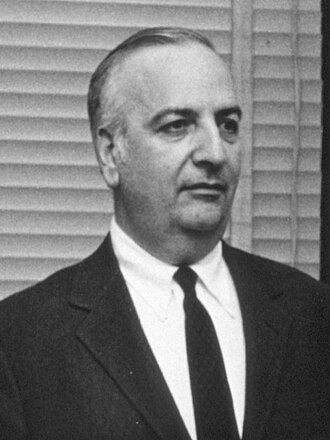
Sir Nicholas John Shackleton was an English geologist and paleoclimatologist who specialised in the Quaternary Period. He was the son of the distinguished field geologist Robert Millner Shackleton and great-nephew of the explorer Ernest Shackleton.
摘自英文维基百科「Nicholas Shackleton」(英文维基百科,暂无中文条目),CC BY-SA 4.0
- 出生
- 1937 年 6 月 23 日,切尔西
- 逝世
- 2006 年 1 月 24 日,剑桥
- 国籍
- 英国
- 学科
- 生物学、地球科学、博物与综合
- 职业
- 地质学家、大学教师、古生物学家、气候学家
- 母语 / 工作语言
- 英语
- 母校
- 剑桥大学克莱尔学院(文学士,1961 年)、Cranbrook School(1956 年)、剑桥大学(哲学博士)
- 工作单位
- 剑桥大学(1965—2004)
所获奖项(21)
- 1985Carus medal
- 1985Francis P. Shepard Medal
- 1987莱伊尔奖章
- 1990A.G. Huntsman Award for Excellence in the Marine Sciences
- 1990美国地球物理联盟会士
- 1995Crafoord Prize in Geosciences
- 1996名誉法学博士
- 1996沃拉斯顿奖章
- 1997Philosophiae doctor (Norway)
- 1998下级勋位爵士
- 1999Milutin Milankovic Medal
- 2001Foreign Member of the Royal Netherlands Academy of Arts and Sciences
- 2002honorary doctor of the University of Padua
- 2002Maurice Ewing Medal
- 2003皇家奖章
- 2003尤里奖章
- 2003Honorary Fellow of the European Union of Geosciences
- 2004维特勒森奖
- 2004美国科学促进会会士
- 2005蓝色星球奖
- 2005Founder’s Medal
学会与院士
百科正文
本条目暂无中文维基百科条目,下面是英文维基百科原文。
Education and employment
Educated at Cranbrook School, Kent (thanks to the generosity of a person he called his "fairy godmother" as she paid his school fees) Shackleton went on to read natural sciences at Clare College, Cambridge. He graduated with the Bachelor of Arts degree in 1961, promoted in 1964 to Master of Arts. In 1967 Cambridge awarded him a PhD degree, for a thesis entitled "The Measurement of Paleotemperatures in the Quaternary Era".
Apart from periods abroad as Visiting Professor or Research Associate, Shackleton's entire scientific career was spent at Cambridge. He became Ad hominem Professor in 1991, in the Department of Earth Sciences, working in the Godwin Institute for Quaternary Research.
Paleoceanography
Shackleton was a key figure in the field of paleoceanography, publishing over two hundred scientific papers. He was a pioneer in the use of mass spectrometry to determine changes in climate as recorded in the oxygen isotope composition of calcareous microfossils. Shackleton also found evidence that the Earth's last magnetic field reversal was 780,000 years ago. He became internationally known, in 1976, with the publication of a paper, with James Hays and John Imbrie, in Science entitled "Variations in the Earth's orbit: Pacemaker of the ice ages". Using ocean sediment cores, Shackleton, Hays and Imbrie demonstrated that oscillations in climate over the past few million years could be correlated with variations in the orbital and positional relationship between the Earth and the Sun (see Milankovitch cycles).
Much of Shackleton's later work focused on constructing precise timescales based on matching the periodic cycles in deep-sea sediment cores to calculations of incoming sunlight at particular latitudes over geological time. This method allows a far greater level of stratigraphic precision than other dating methods, and has also helped to clarify the rates and mechanisms of aspects of climate change.
In September 2000 Shackleton published an innovative study of the relationship between the oxygen isotope record of the oceans and isotope records obtained from the ice in Antarctica (glacial effect). This helped to identify the relative contribution of deep water temperature changes and ice volume changes to the marine isotopic record, and also highlighted the close interdependency between carbon dioxide levels and temperature change over the last 400,000 years.
In 1995 Shackleton became Director of the Godwin Institute for Quaternary Research. In 1998 he was knighted for his services to earth sciences. From 1999 to 2003 he was president of the International Union for Quaternary Research (INQUA). In 2010 Nick Shackleton was one of ten scientists depicted on a set of postage stamps, in commemoration of the 350th anniversary of the Royal Society. Shackleton was chosen to represent Earth Science.
The European Association of Geochemistry quinquennially awards a Science Innovation Award medal named in his honour for work in climatology.
Clarinet
Shackleton was also a skilled amateur clarinet player, and collector of woodwind instruments. During his lifetime he amassed a large collection of clarinets and related instruments. His Cambridge home became a place of pilgrimage for many players and scholars. Shackleton was internationally known as an organologist, reflected in his many journal articles, as well as his contributions to the 1980 and 2001 editions of The New Grove Dictionary of Music and Musicians, as well as the Grove Dictionary of Musical Instruments. Most of Shackleton's substantial instrument collection, numbering over 700 instruments, was bequeathed to the University of Edinburgh together with an endowment. Part of the collection is now exhibited at the Reid Concert Hall, as part of Edinburgh University's Collection of Historic Musical Instruments. The collection has been described in a published catalogue [1].
In addition to his reputation in the scientific world, Shackleton was highly respected by many musicians, and a friend to many who studied at Cambridge, including Christopher Hogwood who lodged with him for several years. The fine copies, by Cambridge maker Daniel Bangham, of many clarinets in Shackleton's collection, had a significant impact on historical performance from the 1980s, and continue to be used by leading performers today.
Personal life
From 1986 until her death in 2002, Shackleton was married to Vivien Law, a linguistic scholar.
以上内容摘自英文维基百科「Nicholas Shackleton」,按 CC BY-SA 4.0 使用,去掉了参考文献、外部链接等尾部小节,公式改写成了纯文本。全文、配图和出处见原文。
同一学科、同时代的科学家





同一学科的科学家
更多 ›