格物
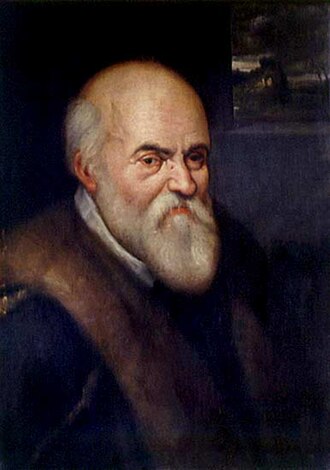
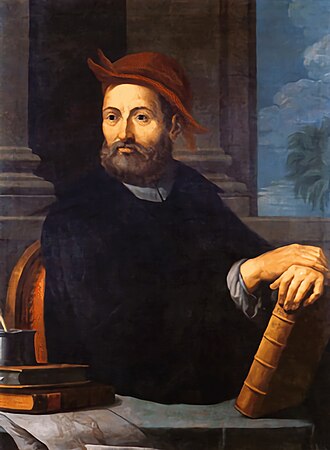
图:Agostino Carracci · Public domain · Wikimedia Commons
- 出生
- 1522 年 9 月 11 日,博洛尼亚
- 逝世
- 1605 年 5 月 4 日,博洛尼亚
- 国籍
- 教皇国
- 学科
- 生物学、地球科学、医学、博物与综合
- 职业
- 昆虫学家、自然科学家、植物学家、鸟类学家
- 母语 / 工作语言
- 拉丁语
- 母校
- 帕多瓦大学、博洛尼亚大学
- 工作单位
- 博洛尼亚大学
研究领域
主要贡献
代表成就
师承
师从2
来自 Wikidata 的「博士导师」「师从」「博士生」「学生」记录,可能不全。
百科正文
英文维基百科补充中文条目比较短,下面是英文条目「Ulisse Aldrovandi」的原文
Ulisse Aldrovandi (11 September 1522 – 4 May 1605) was an Italian naturalist, the moving force behind Bologna's botanical garden, one of the first in Europe. Carl Linnaeus and the comte de Buffon reckoned him the father of natural history studies. He is usually referred to, especially in older scientific literature in Latin, as Aldrovandus; his name in Italian is equally given as Aldroandi.
Life
Aldrovandi was born in Bologna to Teseo Aldrovandi and his wife, a noble but poor family of six children. His father was a lawyer, and secretary to the Senate of Bologna, but died when Ulisse was seven years old. His widowed mother wanted him to become a jurist. Initially, he was sent to apprentice with merchants as a scribe for a short time when he was 14 years old, but after studying mathematics, Latin, law, and philosophy, initially at the University of Bologna, and then at the University of Padua in 1545, he became a notary. His interests successively extended to philosophy and logic, which he combined with the study of medicine.
In June 1549, Aldrovandi was accused and arrested for heresy on account of his espousing of the antitrinitarian beliefs of the Anabaptist Camillo Renato. By September, he publicly abjured, but was nevertheless transferred to Rome, and remained in custody or house arrest until absolved in April 1550. Following the Pope's death, he was released but ordered to stay in Rome where he befriended many local scholars. While in light captivity there, he became more and more interested in botany, zoology, and geology (he is credited for the invention/first written record of this word). From 1551 onward, he organized a variety of expeditions to the Italian mountains, countryside, islands, and coasts to collect and catalogue plants.
Aldrovandi had a great interest in minerals, plants, and animals with medical properties (also known as simples). He actively traveled to find simples and collect specimens and knowledge on various plants for antidotes and other medical applications. He was a strong believer of using Indigenous expertise to grow knowledge of foreign plants but frequently failed to credit them in his writings.
Work
Over the course of his life, he would assemble one of the most spectacular cabinets of curiosities: his "theatre" illuminating natural history comprising some 7000 specimens of the diversità di cose naturali, of which he wrote a description in 1595. Between 1551 and 1554, he organized annual summer expeditions to collect plants for a herbarium, among the first botanizing expeditions. These expeditions were mostly around the Italian peninsula with only one trip to France and Spain. By 1567, his herbarium contained about 4,300 dried specimens in 13 volumes along with 5,000 other various objects, preserved at the University of Bologna. This collection also included 3,900 books and 300 manuscripts. His final collection was said to have contained at least 18,000 total objects. He also had various artists, including Jacopo Ligozzi, Giovanni Neri, and Cornelio Schwindt, compose illustrations of specimens.
Botanic garden
At his demand and under his direction, a public botanic garden was created in Bologna in 1568, now the Orto Botanico dell'Università di Bologna. Due to a dispute on the composition of a popular medicine with the pharmacists and doctors of Bologna in 1575, he was suspended from all public positions for five years. In 1577, he sought the aid of Pope Gregory XIII (a cousin of his mother), who wrote to the authorities of Bologna to reinstate Aldrovandi in his public offices and request financial aid to help him publish his books.
Collections
His vast collections in botany and zoology in his home became an important research space for natural science. Descriptions of his collection include marine animals being hung on the ceiling, stuffed birds and other unique animals on the walls, and fossils and skeletons displayed around the room. He notably had sperm whale and other marine skeletons from nearby Italian beaches. He also had various gems and precious stones.
Honors
The wrinkle ridge Dorsa Aldrovandi on the Moon is named after him.
The Civico Orto Botanico "Ulisse Aldrovandi" in San Giovanni in Persiceto is named in his honor.
The plant genus Aldrovanda is named after him.
以上节选摘自英文维基百科「Ulisse Aldrovandi」,按 CC BY-SA 4.0 使用,去掉了参考文献、外部链接等尾部小节,公式改写成了纯文本。篇幅所限,较长的小节只摘了开头一部分,有的小节没有收;全文、配图和出处见原文。
同一学科、同时代的科学家


同一学科的科学家
更多 ›