格物
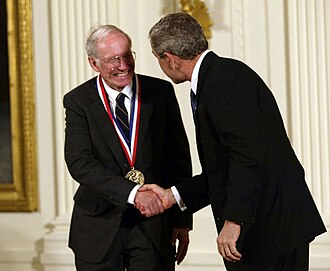
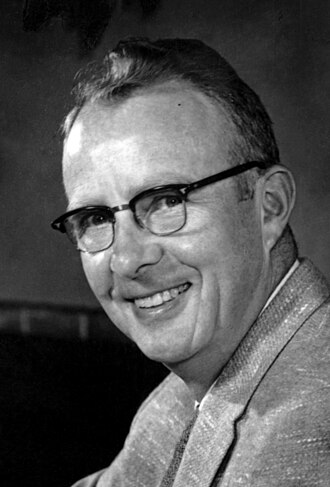
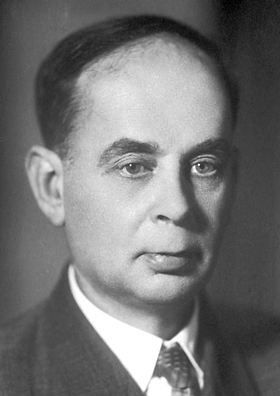
图:National Science Foundation · Public domain · Wikimedia Commons
威廉·杰森·摩根1935—2023
W. Jason Morgan
美国地球物理学家
威廉·杰森·摩根,出生在乔治亚州萨凡纳,美国地球物理学家,对板块构造与地球动力学理论方面作出了开创性的贡献。他为哈佛大学地球与行星科学系访问学者。
摘自维基百科「威廉·傑森·摩根」,CC BY-SA 4.0
- 出生
- 1935 年 10 月 10 日,萨凡纳
- 逝世
- 2023 年 7 月 31 日,内蒂克市
- 国籍
- 美国
- 学科
- 物理学、地球科学、博物与综合
- 职业
- 物理学家、大学教师、地质学家、地球物理学家
- 母语 / 工作语言
- 英语
- 母校
- 佐治亚理工学院(1955 年)、普林斯顿大学
- 工作单位
- 普林斯顿大学(1967—2003)、海军核动力学校
研究领域
师承
博士导师1
来自 Wikidata 的「博士导师」「师从」「博士生」「学生」记录,可能不全。
所获奖项(7)
学会与院士
百科正文
英文维基百科补充中文条目比较短,下面是英文条目「W. Jason Morgan」的原文
William Jason Morgan (October 10, 1935 – July 31, 2023) was an American geophysicist who made seminal contributions to the theory of plate tectonics and geodynamics. He retired as the Knox Taylor Professor emeritus of geology and professor of geosciences at Princeton University. He served as a visiting scholar in the Department of Earth and Planetary Sciences at Harvard University until his death.
Early life and education
Morgan was born on October 10, 1935, in Savannah, Georgia. His father William owned a hardware and dry goods store and his mother Maxie Ponita (Donehoo) Morgan was a French teacher and volunteered with the Girl Scouts of America.
He attended Georgia Institute of Technology, initially studying mechanical engineering, but switched to physics halfway through his studies. He graduated in 1957. He was in the Navy for two years working as an instructor at its Nuclear Power School, which directed him toward graduate studies. In 1959, he went to Princeton University, where he completed his PhD in 1964 under the supervision of Robert H. Dicke. He joined the faculty of the university immediately afterwards.
Morgan's Ph.D. thesis about fluctuations in the gravitational constant was unrelated to geology. As a post-doctoral fellow, he shared an office with the English geologist Fred Vine who had discovered the bilateral symmetry of seafloor spreading. After reading H.W. Menard's work he began to consider how great faults and fracture zones might relate to the geometry of spheres.
Career
His first major contribution, made in the late 1960s, was to relate the magnetic anomalies of alternating polarity, which occur on the ocean bottom at both sides of a mid-ocean ridge, to seafloor spreading and plate tectonics.
From 1971 on he worked on the further development of the plume theory of Tuzo Wilson, which postulates the existence of roughly cylindrical convective upwellings in the Earth's mantle as an explanation of hotspots. Wilson originally applied the concept to Hawaii and explained the increase in age of the seamounts of the Hawaii-Emperor chain with increasing distance from the current hotspot location; however, the concept was subsequently applied to many other hotspots by Morgan and other scientists.
"The theory of plate tectonics he published in 1968 is one of the major milestones of U.S. science in the 20th century," F. A. Dahlen, chair of the Princeton Department of Geosciences, wrote in 2003.
"Essentially all of the research in solid-earth geophysical sciences in the past 30 to 35 years has been firmly grounded upon Jason Morgan's plate tectonic theory," Dahlen said. "The scientific careers of a generation of geologists and geophysicists have been founded upon his landmark 1968 paper."
Awards and honors
Morgan received many honors and awards for his work, among them the Bucher Medal (1972), the Alfred Wegener Medal of the European Geosciences Union (1983), the Maurice Ewing Medal of the American Geophysical Union (1987), the Japan Prize (1990), the Wollaston Medal of the Geological Society of London (1994) and the National Medal of Science of the US, award year 2002.
Personal life
In 1959, Morgan married Cary Goldschmidt. Together they had two children. She died in 1991. He died in Natick, Massachusetts on July 31, 2023, at the age of 87.
以上内容摘自英文维基百科「W. Jason Morgan」,按 CC BY-SA 4.0 使用,去掉了参考文献、外部链接等尾部小节,公式改写成了纯文本。全文、配图和出处见原文。
同年获同一奖项
同一学科、同时代的科学家


同一学科的科学家
更多 ›