格物
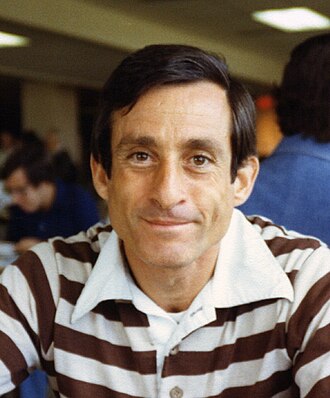
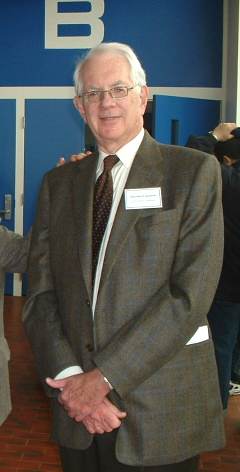
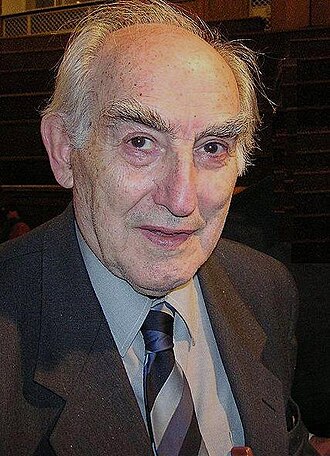
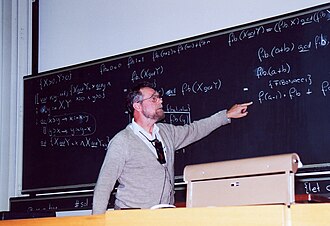
图:A. T. Service · CC BY-SA 3.0 · Wikimedia Commons
皮特·戈德赖希1939—
Peter Goldreich
American astronomer
彼得·戈德赖希,男,美国天体物理学家,研究领域侧重于天体力学、行星环、 日震学和中子星。他目前是加州理工学院的李·阿尔文·杜布里奇天体物理学和行星物理学教授。 自2005年以来,他还担任了普林斯顿高等研究院的教授。小行星3805 戈德赖希以他的名字命名。
摘自维基百科「彼得·戈德赖希」,CC BY-SA 4.0
- 出生
- 1939 年 7 月 14 日,纽约
- 国籍
- 美国
- 学科
- 物理学、天文学、博物与综合
- 职业
- 物理学家、天文学家、大学教师、天体物理学家
- 母语 / 工作语言
- 英语
- 母校
- 康奈尔大学(哲学博士,1967 年)
- 工作单位
- 加州理工学院、剑桥大学
研究领域
师承
博士导师1
博士生5
来自 Wikidata 的「博士导师」「师从」「博士生」「学生」记录,可能不全。
所获奖项(9)
- 1979亨利·诺利斯·罗素讲座
- 1985查普曼奖章
- 1992杰拉德·柯伊伯奖
- 1993英国皇家天文学会金质奖章
- 1995美国国家科学奖章
- 2004英国皇家学会外籍会员
- 2006法国科学院大奖章
- 2007邵逸夫天文学奖
- —邵逸夫奖
学会与院士
百科正文
英文维基百科补充中文条目比较短,下面是英文条目「Peter Goldreich」的原文
Peter Goldreich (born July 14, 1939) is an American astrophysicist whose research focuses on celestial mechanics, planetary rings, helioseismology and neutron stars. He is the Lee DuBridge Professor of Astrophysics and Planetary Physics at California Institute of Technology. Since 2005 he has also been a professor at the Institute for Advanced Study in Princeton, New Jersey. Asteroid 3805 Goldreich is named after him.
Career
Goldreich received a bachelor of science in engineering physics from Cornell University in 1960, and obtained a Ph.D. from Cornell in 1963 under the supervision of Thomas Gold. In 1963 and 1964 Goldreich was a postdoctoral fellow at Cambridge University. From 1964 to 1966 he was an assistant professor of astronomy and geophysics at UCLA. Goldreich joined the faculty at Caltech in 1966 as an associate professor. He later became a full professor in 1969 while remaining at Caltech, and in 1981 he became the Lee A. DuBridge Professor of Astrophysics & Planetary Physics also at Caltech. He also sits on the Board of Adjudicators for the Shaw Prize, and the selection committee for Astronomy Prizes.
Scientific accomplishments
Goldreich has made a wide range of significant contributions to theoretical astrophysics and planetary sciences. In 1966 Goldreich published a classic paper on the evolution of the Moon's orbit and on the orbits of other moons in the Solar System. He showed that for each planet there is a certain distance such that moons closer to the planet than that distance maintain an almost constant orbital inclination with respect to the planet's equator (with an orbital precession mostly due to the tidal influence of the planet), whereas moons further away maintain an almost constant orbital inclination with respect to the ecliptic (with precession due mostly to the tidal influence of the Sun). The moons in the first category, with the exception of Neptune's moon Triton, orbit near the equatorial plane. He concluded that these moons formed from equatorial accretion disks. But he found that the Moon, although it was once inside the critical distance from the Earth, never had an equatorial orbit as would be expected from various scenarios for its origin. This is called the lunar inclination problem, to which various solutions have since been proposed.
Goldreich and Alar Toomre first described the process of polar wander in a 1969 paper, although evidence of paleomagnetism was not discovered until later. Goldreich collaborated with George Abell to conclude that planetary nebulae evolved from red giant stars, a view that is now widely accepted. In 1979 Goldreich, along with Scott Tremaine predicted that Saturn's F ring was maintained by shepherd moons, a prediction that would be confirmed by observations in 1980.
Awards and honors
- Woodrow Wilson Honorary Fellowship, 1960–1961
- Andrew Dixon White Fellowship, 1960–1961
- National Foundation Fellowship, 1961–1963
National Academy of Sciences, National Research Council Postdoctoral Fellowship, 1963–1964
- Sloan Foundation Fellowship, 1968–1970
- Elected to National Academy of Sciences, 1972
- Elected to American Academy of Arts and Sciences, 1973
- Henry Norris Russell Lectureship of the American Astronomical Society, 1979
- California Scientist of the Year, 1981
- Chapman Medal of the Royal Astronomical Society, 1985
Brouwer Award of the Division on Dynamical Astronomy of the American Astronomical Society, 1986
- Amos de Shalit Lecturer at the Weizmann Institute, 1986
- Thomas Gold Lecturer at Cornell University, 1987
- Regents Fellow, Smithsonian Institution, 1988–1990
- Miller Professorship, University of California, Berkeley, 1990
Gerard P. Kuiper Prize of the Division for Planetary Science, American Astronomical Society, 1992
- Morris Loeb Lecturer, Harvard University, 1992
- Gold Medal of the Royal Astronomical Society, 1993
- Foreign Member of the Royal Society, 2004
- Shaw Prize, 2007
In 1995, Goldreich received the National Medal of Science for "his profound and lasting contributions to planetary sciences and astrophysics, providing fundamental theoretical insights for understanding the rotation of planets, the dynamics of planetary rings, pulsars, astrophysical masers, the spiral arms of galaxies, and the oscillations of the Sun".
Goldreich was awarded the Grande Médaille of the French Academy of Sciences in 2006 for his numerous contributions in the field of Astrophysics.
以上节选摘自英文维基百科「Peter Goldreich」,按 CC BY-SA 4.0 使用,去掉了参考文献、外部链接等尾部小节,公式改写成了纯文本。篇幅所限,较长的小节只摘了开头一部分,有的小节没有收;全文、配图和出处见原文。
同年获同一奖项
同一学科、同时代的科学家


同一学科的科学家
更多 ›