格物
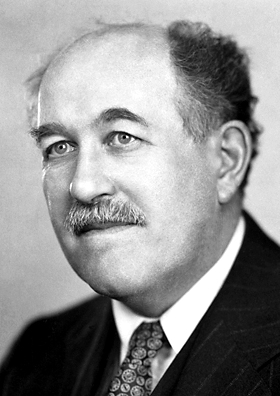
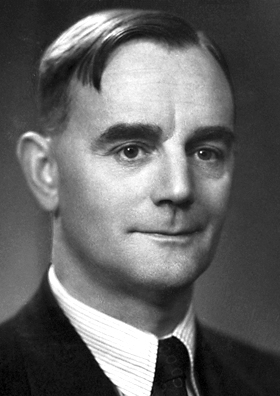
尼古拉斯·凯默1911—1998
Nicholas Kemmer
英国物理学家
尼古拉斯·克默尔,FRS FRSE,俄罗斯出生的德裔英国核物理学家,在英国的核计划中发挥了不可或缺的领导作用。他是诺贝尔物理学奖得主阿卜杜勒·萨拉姆的导师。
摘自维基百科「尼古拉斯·克默尔」,CC BY-SA 4.0
- 出生
- 1911 年 12 月 7 日,圣彼得堡
- 逝世
- 1998 年 10 月 21 日,爱丁堡
- 国籍
- 英国、大不列颠及爱尔兰联合王国
- 学科
- 物理学、博物与综合
- 职业
- 物理学家、大学教师
- 母语 / 工作语言
- 英语
- 母校
- 哥廷根大学、苏黎世大学
- 工作单位
- 剑桥大学、爱丁堡大学
研究领域
师承
博士生6
来自 Wikidata 的「博士导师」「师从」「博士生」「学生」记录,可能不全。
所获奖项(5)
- 1966休斯奖章
- 1975J·罗伯特·奥本海默纪念奖
- 1983马克斯·普朗克奖章
- 1984冈宁-维多利亚·朱比列奖
- —英国皇家学会院士
学会与院士
百科正文
英文维基百科补充中文条目比较短,下面是英文条目「Nicholas Kemmer」的原文
Nicholas Kemmer (7 December 1911 – 21 October 1998) was a Russian-born nuclear physicist working in Britain, who played an integral and leading edge role in the United Kingdom's nuclear programme, and was known as a mentor of Abdus Salam – a Nobel laureate in physics.
Life
Early life
Nicholas was born to Nicholas P. Kemmer and Barbara Stutzer in Saint Petersburg. His family moved to Germany in 1922, where he was educated at Bismarckschule Hanover and then at the University of Göttingen. He received his doctorate in nuclear physics at the University of Zurich and worked as an assistant to Wolfgang Pauli, who had to give strong arguments in 1936, before being allowed to employ a non-Swiss national. Later on, Kemmer moved to the Beit Fellowship at Imperial College London.
British nuclear development
Kemmer moved to Trinity College, Cambridge in 1940 to work on Tube Alloys, the wartime atomic energy project. In 1940, when Egon Bretscher and Norman Feather showed that a slow neutron reactor fuelled with uranium would in theory produce substantial amounts of plutonium-239 as a by-product, Kemmer (who was lodging at the Bretschers') proposed the names Neptunium for the new element 93 and Plutonium for 94 by analogy with the outer planets Neptune and Pluto beyond Uranus (uranium being element 92). The Americans Edwin M. McMillan and Philip Abelson at the Berkeley Radiation Laboratory, who had made the same discovery, fortuitously suggested the same names.
Professorship
Kemmer spent 1944–1946 in Canada. In 1953 he became the third Tait Professor of Mathematical Physics at the University of Edinburgh, succeeding the retiring Max Born. He founded the Tait Institute of Mathematical Physics in 1955 and taught at Edinburgh until 1979. He was elected as a Fellow of the Royal Society of Edinburgh in 1954. His proposers were Norman Feather, Max Born, Sir Edmund Whittaker and Alexander Aitken. He served as the Society's Vice-President from 1971 to 1974.
Kemmer was elected a Fellow of the Royal Society in 1956 and won its Hughes Medal in 1966. He was awarded the J. Robert Oppenheimer Memorial Prize in 1975. Nicholas Kemmer was also a mentor and a teacher of the only Pakistani Nobel laureate, Dr. Abdus Salam. Kemmer is credited to trained and work with Salam in Neutron scattering by using relativity equations.
Work and legacy
Duffin–Kemmer–Petiau equation
The Duffin–Kemmer–Petiau equation (DKP equation, also called Duffin–Kemmer equation or Kemmer equation) plays a role in the description of the Standard Model of particles, together with the Yang-Mills field. The Duffin–Kemmer–Petiau equation is closely linked to the Proca equation and the Klein–Gordon equation. The DKP equation suffers the same drawback as the Klein–Gordon equation in that it calls for negative probabilities. The equation involves matrices which obey the Duffin–Kemmer–Petiau algebra. The work leading to the DKP equation, culminating in Kemmer's article, has been quoted as "the first attempt at writing down a satisfactory relativistic theory of elementary particles beyond the electron", and these equations have later been brought in unified form with the Dirac equation by Homi J. Bhabha.
Recognition
Nicholas Kemmer Road in Edinburgh University's King's Buildings complex is named in his honour.
以上内容摘自英文维基百科「Nicholas Kemmer」,按 CC BY-SA 4.0 使用,去掉了参考文献、外部链接等尾部小节,公式改写成了纯文本。全文、配图和出处见原文。
同一学科、同时代的科学家


同一学科的科学家
更多 ›