格物
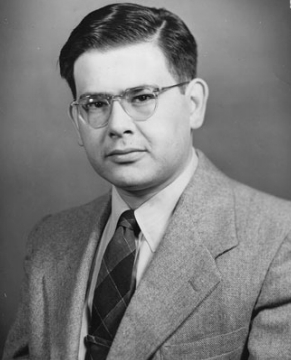
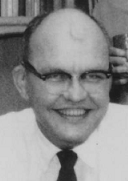
图:Credit: Alpher Papers. · CC BY-SA 4.0 · Wikimedia Commons
- 出生
- 1921 年 2 月 3 日,华盛顿哥伦比亚特区
- 逝世
- 2007 年 8 月 12 日,奥斯汀
- 国籍
- 美国
- 学科
- 物理学、天文学、博物与综合
- 职业
- 天文学家、物理学家、大学教师、天体物理学家
- 母语 / 工作语言
- 英语
- 母校
- 乔治·华盛顿大学、Theodore Roosevelt High School
- 工作单位
- 约翰·霍普金斯大学
研究领域
主要贡献
本站收录的发现与发明
以他 / 她命名
师承
博士导师1
来自 Wikidata 的「博士导师」「师从」「博士生」「学生」记录,可能不全。
所获奖项(5)
- 1975麦哲伦奖
- 1980约翰·普赖斯·韦瑟里尔奖章
- 1993亨利·德雷伯奖章
- 2005美国国家科学奖章
- —美国文理科学院院士
学会与院士
百科正文
生平
阿尔弗在少年时期就表现出了极高的天分。阿尔弗在乔治·华盛顿大学获得学士学位,并在那里结识了旅美的俄裔物理学家乔治·伽莫夫。阿尔弗1948年与乔治·伽莫夫、汉斯·贝特一起发表了大爆炸元素合成的理论,即αβγ理论。汉斯·贝特实际并没有在其中做出工作,只是在伽莫夫的建议下署了名,这样三人的名字凑成了前三个希腊字母的发音。1948年阿尔弗还与伽莫夫一道预言了宇宙背景辐射的存在,然而当时这项预言并没有引起人们关注,直到1964年彭齐亚斯和威尔逊偶然发现了微波背景辐射,证实了他们的预言。1993年,阿尔弗与他当年的合作者罗伯特·赫尔曼一起获得了亨利·德雷伯奖章。
以上内容摘自维基百科「拉尔夫·阿尔弗」,按 CC BY-SA 4.0 使用,去掉了参考文献、外部链接等尾部小节,公式改写成了纯文本。全文、配图和出处见原文。
英文维基百科补充中文条目比较短,下面是英文条目「Ralph Alpher」的原文
Ralph Asher Alpher (February 3, 1921 – August 12, 2007) was an American cosmologist, who carried out pioneering work in the early 1950s on the Big Bang model, including Big Bang nucleosynthesis and predictions of the cosmic microwave background radiation.
Childhood and education
Alpher was the son of a Jewish immigrant, Samuel Alpher (né Ilfirovich), from Vitebsk, Russian Empire. His mother, Rose Maleson, died of stomach cancer in 1938, and his father later remarried. Alpher graduated at age 16 from Theodore Roosevelt High School in Washington, D.C., and was second in command of his school's Cadet program. He worked in the high school theater as a secretary for the principal and as a stage manager, supplementing his family's Depression-era income.
From 1938-1940 he worked as a secretary for the Department of Terrestrial Magnetism of the Carnegie Foundation, where he helped Dr. Scott Forbush analyze cosmic-ray data. Part of his work there also included typing up the transactions of the American Geophysical Union. During World War II he worked for the Naval Ordnance Laboratory (1940-1944) under John Bardeen on a project to protect ships from magnetic mines.
Big Bang nucleosynthesis theory
Alpher's dissertation in 1948 dealt with a subject that came to be known as Big Bang nucleosynthesis. Nucleosynthesis is the explanation of how more complex elements are created out of simple elements in the moments following the Big Bang. Right after the Big Bang, when the temperature was extremely high, if any nuclear particles, such as neutrons and protons, became bound together (being held together by the attractive nuclear force) they would be immediately broken apart by the high energy photons (quanta of light) present in high density. In other words, at this extremely high temperature, the photons' kinetic energy would overwhelm the binding energy of the strong nuclear force. For example, if a proton and a neutron became bound together (forming deuterium), it would be immediately broken apart by a high energy photon. However, as time progressed, the universe expanded and cooled and the average energy of the photons decreased. At some point, roughly one second after the Big Bang, the attractive force of nuclear attraction would begin to win out over the lower energy photons and neutrons and protons would begin to form stable deuterium nuclei.
Later career
In 1955, Alpher moved to a position with the General Electric Company's Research and Development Center. His primary role in his early years there was working on problems of vehicle re-entry from space.
In 1955, both Alpher and Herman applied for positions at Iowa, where van Allen was now department chair, however, the salaries in academia were simply too low by comparison with industrial pay. Alpher also continued to collaborate with Robert Herman, who had moved to the General Motors Research Laboratory, on problems in cosmology. The Cosmic Microwave Background Radiation was finally confirmed in 1964, although in retrospect many other astronomers and radio astronomers probably observed it without recognizing the cosmological significance.
From 1987 to 2004, he served as distinguished research professor of physics and astronomy at Union College in Schenectady, New York, during which time he was able to return to research and teaching. During all this time he continued to publish major peer-reviewed scientific papers and was active in community service for Public Broadcasting. Alpher was also (1987–2004) director of the Dudley Observatory.
Approach to science
Alpher told Joseph D'Agnese in his interview for Discover Magazine, "There are two reasons you do science. One is the altruistic feeling that maybe you can contribute to mankind's store of knowledge about the world. The other and more personal thing is you want the approbation of your peers. Pure and simple."
Personal life and views
Despite raising a Jewish family, Alpher considered himself to be agnostic and humanist.
Family
He and his wife, Louise, had two children and two grandchildren.
Death
Alpher died following an extended illness on August 12, 2007. He had been in failing health since falling and breaking his hip in February 2007.
以上节选摘自英文维基百科「Ralph Alpher」,按 CC BY-SA 4.0 使用,去掉了参考文献、外部链接等尾部小节,公式改写成了纯文本。篇幅所限,较长的小节只摘了开头一部分,有的小节没有收;全文、配图和出处见原文。
同一学科、同时代的科学家




同一学科的科学家
更多 ›