格物
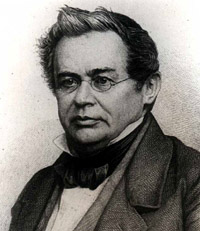
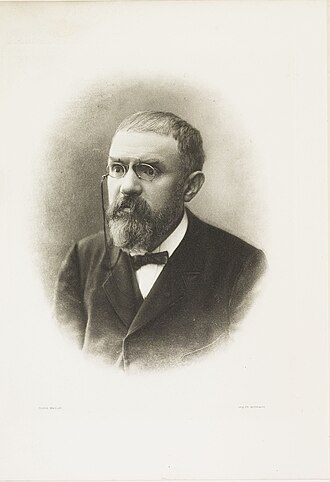
图:penarc · Public domain · Wikimedia Commons
- 出生
- 1804 年 2 月 12 日,塔尔图
- 逝世
- 1865 年 1 月 29 日,罗马
- 国籍
- 俄罗斯帝国
- 学科
- 物理学、工程与发明、博物与综合
- 职业
- 物理学家、工程师、发明家、大学教师
- 母语 / 工作语言
- 俄语、德语
- 母校
- Imperial University of Dorpat
- 工作单位
- 圣彼得堡帝国大学、Main Pedagogical Institute、圣彼得中学、Mikhailovsky Artillery School(1848—1861)、圣彼得堡国立大学(1836—)、圣彼得堡国立大学(1840—1862)
研究领域
主要贡献
代表成就
以他 / 她命名
师承
来自 Wikidata 的「博士导师」「师从」「博士生」「学生」记录,可能不全。
所获奖项(1)
- 1842honorary member of the Physics Association (Frankfurt am Main, Germany)
学会与院士
百科正文
生平
楞次1804年出生于被俄国占领的爱沙尼亚德尔帕特市(今爱沙尼亚共和国的塔尔图),16岁时以优异的成绩考入德尔帕特大学。1828年,楞次当选俄国圣彼得堡科学院的初级科学助理,1830年当选为圣彼得堡科学院通讯院士,1834年成为院士。1836年到1865年任圣彼得堡大学教授,1840年担任圣彼得堡大学数学物理系系主任,1863年当选为第一任校长。楞次1865年在意大利罗马因中风逝世。
楞次总结了安培的电动力学与法拉第的电磁感应现象后,于1833年在圣彼得堡科学院宣读了题为“关于用电动力学方法决定感生电流方向”的论文,提出了感应电动势阻止产生电磁感应的磁铁或线圈的运动,后来这条定律被称为楞次定律,在1834年的《物理学和化学年鉴》上发表。随后德国物理学家亥姆霍兹证明楞次定律实际上是电磁现象的能量守恒定律。
1842年,楞次独立于英国物理学家焦耳确定了电流与其所产生的热量的关系,也就是焦耳定律,因此焦耳定律也被称为焦耳-楞次定律。楞次还研究了不同金属的电阻率,以及电阻率与温度的关系。
除此之外,在楞次的倡导与协助下,1845年成立了俄罗斯地理学会。
纪念
为了纪念楞次,通常使用 L 来表示自感。此外,月球背面的一个陨石坑以他名字命名。
以上内容摘自维基百科「海因里希·楞次」,按 CC BY-SA 4.0 使用,去掉了参考文献、外部链接等尾部小节,公式改写成了纯文本。全文、配图和出处见原文。
英文维基百科补充中文条目比较短,下面是英文条目「Emil Lenz」的原文
Heinrich Friedrich Emil Lenz (German: [ˈeːmɪl ˈlɛnts]; also Emil Khristianovich Lenz; Russian: Эми́лий Христиа́нович Ленц; 24 February [O.S. 12 February] 1804 – 10 February [O.S. 29 January] 1865), usually cited as Emil Lenz or Heinrich Lenz in some countries, was a Russian physicist of Baltic German descent who is most noted for formulating Lenz's law in electrodynamics in 1834.
Biography
Lenz was born in Dorpat (nowadays Tartu, Estonia), at that time in the Governorate of Livonia in the Russian Empire. After completing his secondary education in 1820, Lenz studied chemistry and physics at the Imperial University of Dorpat. He traveled with the navigator Otto von Kotzebue on his third expedition around the world from 1823 to 1826. On the voyage Lenz studied climatic conditions and the physical properties of seawater. The results were published in "Memoirs of the St. Petersburg Academy of Sciences" (1831).
After the voyage, Lenz began working at the University of St. Petersburg, Russia, where he later served as the Dean of Mathematics and Physics from 1840 to 1863 and was Rector from 1863 until his death in 1865. Lenz also taught at the Petrischule in 1830 and 1831, and at the Mikhailovskaya Artillery Academy.
Lenz had begun studying electromagnetism in 1831. Besides the law named in his honor, Lenz also independently discovered Joule's law in 1842; to honor his efforts on the problem, it is also given the name the "Joule–Lenz law," named also for James Prescott Joule.
Lenz eagerly participated in development of the electroplating technology, invented by his friend and colleague Moritz von Jacobi. In 1839, Lenz produced several medallions using electrotyping. Along with the electrotyped relief produced by Jacobi the same year, these were the first instances of galvanoplastic sculpture.
Lenz died in Rome, after suffering a cerebral haemorrhage.
In Lenz's honor, it is customary to use the symbol L for inductance.
A lunar crater on the far side of the Moon is named after him.
以上内容摘自英文维基百科「Emil Lenz」,按 CC BY-SA 4.0 使用,去掉了参考文献、外部链接等尾部小节,公式改写成了纯文本。全文、配图和出处见原文。
同一学科、同时代的科学家




同一学科的科学家
更多 ›