格物
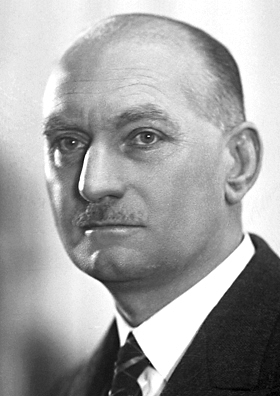
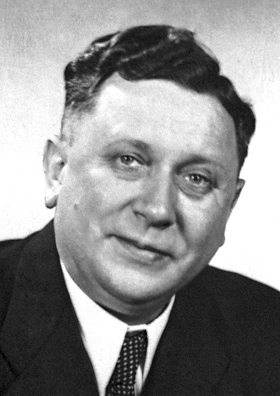
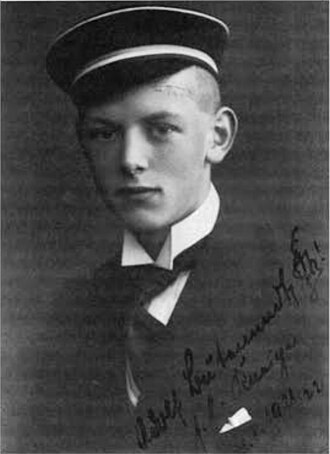
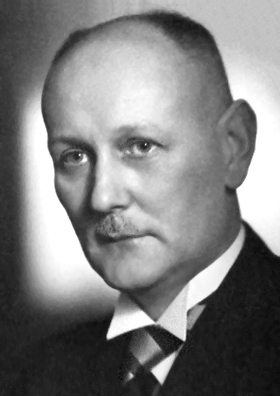
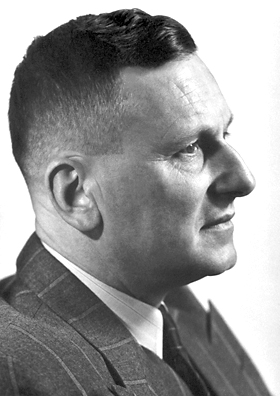
图:作者不详 · Public domain · Wikimedia Commons
柯奈尔·海门斯1892—1968
Corneille Heymans
医生, 比利时
柯奈尔‧海门斯 ,比利时医学家,因发现了颈动脉窦和主动脉弓调节呼吸的作用,于1939年获得1938年度的诺贝尔生理学或医学奖。
摘自维基百科「柯奈尔·海门斯」,CC BY-SA 4.0
- 出生
- 1892 年 3 月 28 日,根特
- 逝世
- 1968 年 7 月 18 日,克诺克-海斯特
- 国籍
- 比利时
- 学科
- 化学、生物学、医学
- 职业
- 医生、大学教师、药理学家、生理学家
- 母语 / 工作语言
- 法语
- 母校
- 根特大学、Sint-Barbaracollege
- 工作单位
- 伦敦大学学院、根特大学
研究领域
所获奖项(15)
- 1938诺贝尔生理学或医学奖
- 1953honorary doctorate of the University of Montpellier
- 1959doctor honoris causa from the University of Paris
- 1959doctor honoris causa from the University of Alger
- 1962Schmiedeberg Plaque
- 1962honorary doctor of the University of Bordeaux
- 1964honorary doctor of the University of Toulouse
- 1967honorary doctor of the Marie and Louis Pasteur University
- —北极星勋章
- —耶路撒冷圣墓骑士团
- —Knight Commander of the Order of St. Sylvester
- —Grand Officer of the Order of Leopold
- —honorary doctor of the University of Utrecht
- —honorary doctor of the University of Turin
- —Honorary doctors of Ghent University
学会与院士
百科正文
英文维基百科补充中文条目比较短,下面是英文条目「Corneille Heymans」的原文
Corneille Jean François Heymans (28 March 1892 – 18 July 1968) was a Belgian physiologist. He studied at the Jesuit College of Saint Barbara and then at Ghent University, where he obtained a doctor's degree in 1920.
Heymans won the Nobel Prize for Physiology or Medicine in 1938 for showing how blood pressure and the oxygen content of the blood are measured by the body and transmitted to the brain.
Early life and education
After graduation Heymans worked at the Collège de France (under Prof. E. Gley), the University of Lausanne (under Prof. M. Arthus), the University of Vienna (under Prof. H. H. Meyer), University College London (under Prof. E. H. Starling) and Case Western Reserve University School of Medicine (under Prof. C. F. Wiggers). In 1922 Heymans became lecturer in Pharmacodynamics at Ghent University, and in 1930 succeeded his father, Jean-François Heymans, as Professor of Pharmacology, as well as being appointed Head of the Department of Pharmacology, Pharmacodynamics, and Toxicology; and Director of the J. F. Heymans Institute.
Research
Heymans was awarded the Nobel Prize for Physiology or Medicine in 1938 for showing how blood pressure and the oxygen content of the blood are measured in the body and transmitted to the brain via the nerves and not by the blood itself.
Heymans accomplished this by vivisection of two dogs, the head of one connected to its body only by nerves, and the second one's body was used to cross-perfuse (supply blood) to the first dog's head. Heymans found that the first dog's upward and downward cardiovascular reflex arc traffic were carried by its own vagus nerves, but agents introduced to the second dog's blood, which served the first dog's brain, had no effect. He used a similar experiment to demonstrate the role of peripheral chemoreceptors in respiratory regulation, for which he received his Nobel Prize.
He was the Editor-in-Chief of Archives Internationales de Pharmacodynamie et de Thérapie for many years. His memberships included the Pontifical Academy of Sciences, the Académie des Sciences, and the Royal Society of Arts.
The group of physiopharmacologists working under Heymans at Ghent University were looking for the anatomical basis of the respiratory reflex at the carotid sinus. It was necessary that the Spanish neurohistologist Fernando de Castro Rodríguez (1898–1967) described in detail the innervation of the aorta-carotid region, circumscribing the presence of baroreceptors to the carotid sinus, but that of chemoreceptors to the carotid body, for the Belgian group to move their focus from the first to the very small second structure to physiologically demonstrate the nature and function of the first blood chemoreceptors. The contribution of the young De Castro, maybe the last direct disciple of Santiago Ramón y Cajal (1852–1934; awarded the 1906 Nobel prize in Physiology or Medicine) was overlooked at the time, but it was later recognized that he deserved to share the Nobel Prize with Heymans, his colleague and friend.
Personal life
Heymans married Berthe May (1892–1974), an ophthalmologist, in 1929 and had five children. He died in Knokke from a stroke. He was Catholic.
Honours and awards
- Heymans (crater) on the Moon
- Nobel Prize for Physiology or Medicine (1938)
- Member, American Philosophical Society (1962)
以上内容摘自英文维基百科「Corneille Heymans」,按 CC BY-SA 4.0 使用,去掉了参考文献、外部链接等尾部小节,公式改写成了纯文本。全文、配图和出处见原文。
同一学科、同时代的科学家