格物
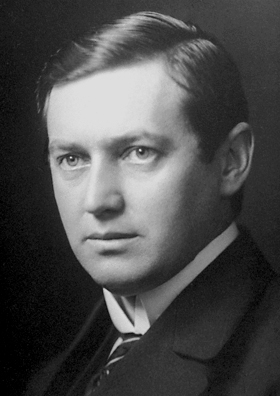
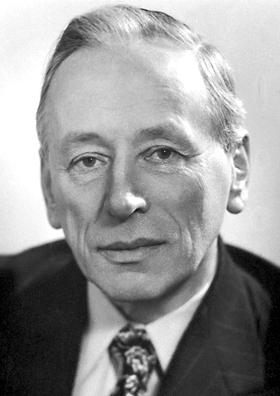
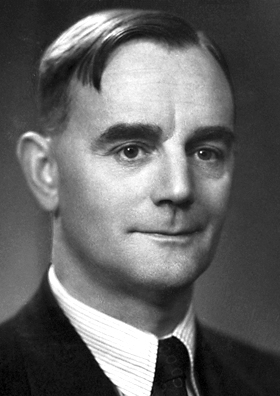
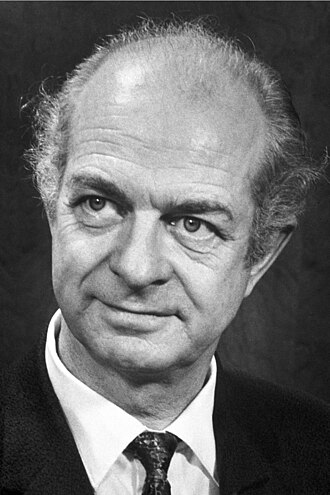
图:Copyright © The Nobel Foundation 1924 · Public domain · Wikimedia Commons
曼内·西格巴恩1886—1978
Manne Siegbahn
物理学家, 瑞典
曼内·西格巴恩,瑞典物理学家,1925年,他因为发现X射线的光谱,而获得1924年度的诺贝尔物理学奖殊荣。值得一提的是,他的儿子凯·西格巴恩亦是1981年的诺贝尔物理学奖得主。
摘自维基百科「曼内·西格巴恩」,CC BY-SA 4.0
- 出生
- 1886 年 12 月 3 日,Örebro Nikolai parish
- 逝世
- 1978 年 9 月 24 日,Engelbrekt church parish
- 国籍
- 瑞典
- 学科
- 物理学、博物与综合
- 职业
- 物理学家、大学教师
- 母语 / 工作语言
- 瑞典语
- 母校
- 隆德大学、Norra Real
- 工作单位
- 隆德大学、乌普萨拉大学(1922—)
研究领域
主要贡献
代表成就
师承
博士生1
来自 Wikidata 的「博士导师」「师从」「博士生」「学生」记录,可能不全。
所获奖项(9)
- 1923Björkén Prize
- 1924诺贝尔物理学奖
- 1933Guthrie Lecture
- 1934休斯奖章
- 1940伦福德奖
- 1948嘉宝勋章和奖金
- 1952doctor honoris causa from the University of Paris
- 1954英国皇家学会外籍会员
- 1957honorary doctor of Royal Institute of Technology
学会与院士
百科正文
相关资料
Nobel prize winner bio entry for Karl Manne Georg Siegbahn (页面存档备份,存于互联网档案馆)
以上内容摘自维基百科「曼内·西格巴恩」,按 CC BY-SA 4.0 使用,去掉了参考文献、外部链接等尾部小节,公式改写成了纯文本。全文、配图和出处见原文。
英文维基百科补充中文条目比较短,下面是英文条目「Manne Siegbahn」的原文
Karl Manne Georg Siegbahn (Swedish: [ˈmanːɛ ˈsiːgbɑːn]; 3 December 1886 – 24 September 1978) was a Swedish physicist who received the Nobel Prize in Physics in 1924 "for his discoveries and research in the field of X-ray spectroscopy."
Education and career
Karl Manne Georg Siegbahn was born on 3 December 1886 in Örebro, Sweden, the son of Nils Reinhold Georg Siegbahn, a station master, and Emma Sofia Mathilda Zetterberg.
Siegbahn graduated in Stockholm 1906 and began his studies at Lund University the same year. During his education he was secretarial assistant to Johannes Rydberg. In 1908, he studied at the University of Göttingen. He received his Ph.D. from Lund in 1911 with a thesis titled Magnetische feldmessung (Magnetic field measurements). He became acting professor for Rydberg when his (Rydberg's) health was failing, and succeeded him as full professor in 1920 following his death. In 1923, he left Lund to become Professor of Physics at Uppsala University.
In 1937, Siegbahn was appointed Research Professor of Experimental Physics at the Royal Swedish Academy of Sciences. In 1988, this was renamed the Manne Siegbahn Institute (MSI). The institute research groups have been reorganized since, but the name lives on in the Manne Siegbahn Laboratory hosted by Stockholm University.
X-ray spectroscopy
Siegbahn began his studies of X-ray spectroscopy in 1914. Initially, he used the same type of spectrometer as Henry Moseley had done for finding the relationship between the frequency of characteristic X-rays some elements and their place at the periodic system. Shortly thereafter he developed improved experimental apparatus which allowed him to make very accurate measurements of the X-ray wavelengths produced by atoms of different elements. Also, he found that several of the spectral lines that Moseley had discovered consisted of more components. By studying these components and improving the spectrometer, Siegbahn got an almost complete understanding of the electron shell. He developed a convention for naming the different spectral lines that are characteristic to elements in X-ray spectroscopy, the Siegbahn notation. Siegbahn's precision measurements drove many developments in quantum theory and atomic physics.
Family
Siegbahn married Karin Högbom in 1914. They had two children: Bo Siegbahn (1915–2008), a diplomat and politician, and Kai Siegbahn (1918–2007), a physicist who received the Nobel Prize in Physics in 1981 for his contribution to the development of X-ray photoelectron spectroscopy.
以上内容摘自英文维基百科「Manne Siegbahn」,按 CC BY-SA 4.0 使用,去掉了参考文献、外部链接等尾部小节,公式改写成了纯文本。全文、配图和出处见原文。
同一学科、同时代的科学家




同一学科的科学家
更多 ›