格物
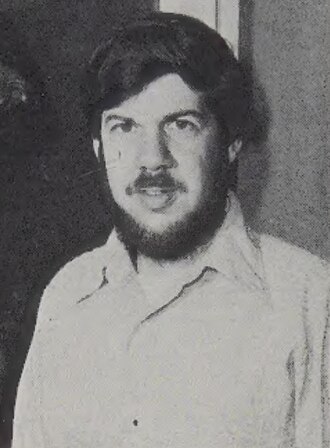
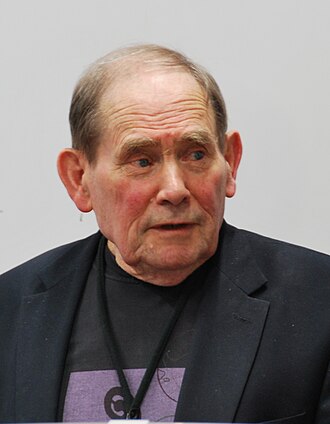
图:Lawrence Lipke · Public domain · Wikimedia Commons
- 出生
- 1941 年 9 月 10 日,皇后区
- 逝世
- 2002 年 5 月 20 日,纽约
- 国籍
- 美国
- 学科
- 生物学、地球科学、博物与综合
- 职业
- 古生物学家、作家、哲学家
- 母语 / 工作语言
- 英语
- 母校
- 安蒂奥克大学、利兹大学、安蒂奥克学院(文学士,1963 年)、哥伦比亚大学(博士,1967 年)、哈佛大学、Jamaica High School
- 工作单位
- 哈佛大学、纽约大学、美国自然史博物馆
研究领域
主要贡献
代表成就
师承
博士生1
来自 Wikidata 的「博士导师」「师从」「博士生」「学生」记录,可能不全。
所获奖项(23)
- 1975Charles Schuchert Award
- 1981美国国家图书奖
- 1981麦克阿瑟天才奖
- 1981Tinbergen Lecture
- 1981National Book Critics Circle Award in Nonfiction
- 1982海登纪念地质学奖
- 1983Phi Beta Kappa Award in Science
- 1984Silver Medal of the Zoological Society of London
- 1988Mary C. Rabbitt History And Philosophy of Geology Award
- 1989Sue Tyler Friedman Medal
- 1990Phi Beta Kappa Award in Science
- 1990爱丁堡奖章
- 1991英国皇家学会科普书奖
- 1992林奈奖章
- 1994威廉·普罗克特科技成果奖
- 1994St. Louis Literary Award
- 2000Library of Congress Living Legend
- 2001Humanist of the Year
- 2002Paleontological Society Medal
- 2008达尔文-华莱士奖章
- —怀疑调查委员会会员
- —美国科学促进会会士
- —美国文理科学院院士
学会与院士
百科正文
生平
古尔德出生于纽约市皇后区,父亲伦纳德为法庭速记员,母亲埃利诺是个艺术家。古尔德五岁时,他父亲带他到美国自然史博物馆的恐龙厅参观,这是他最早接触到暴龙的时刻。
科学研究
古尔德早期研究的对象是百慕大地区的蜗牛。1972年,他和纽约美国自然史博物馆的尼尔斯·艾崔奇(Niles Eldredge)共同提出“间断平衡”(英语:Punctuated Equilibrium)进化理论,由此享誉全球。“间断平衡”理论认为,生物的进化并不像达尔文所认为的那样,是一个缓慢的渐变积累的过程;而是长期的稳定甚至不变与短暂的剧变交替的过程,从而解释了化石在地层中为什么会有许多空缺之处。
古尔德是一位忠实的达尔文主义者,他认为达尔文理论的核心是自然选择,而不是生存竞争或生物渐变论。从他的作品中可以看出,他非常推崇自然选择在生物进化中的作用,尤其难能可贵的是,他也承认,自然选择不是唯一答案,而是最重要的答案。
科普写作
古尔德的另一杰出贡献并不是提出什么理论,而是他写出了大量的科普作品,令世人对古生物学产生兴趣。没有人关注的科学是没有生命力的科学,古尔德的科普文章给予了古生物学持续的生命动力。古尔德文笔流畅、学识渊博,不仅向读者解释自然现象,而且讲述自然现象所引出的思考及其对人类社会的影响,他对科学的反思相当深刻,对社会曲解科学理论进行了尖锐的批判。他的主要科普作品有《千禧年》、《自达尔文以来》(台译:《达尔文大震撼》)、《熊猫的拇指》、《奇妙的生命》(台译:《壮丽的生命》)等。
以上内容摘自维基百科「史蒂芬·古爾德」,按 CC BY-SA 4.0 使用,去掉了参考文献、外部链接等尾部小节,公式改写成了纯文本。全文、配图和出处见原文。
英文维基百科补充中文条目比较短,下面是英文条目「Stephen Jay Gould」的原文
Stephen Jay Gould ( GOOLD; September 10, 1941 – May 20, 2002) was an American paleontologist, evolutionary biologist, historian of science, and one of the most widely read authors of popular science of his generation. Gould spent most of his career teaching at Harvard University and working at the American Museum of Natural History in New York. In 1996, Gould was hired as the Vincent Astor Visiting Research Professor of Biology at New York University, after which he divided his time teaching between there and Harvard.
Gould's most significant contribution to his field was the theory of punctuated equilibrium developed with Niles Eldredge in 1972. The theory proposes that most evolution is characterized by long periods of evolutionary stability, infrequently punctuated by swift periods of branching speciation. The theory was contrasted against phyletic gradualism, the popular idea that evolutionary change is marked by a pattern of smooth and continuous change in the fossil record.
Most of Gould's empirical research was based on the land snail genera Poecilozonites and Cerion. He also made important contributions to evolutionary developmental biology, receiving broad professional recognition for his book Ontogeny and Phylogeny. In evolutionary theory he opposed the overemphasis placed on natural selection, and was critical of biological determinist theories of human behavior in sociobiology and evolutionary psychology. As a public advocate for science he campaigned against creationism and proposed that science and religion should be considered two distinct fields (or "non-overlapping magisteria") whose authorities do not overlap.
Gould was known by the general public mainly for his 300 popular essays in Natural History magazine, and his numerous books written for both the specialist and non-specialist.
In April 2000, the US Library of Congress named him a "Living Legend".
Biography
Stephen Jay Gould was born in Queens, New York, on September 10, 1941. His father Leonard was a court stenographer and a World War II veteran of the United States Navy. His mother Eleanor was an artist, whose parents were Jewish immigrants living and working in the city's Garment District. Gould and his younger brother Peter were raised in Bayside, a middle-class neighborhood in the northeastern section of Queens. He attended P.S. 26 elementary school and graduated from Jamaica High School.
Scientific career
Gould began his higher education at Antioch College, graduating with a double major in geology and philosophy in 1963. During this time, he also studied at the University of Leeds in the United Kingdom. After completing graduate work at Columbia University in 1967 under the guidance of Norman Newell, he was immediately hired by Harvard University, where he worked until the end of his life (1967–2002).
The "Darwin Wars"
Gould received many accolades for his scholarly work and popular expositions of natural history, but a number of biologists felt his public presentations were out of step with mainstream evolutionary thinking. The public debates between Gould's supporters and detractors have been so quarrelsome that they have been dubbed "The Darwin Wars" by several commentators.
A self-described Darwinist, Gould's emphasis was less gradualist and reductionist than most neo-Darwinists.
Non-overlapping magisteria
In his book Rocks of Ages (1999), Gould put forward what he described as "a blessedly simple and entirely conventional resolution to... the supposed conflict between science and religion". He defines the term magisterium as "a domain where one form of teaching holds the appropriate tools for meaningful discourse and resolution".
Art and Science, Overlapping Magisteria
With his wife Rhonda Roland Shearer, Gould co-founded the Art Science Research Laboratory (ASRL) in 1998. Based in New York City, the non-profit organization supports interdisciplinary work in art, science, and media studies. Its stated goal is to apply critical methods across different fields, including academic research and journalism.
Gould developed an interest in Marcel Duchamp, particularly the French-American artist's use of optics and perception in his readymades.
以上节选摘自英文维基百科「Stephen Jay Gould」,按 CC BY-SA 4.0 使用,去掉了参考文献、外部链接等尾部小节,公式改写成了纯文本。篇幅所限,较长的小节只摘了开头一部分,有的小节没有收;全文、配图和出处见原文。
同一学科、同时代的科学家