格物

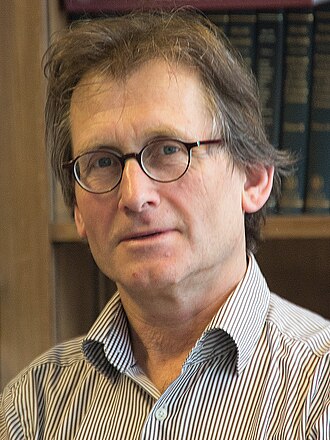
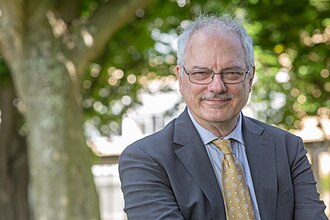
图:Gjd-wicki · CC BY-SA 4.0 · Wikimedia Commons
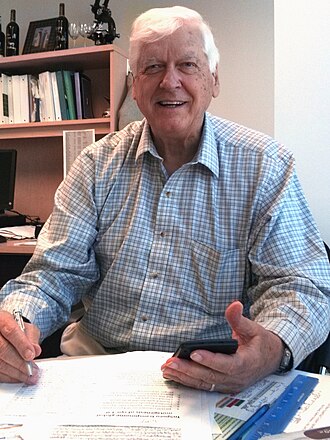
吉迪恩·戴维斯1964—
Gideon Davies
English chemistry professor
Gideon John Davies is a British structural biologist and chemist known for his research on the structure, mechanism, and biological roles of carbohydrate-active enzymes. He is a professor at the University of York and holds the Royal Society Ken Murray Research Professorship. His research work focusses on understanding how enzymes synthesise, break down, modify and interact with complex carbohydrates.
摘自英文维基百科「Gideon Davies」(英文维基百科,暂无中文条目),CC BY-SA 4.0
- 出生
- 1964 年 7 月 6 日,大萨顿
- 国籍
- 英国
- 学科
- 化学、生物学
- 职业
- 化学家、大学教师、教授、生物化学家
- 母语 / 工作语言
- 英语
- 母校
- 布里斯托尔大学、The Whitby High School
- 工作单位
- 约克大学、乌普萨拉大学(1994—1995)、Cermav(1992—1993)、European Molecular Biology Laboratory Hamburg(1990—1990)
师承
博士生12
来自 Wikidata 的「博士导师」「师从」「博士生」「学生」记录,可能不全。
所获奖项(7)
- 2001科戴-摩根奖章
- 2010英国皇家学会院士
- 2010加博尔奖章
- 2014英国医学科学院院士
- 2014Khorana Prize
- 2015戴维奖章
- —英国皇家化学学会会士
学会与院士
百科正文
本条目暂无中文维基百科条目,下面是英文维基百科原文。
Davies’s work has contributed to the fields of glycobiology, enzymology and structural biology, particularly in explaining enzyme-substrate interactions and the conformational pathways involved in catalysis. His research has widespread impact, notably in biotechnology and biomedicine, and his work has also led to the development of enzyme inhibitors and probes with applications in disease research, industrial processes, and the study of the human gut microbiome.
He has received several notable honours, including the Davy Medal and the Gabor Medal of the Royal Society, and was part of the YSBL team that won the Queens Anniversary Prize in 2019. He was and has been elected as a fellow of The Royal Society, The Academy of Medical Sciences, The Royal Society of Chemistry, and as a member of the European Molecular Biology Organization (EMBO). Gideon Davies has recently been elected to the Council of the Royal Society.
Early life and education
Davies grew up in Great Sutton, Cheshire and attended Whitby Comprehensive School (now The Whitby High School). He went on to study at the University of Bristol where he received a Bachelor of Science degree in Biochemistry in 1985 followed by a PhD in 1990 for research on the enzyme phosphoglycerate kinase isolated from the bacterium Bacillus stearothermophilus, and supervised by Herman Watson and Len Hall. In 2007, he was awarded a Doctor of Science (DSc) degree from the University of Bristol.
Career
Following his PhD, Davies conducted postdoctoral research at the European Molecular Biology Laboratory (EMBL) outstation in Hamburg, where he worked with Keith S. Wilson on the use of synchrotron radiation in protein crystallography. In 1990, Davies moved to the University of York to work with Dale Wigley and Guy Dodson on the structure solution of DNA gyrase, published in 1991.
During the early 1990s, Davies shifted his research focus to carbohydrate-active enzymes, collaborating with Novo Nordisk (now Novozymes/Novonensis) on the structure and mechanism of cellulases — key enzymes in washing detergents and biofuels. He also spent periods as a visiting researcher at the French National Centre for Scientific Research (CNRS) in Grenoble, working with Bernard Henrissat on enzyme mechanisms, leading to the influential glycosyltransferase classification of the CAZy database. He also collaborated with Alwyn Jones on computer graphics applications and in studying plant polysaccharide-degrading enzymes.
In 1996, Davies was awarded a Royal Society University Research Fellowship, which allowed him to establish his own research group within the York Structural Biology Laboratory. He was promoted to professor at the University of York in 2001 and was awarded a Royal Society Ken Murray Research Professorship in 2016.
In 2000, Davies was the inaugural Peter Wall Catalytic Visitor at the University of British Columbia, where he collaborated with Steve Withers and David Vocadlo on the structural and mechanistic analysis of hen egg white lysozyme.
Davies was elected a member of the European Molecular Biology Organization in 2010 and is a Fellow of the Royal Society of Chemistry (FRSC). In 2010, he was elected a Fellow of the Royal Society (FRS). His Royal Society citation states: Professor Gideon Davies' research is focused on "structural enzymology". In this he addresses the enzymes, and their accessory domains, that are involved in the synthesis, modification and breakdown of carbohydrates. His chemical and structural insight into protein-carbohydrate interactions and his brilliant exploitation of advanced crystallographic methods provide the basis for understanding how the chemical and structural factors in the stereochemical pathway of the enzyme:substrate complex govern specificity and catalysis. His research is having an immense impact on carbohydrate chemistry and biology and biological catalysis generally.
In 2014, Davies was elected a Fellow of the Academy of Medical Sciences. His citation notes: Gideon Davies, who is Professor of Biological Chemistry at University of York, has made world-leading contributions to Biochemistry. He has made fundamental additions to our understanding of enzyme mechanism and carbohydrate biochemistry. As a direct result of his work into the conformation of sugars during turnover, he described the rational design of highly potent inhibitors of O-linked glucosamine modifying enzymes. These compounds are showing potential as treatments for Alzheimer's disease. Recently he has turned to study the human microbiota, which are now recognised to be an essential component of human health, and their carbohydrate metabolism is implicated in several disease states.
Davies also serves on the scientific advisory board of Alectos Therapeutics, a private pharmaceutical company focusing on the discovery and development of therapeutics for neurological diseases.
Former group members
Several of Davies' former students and postdoctoral researchers have advanced to prominent roles in academia and industry. Notably, Tracey Gloster is a professor at the University of St Andrews, recognized for her work on carbohydrate-processing enzymes. David Vocadlo is a professor at Simon Fraser University, holding a Canada Research Chair in Chemical Glycobiology and co-founding Alectos Therapeutics. David Zechel serves as a professor at Queen's University, focusing on enzyme mechanisms and natural product biosynthesis.
Research
Davies' research focuses on the biological chemistry of carbohydrates, combining structural biology, enzymology, and glycobiology to understand how carbohydrate-active enzymes function at the molecular level. His group has used advanced techniques such as X-ray crystallography and cryo-electron microscopy to study glycoside hydrolases, glycosyltransferases, lytic polysaccharide monooxygenases (LPMOs), and polysaccharide lyases — enzymes critical for biomass degradation, cell wall remodelling, and microbial interactions.
A major focus of Davies' research has been dissecting the structures and catalytic mechanisms of enzymes central to industrial biotechnology, particularly those involved in the degradation of complex polysaccharides such as cellulose, hemicellulose, and starch.
Personal life
Davies married Valérie Marie-Andrée Ducros in 1999 (div. 2021) and has two daughters.
以上节选摘自英文维基百科「Gideon Davies」,按 CC BY-SA 4.0 使用,去掉了参考文献、外部链接等尾部小节,公式改写成了纯文本。篇幅所限,较长的小节只摘了开头一部分,有的小节没有收;全文、配图和出处见原文。