格物
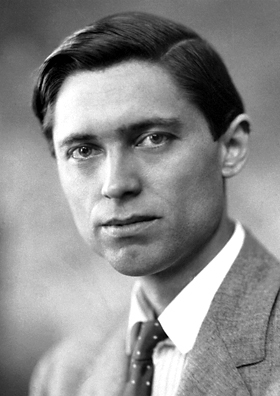
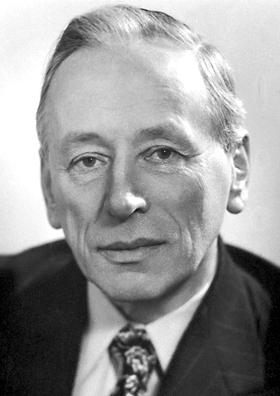
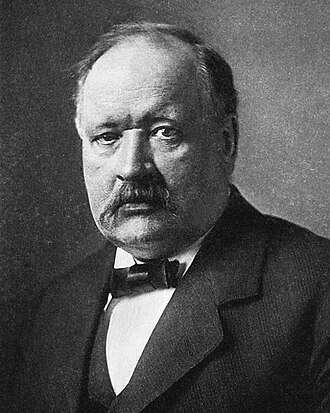
图:作者不详 · Public domain · Wikimedia Commons
特奥多尔·斯韦德贝里1884—1971
Theodor Svedberg
化学家, 瑞典
特奥多尔·斯韦德贝里,瑞典化学家,1926年获诺贝尔化学奖。
摘自维基百科「特奥多尔·斯韦德贝里」,CC BY-SA 4.0
- 出生
- 1884 年 8 月 30 日,Valbo church parish
- 逝世
- 1971 年 2 月 25 日,厄勒布鲁
- 国籍
- 瑞典
- 学科
- 物理学、化学、博物与综合
- 职业
- 化学家、大学教师、艺术家、物理学家
- 母语 / 工作语言
- 瑞典语
- 母校
- 乌普萨拉大学(博士,1907 年)
- 工作单位
- 乌普萨拉大学
研究领域
师承
博士导师2
来自 Wikidata 的「博士导师」「师从」「博士生」「学生」记录,可能不全。
所获奖项(6)
- 1926诺贝尔化学奖
- 1926Björkén Prize
- 1944英国皇家学会外籍会员
- 1944honorary doctor of Royal Institute of Technology
- 1949富兰克林奖
- 1950doctor honoris causa from the University of Paris
学会与院士
百科正文
早年
斯韦德贝里1884年8月30日出生于瑞典耶夫勒堡省瓦尔布的弗莱伦,是土木工程师埃利亚斯·斯韦德贝里和奥古丝塔·阿尔斯特马克的独子。他先后进入雪平学校、厄勒布鲁高中和哥德堡现代学校就读,1903年12月在哥德堡通过了结业考试。1904年1月,进入乌普萨拉大学就读。他以惊人的时间通过了各项课程和考试,仅用一年多就取得了文学士学位。1905年8月,他直接开始了胶体化学的研究,当时那是个全新的领域。
研究
虽然以前对生物学很感兴趣,但斯韦德贝里抵制了当时很流行的一种思想——将胶体作为生命系统的模型。他解决了可重复的制备稳定胶体的实践问题,这样对粒子大小与其他物理常数的关系进行定量分析便成为可能。1905年12月,他发表了首篇论文,改进了格奥尔格·布雷迪希用电弧技术制备金和铂的水溶胶的方法,引入了释出交流电并在多种有机溶剂中进行实验。之后他根据日格蒙迪和西登托普夫的设计组装了超显微镜。
1907年,斯韦德贝里提交了他的博士论文。论文中的主要部分是关于布朗运动,该运动是超显微镜下非常引人注目的胶体行为。他还探讨了粒子尺寸对光学吸收的影响,温度和增加电解质对水溶胶的影响、以及溶胶的电合成。
以上内容摘自维基百科「特奥多尔·斯韦德贝里」,按 CC BY-SA 4.0 使用,去掉了参考文献、外部链接等尾部小节,公式改写成了纯文本。全文、配图和出处见原文。
英文维基百科补充中文条目比较短,下面是英文条目「Theodor Svedberg」的原文
Theodor Svedberg (30 August 1884 – 25 February 1971) was a Swedish chemist and Nobel laureate for his research on colloids and proteins using the ultracentrifuge. Svedberg was active at Uppsala University from the mid-1900s to late 1940s. While at Uppsala, Svedberg started as a docent before becoming the university's physical chemistry head in 1912. After leaving Uppsala in 1949, Svedberg was in charge of the Gustaf Werner Institute until 1967. Apart from his 1926 Nobel Prize, Svedberg was named a Foreign Member of the Royal Society in 1944 and became part of the National Academy of Sciences in 1945.
Early life and education
Svedberg was born in Valbo, Sweden on 30 August 1884. He was the son of Augusta Alstermark and Elias Svedberg. Growing up, Svedberg enjoyed botany and other branches of science. While in grammar school, Svedberg conducted individual laboratorial research and performed scientific demonstrations. For his post-secondary education, Svedberg entered a chemistry program at Uppsala University in the early mid 1900s. He earned his Bachelor of Arts degree in 1905, his master's degree in 1907, and in 1908, he earned his Ph.D.
Career
While at Uppsala, Svedberg started his scientific career in 1905 as an assistant chemist with the university. After becoming a chemistry docent for Uppsala in 1907, he became the university's physical chemistry head in 1912. For his academic tenure, Svedberg remained with Uppsala until 1949. During the early 1920s, he also temporarily taught for the University of Wisconsin. After leaving Uppsala, Svedberg led the Gustaf Werner Institute from 1949 to 1967.
Research
Svedberg's work with colloids supported the theories of Brownian motion put forward by Albert Einstein and the Polish physicist Marian Smoluchowski. During this work, he developed the technique of analytical ultracentrifugation, and demonstrated its utility in distinguishing pure proteins one from another.
Awards and honours
The unit svedberg (symbol S), a unit of time amounting to 10−13 s or 100 fs, is named after him, as well as The Svedberg Laboratory in Uppsala.
Svedberg's candidacy for the Royal Society reads:"distinguished for his work in physical and colloid chemistry and the development of the ultracentrifuge"
Svedberg was elected an International Member of the American Philosophical Society in 1941. After becoming a Foreign Member of the Royal Society in 1944, Svedberg was named to the National Academy of Sciences in 1945. He was elected to the American Philosophical Society in 1948. From the 1910s to 1920s, Svedberg was awarded the Björkénska priset three times from Uppsala University for his contributions to science in Sweden. From the Franklin Institute, Svedberg was given the Franklin Medal in 1949 for his work with the ultracentrifuge.
Death and personal life
On 25 February 1971, Svedberg died in Kopparberg, Sweden. He was married four times and had a total of twelve children.His widow died in 2019. He was a Lutheran
以上内容摘自英文维基百科「Theodor Svedberg」,按 CC BY-SA 4.0 使用,去掉了参考文献、外部链接等尾部小节,公式改写成了纯文本。全文、配图和出处见原文。
同一学科、同时代的科学家




同一学科的科学家
更多 ›