格物
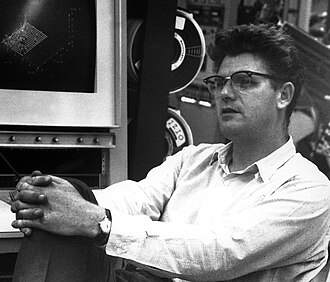
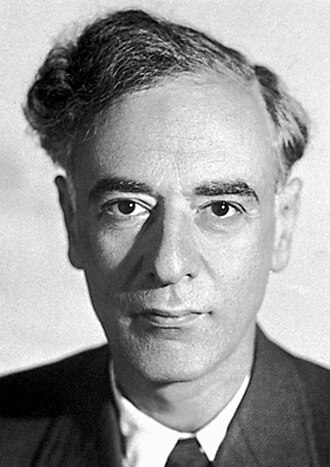
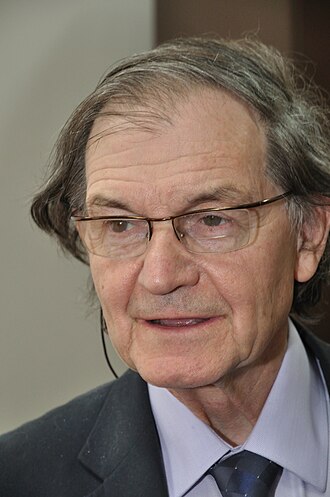
图:ENERGY.GOV · Public domain · Wikimedia Commons
- 出生
- 1929 年 11 月 2 日,梅迪辛哈特
- 逝世
- 2018 年 2 月 22 日,斯坦福
- 国籍
- 加拿大
- 学科
- 物理学、博物与综合
- 职业
- 物理学家、大学教师
- 母语 / 工作语言
- 英语
- 母校
- 斯坦福大学、阿尔伯塔大学
- 工作单位
- 斯坦福大学、劳伦斯伯克利国家实验室、高等师范学校
研究领域
所获奖项(10)
- 1980honorary doctorate from University of Paris-XI
- 1989潘诺夫斯基实验粒子物理学奖
- 1990诺贝尔物理学奖
- 1994Wolfgang Paul Lecture
- 1997honorary doctorate at the Blaise-Pascal university
- —古根海姆学者奖
- —英国皇家学会院士
- —加拿大勋章同伴
- —美国物理学会会士
- —加拿大皇家学会院士
学会与院士
百科正文
生平
1929年出生在加拿大艾伯塔省梅迪辛哈特。1990年获诺贝尔物理学奖。他因与美国科学家杰尔姆·弗里德曼、亨利·肯德尔共同发现夸克的第一个证据而获奖。
以上内容摘自维基百科「理查德·爱德华·泰勒」,按 CC BY-SA 4.0 使用,去掉了参考文献、外部链接等尾部小节,公式改写成了纯文本。全文、配图和出处见原文。
英文维基百科补充中文条目比较短,下面是英文条目「Richard E. Taylor」的原文
Richard Edward Taylor (2 November 1929 – 22 February 2018), was a Canadian physicist and Stanford University professor. He shared the 1990 Nobel Prize in Physics with Jerome Friedman and Henry Kendall "for their pioneering investigations concerning deep inelastic scattering of electrons on protons and bound neutrons, which have been of essential importance for the development of the quark model in particle physics."
Early life
Taylor was born in Medicine Hat, Alberta. He studied for his BSc (1950) and MSc (1952) degrees at the University of Alberta in Edmonton, Canada. Newly married, he applied to work for a PhD degree at Stanford University, where he joined the High Energy Physics Laboratory.
His PhD thesis was on an experiment using polarised gamma rays to study pion production.
Research and career
After three years at the École Normale Supérieure in Paris and a year at the Lawrence Berkeley Laboratory in California, Taylor returned to Stanford. Construction of the Stanford Linear Accelerator Center (now the SLAC National Accelerator Laboratory) was beginning. In collaboration with researchers from the California Institute of Technology and the Massachusetts Institute of Technology, Taylor worked on the design and construction of the equipment, and was involved in many of the experiments.
In 1971, Taylor was awarded a Guggenheim fellowship that allowed him to spend a sabbatical year at CERN.
The experiments run at SLAC in the late 1960s and early 1970s involved scattering high-energy beams of electrons from protons and deuterons and heavier nuclei. At lower energies, it had already been found that the electrons would only be scattered through low angles, consistent with the idea that the nucleons had no internal structure. However, the SLAC-MIT experiments showed that higher energy electrons could be scattered through much higher angles, with the loss of some energy. These deep inelastic scattering results provided the first experimental evidence that the protons and neutrons were made up of point-like particles, later identified to be the up and down quarks that had previously been proposed on theoretical grounds. The experiments also provided the first evidence for the existence of gluons. Taylor, Friedman and Kendall were jointly awarded the Nobel Prize in 1990 for this work.
Death
Taylor died at his home in Stanford, California near the campus of Stanford University on 22 February 2018 at the age of 88.
In popular culture
In May 2019, the announcement of the 1990 Nobel Prize for physics was featured on the season 2 finale of the TV series Young Sheldon. "A Swedish Science Thing and the Equation for Toast" featured Sheldon Cooper as a child, listening to a short wave radio as the Nobel Prize was announced in Sweden.
以上内容摘自英文维基百科「Richard E. Taylor」,按 CC BY-SA 4.0 使用,去掉了参考文献、外部链接等尾部小节,公式改写成了纯文本。全文、配图和出处见原文。
同年获同一奖项
同一学科、同时代的科学家


同一学科的科学家
更多 ›