格物
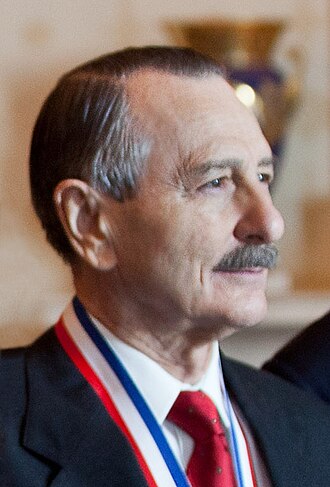
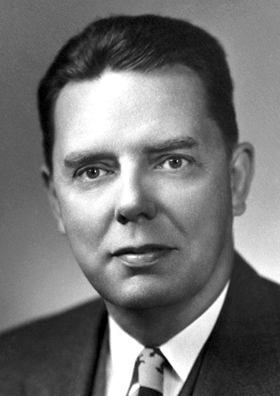
图:National Medal of Science 2010 recipients.jpg: The White Hou… · Public domain · Wikimedia Commons
拉夫·L·布林斯特尔1932—
Ralph L. Brinster
American geneticist
Ralph Lawrence Brinster is an American geneticist, National Medal of Science laureate, and Richard King Mellon Professor of Reproductive Physiology at the School of Veterinary Medicine, University of Pennsylvania.
摘自英文维基百科「Ralph L. Brinster」(英文维基百科,暂无中文条目),CC BY-SA 4.0
- 出生
- 1932 年 3 月 10 日,蒙特克莱
- 国籍
- 美国
- 学科
- 生物学
- 职业
- 军官、遗传学家、兽医、大学教师
- 母语 / 工作语言
- 英语
- 母校
- 宾夕法尼亚大学、罗格斯大学
- 工作单位
- 宾夕法尼亚大学
研究领域
所获奖项(8)
- 1989美国科学促进会会士
- 1994夏尔-列奥波·马亚奖
- 1996March of Dimes Prize in Developmental Biology
- 1997Bower Award and Prize for Achievement in Science
- 1997约翰·斯科特奖
- 2002沃尔夫医学奖
- 2006盖尔德纳国际奖
- 2010美国国家科学奖章
学会与院士
百科正文
本条目暂无中文维基百科条目,下面是英文维基百科原文。
Early life and education
Brinster grew up on a small farm in Cedar Grove, New Jersey, where his parents raised purebred animals. He studied animal science as an undergraduate at the Cook School of Agriculture, Rutgers University, New Brunswick, NJ and completed his B.S. in 1953. While he was in college, the Korean Conflict began, and he volunteered for service. He was a USAF second lieutenant in Korea during the last year of the combat period and after being assigned to the U.S. Army was stationed north of Seoul with an Army Battalion. He returned from military service and earned his V.M.D. (Veterinariae Medicinae Doctoris) (1960) and his Ph.D. in Physiology (1964) from the University of Pennsylvania.
Research impact
Ralph Brinster is acknowledged as one of the seminal founders of the field of mammalian transgenesis. He is known throughout the scientific community for his revolutionary research in early embryo development, embryonic-cell differentiation, mechanisms of gene control, and stem cell biology.. In 2006, Brinster received a Canada Gairdner Foundation International Award for pioneering discoveries in germline modification in mammals. In part the citation read, "his range of contributions is unmatched in the field". Germline cells are at the foundation of species continuity and are responsible for propagation of individuals of varying genetic content that is critical for evolutionary competition. Specifically, the genetic composition of these cells is the essence of their importance.
Research history
Culture of mammalian eggs and embryos
While a Ph.D. candidate in the 1960s, Brinster developed the first reliable in vitro culture system for early mammalian embryos. His initial studies were on fertilized eggs of the mouse. In 1963, he described a culture method consisting of micro drops of medium under oil, which remains the primary culture technique for mammalian eggs of all species, including human eggs during in vitro fertilization. During the next 10 years, Brinster studied many aspects of mouse egg metabolism and defined characteristics common to eggs of all mammalian species. From these studies he developed a culture medium and embryo manipulation strategies that are the basis of all egg culture media and manipulation methods in use today. He published more than 60 papers in the general area of egg metabolism and culture and is the scientist who laid the foundation for subsequent research involving mammalian egg culture.
Major scientific recognition
In 2003, Brinster was awarded the Wolf Prize in Medicine and was cited for "development of procedures to manipulate mouse ova and embryos, which has enabled transgenesis and its applications in mice. The first scientist to microinject fertilized eggs (with RNA), Brinster was at the forefront of applying these methods to generate transgenic mice". Importantly, the first transgenics of any species were made by direct injection of genes into mouse eggs, which has been the major method to generate transgenic animals since it was described. Moreover, the development of the CRISPR/Cas9 approach has now made direct egg injection the choice for germline modification in almost all circumstances and in all species. In 2006, Brinster received a Canada Gairdner Foundation International Award for pioneering discoveries in germline modification in mammals.
Academic career
Brinster has spent his entire academic career at the University of Pennsylvania School of Veterinary Medicine; from 1956 to 1960 as a veterinary student, from 1960 to 1964 as a postdoctoral fellow and PhD Candidate, and then continuing as a faculty member. He was appointed associate professor in 1966, professor in 1970, and the Richard King Mellon Professor of Reproductive Physiology in 1975, a position he still holds. In 1969 he founded the Veterinary Medical Scientist Training Program, the first and only combined VMD (DVM)/PhD program funded by the National Institutes of Health, serving as its Director until 1984. Since 1969 the Program has trained more than 100 combined degree graduates that serve in many senior positions throughout the country. From 1997 to 2007, he was Scientific Director of the Center for Animal Transgenesis and Germ Cell Research at the School of Veterinary Medicine.
Personal history
In 1961, Brinster married Elaine Redding, a registered nurse and graduate of the Philadelphia General Hospital School of Nursing, and they currently reside in Gladwyne, PA. They have four children. Lauren R. Brinster earned her VMD from the School of Veterinary Medicine at the University of Pennsylvania. She is a veterinary pathologist at the National Institutes of Health, Bethesda, MD. Kristen A. Brinster earned her Juris Doctor from the University of Baltimore School of Law. She is a trial lawyer and the founding managing partner of Sutherland & Brinster, PA in Maryland. Derek R. Brinster earned his MD from the Perelman School of Medicine at the University of Pennsylvania. He is a Professor of Cardiovascular and Thoracic Surgery and Director of Aortic Surgery at Northwell Health, New York, NY. Clayton J. Brinster earned an MD from the Perelman School of Medicine at the University of Pennsylvania.
Awards and honors
1960–1961 American Veterinary Medical Association Fellow University of Pennsylvania, Graduate School of Arts & Sciences
1961–1964 Pennsylvania Plan Scholar University of Pennsylvania, Graduate School of Arts & Sciences
- 1983 Award in Biological and Medical Sciences New York Academy of Sciences
- 1984 Harvey Society Lecturer
- 1986 Fellow of the American Academy of Arts and Sciences
- 1986 Member of the Institute of Medicine National Academy of Sciences
- 1987 Honored by an International Symposium W. Alton Jones Cell Science Center
- 1987 Member of the National Academy of Sciences
- 1989 Fellow of the American Association for the Advancement of Science
- 1989 Distinguished Service Award U.S. Department of Agriculture
- 1991 Nobel Symposium Invited Lecturer, Stockholm, Sweden
- 1992 Fellow American Academy of Microbiology
- 1992 Fundación Juan March Lecture Madrid, Spain
- 1992 Pioneer Award of the International Embryo Transfer Society
In popular culture
The widely acclaimed Zadie Smith novel "White Teeth" features prominently a genetically modified mouse "Futuremouse", based loosely on the transgenic experiments of Palmiter and Brinster in the 1980s.
In 2017, Dr. Brinster was depicted in his laboratory by portrait artist Mary Whyte. Mary Whyte was recently presented the Portrait Society of America Gold Medal in honor of "a lifelong dedication to excellence, as well as in recognition of a distinguished body of work that serves to foster and enhance fine art portraiture and figurative works in America."
以上节选摘自英文维基百科「Ralph L. Brinster」,按 CC BY-SA 4.0 使用,去掉了参考文献、外部链接等尾部小节,公式改写成了纯文本。篇幅所限,较长的小节只摘了开头一部分,有的小节没有收;全文、配图和出处见原文。
同年获同一奖项
同一学科、同时代的科学家








同一学科的科学家
更多 ›