格物
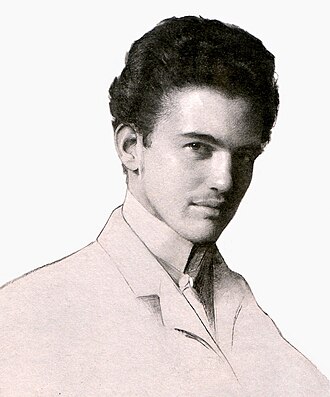
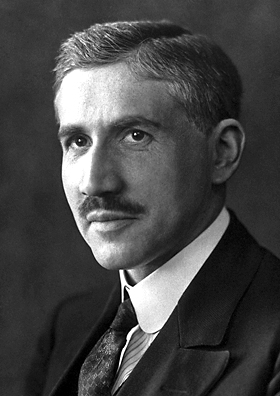
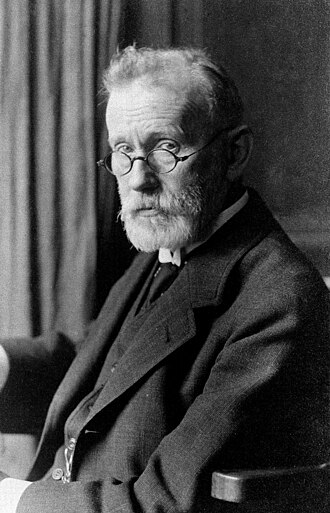
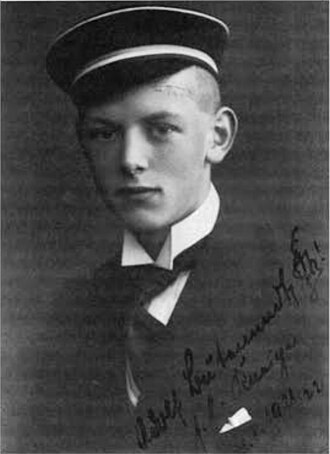
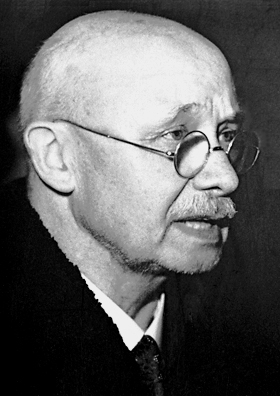
图:Asta Nørregaard · Public domain · Wikimedia Commons
维克多·戈耳斯密特1888—1947
Viktor Goldschmidt
Norwegian mineralogist (1888-1947)
维克多·莫里茨·戈尔德施密特ForMemRS(1888年1月27日—1947年3月20日)是一位挪威犹太裔矿物学家,与弗拉基米尔·韦尔纳茨基一起被视为现代地球化学和晶体化学的创始人,他也是戈尔德施密特分类的制定者。
摘自维基百科「维克多·莫里茨·戈尔德施密特」,CC BY-SA 4.0
- 出生
- 1888 年 1 月 27 日,苏黎世
- 逝世
- 1947 年 3 月 20 日,奥斯陆
- 国籍
- 挪威
- 学科
- 化学、地球科学
- 职业
- 化学家、教授、矿物学家
- 母语 / 工作语言
- 瑞典语、英语、德语
- 母校
- 奥斯陆大学
- 工作单位
- 哥廷根大学(1929—1935)、奥斯陆大学(1914—)、奥斯陆大学(1912—)、Oslo Geological Museum(1935—)
研究领域
师承
博士生1
来自 Wikidata 的「博士导师」「师从」「博士生」「学生」记录,可能不全。
所获奖项(5)
- 1903埃利奥特·克雷森奖章
- 1912Fridtjof Nansen Award of Excellence, Mathematics-Natural sciences class
- 1943英国皇家学会外籍会员
- 1944沃拉斯顿奖章
- —Knight of the Order of St. Olav
学会与院士
百科正文
生平
戈尔德施密特生于瑞士苏黎世。他的父亲是苏黎世联邦理工学院的物理化学家。 他们一家于1893年搬到阿姆斯特丹,1896年搬到海德堡,最终于1901年定居奥斯陆。他们一家于1905年成为挪威公民。
戈尔德施密特于1906年进入奥斯陆大学学习无机化学、物理化学、地质学、矿物学、物理学、数学、动物学和植物学。 23岁时(1911年)获得该大学的博士学位。1912年,他成为该大学的矿物学和岩相学副教授。
1929年,戈尔德施密特成为哥廷根大学矿物学教授。 然而希特勒上台后,戈尔德施密特感到不安,并于1935年辞职返回奥斯陆。
1940年4月9日,德国入侵挪威。1942年10月26日,戈尔德施密特被德国占领当局捕。他被送往集中营,病情严重,他在奥斯陆附近的一家医院接受治疗后,于11月8日获释,但仅11月25日就再次被捕。然而,就在他即将坐船前往奥斯威辛集中营时,由于他的一些同事劝说警察局长,表示他的科学专长对国家至关重要,他才得以获释。 戈尔德施密特很快逃往瑞典。
1943年3月3日,戈尔德施密特被英国情报部门空运至英国,并提供了有关挪威的情报。
戈尔德施密特于1946年6月26日返回奥斯陆,但不久后便去世了,享年59岁。
以上内容摘自维基百科「维克多·莫里茨·戈尔德施密特」,按 CC BY-SA 4.0 使用,去掉了参考文献、外部链接等尾部小节,公式改写成了纯文本。全文、配图和出处见原文。
英文维基百科补充中文条目比较短,下面是英文条目「Victor Goldschmidt」的原文
Victor Moritz Goldschmidt (27 January 1888 – 20 March 1947) was a Norwegian-Jewish mineralogist considered (together with Vladimir Vernadsky) to be the founder of modern geochemistry and crystal chemistry, developer of the Goldschmidt Classification of elements.
Early life and education
Goldschmidt was born in Zürich, Switzerland on 27 January 1888. His father, Heinrich Jacob Goldschmidt, (1857–1937) was a physical chemist at the Eidgenössisches Polytechnikum and his mother, Amelie Koehne (1864–1929), was the daughter of a lumber merchant. They named him Viktor after a colleague of Heinrich, Victor Meyer. His father's family was Jewish back to at least 1600 and mostly highly educated, with rabbis, judges, lawyers and military officers among their numbers. As his father's career progressed, the family moved first to Amsterdam in 1893, to Heidelberg in 1896, and finally to Kristiania (later Oslo), Norway in 1901, where he took over the physical chemistry chair at the university. The family became Norwegian citizens in 1905.
Goldschmidt entered the University of Kristiania (later the University of Oslo) in 1906 and studied inorganic and physical chemistry, geology, mineralogy, physics, mathematics, zoology and botany. He secured a fellowship for his doctoral studies from the university at the age of 21 (1909). He worked on his thesis with the noted geologist Waldemar Christofer Brøgger and obtained his Norwegian doctor’s degree when he was 23 years old (1911).
Career
In 1914 Goldschmidt applied for a professorship in Stockholm and was offered the position. To entice him to stay, the University of Kristiania persuaded the government to establish a mineralogical institute with a professorship for him. In 1929 Goldschmidt was appointed the chair of mineralogy in Göttingen, and he hired Reinhold Mannkopff and Fritz Laves as his assistants. However, after the rise of the Nazis to power, he became unhappy with the treatment of non-Aryans like himself (although the university treated him well) and he resigned in 1935 and returned to Oslo. In 1937, he was invited by the Royal Society of Chemistry to give the Hugo Müller lecture.
On 9 April 1940 the Germans invaded Norway. On 26 October 1942 Goldschmidt was arrested at the orders of the German occupying powers as part of the persecution of Jews in Norway during World War II. Taken to the Berg concentration camp, he became seriously ill and after a stay in a hospital near Oslo, he was released on 8 November, only to be rearrested on 25 November.
Scientific work
For his thesis, Goldschmidt studied the Oslo graben, a valley formed by the downward displacement of a block of land along faults on each side. The region had recently been mapped by Brøgger. In the Permian, magmas intruded into the older rocks, heating the surrounding rock. This resulted in mineralogical changes known as contact metamorphism, resulting in a fine-grained class of rocks known as hornfels. Goldschmidt made a systematic study of the hornfels. He showed that, of the minerals to be found in the hornfels, only certain associations occurred. For example, andalusite could be associated with cordierite but never with hypersthene.
From his data on the hornfels, Goldschmidt deduced a mineralogical phase rule. It is a special case of the Gibbs' phase rule for phases in thermodynamic equilibrium with each other, which states that C-P=F-2,
where C is the minimum number of chemical components, P is the number of phases, and F is the number of degrees of freedom (e.g., temperature and pressure) that can vary without changing C or P. As an example, the chemical compound Al2SiO5 can occur naturally as three different minerals: andalusite, kyanite and sillimanite.
Awards
Goldschmidt was created a Knight of the Order of St. Olav in 1929.
While at the Macaulay Institute, Goldschmidt was elected a Foreign Member of the Royal Society, given an honorary Doctor of Laws (LLD) by the University of Aberdeen and awarded the Wollaston Medal, the highest honor of the Geological Society of London.
The mountain ridge Goldschmidtfjella in Oscar II Land at Spitsbergen is named after him.
The mineral goldschmidtite (KNbO3) was named in his honour (IMA2018-034).
The V. M. Goldschmidt Medal is awarded annually by The Geochemical Society
以上节选摘自英文维基百科「Victor Goldschmidt」,按 CC BY-SA 4.0 使用,去掉了参考文献、外部链接等尾部小节,公式改写成了纯文本。篇幅所限,较长的小节只摘了开头一部分,有的小节没有收;全文、配图和出处见原文。
同一学科、同时代的科学家


同一学科的科学家
更多 ›