格物
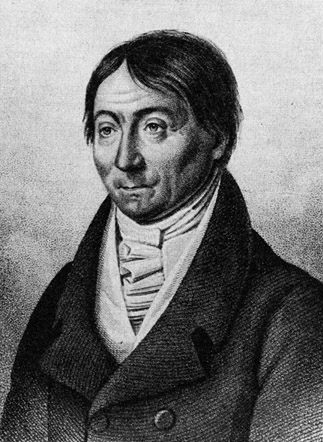
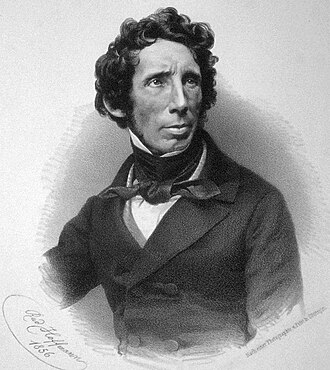
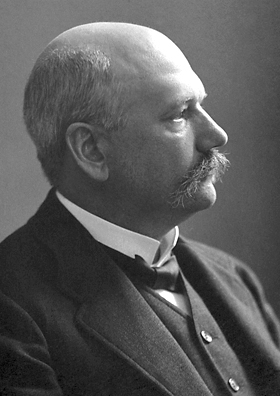
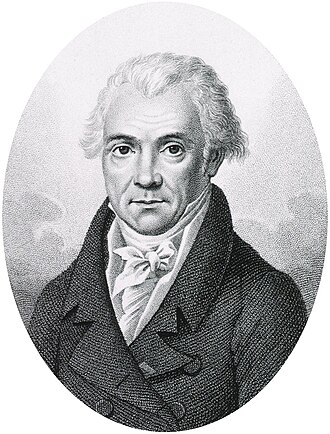
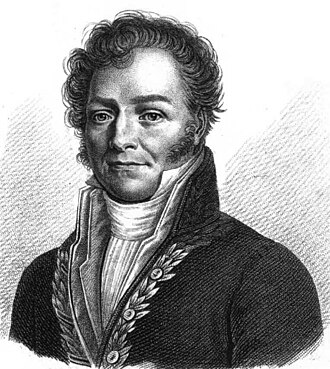
图:作者不详 · Public domain · Wikimedia Commons
- 出生
- 1767 年 2 月 2 日,希尔德斯海姆
- 逝世
- 1851 年 1 月 1 日,柏林
- 国籍
- 神圣罗马帝国、汉诺威王国
- 学科
- 化学、生物学、医学、博物与综合
- 职业
- 植物学家、蕨类植物学家、苔藓学家、化学家
- 母语 / 工作语言
- 拉丁语、德语
- 母校
- 哥廷根大学
- 工作单位
- University of Berlin、柏林洪堡大学、弗罗茨瓦夫大学、罗斯托克大学
研究领域
师承
来自 Wikidata 的「博士导师」「师从」「博士生」「学生」记录,可能不全。
所获奖项(3)
- —英国皇家学会院士
- —Pour le Mérite for Sciences and Arts order
- —蓝马克斯勋章
学会与院士
百科正文
林克出生于希尔德斯海姆,在位于格丁根的汉诺威州立大学学习医学和自然科学,1789年获得医学士学位,毕业论文是《格丁根地区岩石层的植物》,1792年,他成为罗斯托克大学新成立的化学、动物学和植物学系的第一位教授,他相信拉瓦锡的理论,不再教学生“热素”的理论,而代之新的氧气理论,他在讲授化学时也引入了最新的化学计量学理论,1806年他创建了罗斯托克第一个化学实验室,在此期间,他写了多篇化学、物理、地理、矿物学、动物学的论文。
1797年-1799年,他去葡萄牙考察,这次旅行使他最终确定将植物学作为他的主要研究方向。1800年他被选为利奥波德德国国家科学院院士,1808年,他获得圣彼得堡科学院奖。1811年,他被聘任为弗罗茨瓦夫大学的化学和植物学教授,1815年,被聘任为柏林植物园园长和标本馆馆长,直到他去世,这一阶段是他科学成果最丰富的阶段,他将植物园扩大到包括14 000种,有许多珍稀品种,1827年他命名了金琥属(Echinocactus)、花座球属(Melocactus)等,以及真菌如虫草属(Cordyceps)、 镰刀菌属(Fusarium)、光果菌属(Leocarpus)、黏菌类(Myxomycetes)、多孢锈菌属(Phragmidium)等。
他被选为柏林科学院院士,最终在柏林逝世。
以上内容摘自维基百科「约翰·海因里希·弗里德里希·林克」,按 CC BY-SA 4.0 使用,去掉了参考文献、外部链接等尾部小节,公式改写成了纯文本。全文、配图和出处见原文。
英文维基百科补充中文条目比较短,下面是英文条目「Johann Heinrich Friedrich Link」的原文
Johann Heinrich Friedrich Link (2 February 1767 – 1 January 1851) was a German naturalist and botanist. The standard author abbreviation Link is used to indicate this person as the author when citing a botanical name.
Biography
Link was born at Hildesheim as a son of the minister August Heinrich Link (1738–1783), who taught him love of nature through collection of 'natural objects'. He studied medicine and natural sciences at the Hannoverschen Landesuniversität of Göttingen, and graduated as MD in 1789, promoting on his thesis "Flora der Felsgesteine rund um Göttingen" (Flora of the rocky beds around Göttingen). One of his teachers was the famous natural scientist Johann Friedrich Blumenbach (1752–1840). He became a private tutor (Privatdozent) in Göttingen.
In 1792, he became the first professor of the new department of chemistry, zoology and botany at the University of Rostock. During his stay at Rostock, he became an early follower of the antiphlogistic theory of Lavoisier, teaching about the existence of oxygen instead of phlogiston. He was also a proponent of the attempts of Jeremias Benjamin Richter to involve mathematics in chemistry, introducing stoichiometry in his chemistry lessons. In 1806, he set up the first chemical laboratory at Rostock in the "Seminargebäude". He began to write an abundant number of articles and books on the most different subjects, such as physics and chemistry, geology and mineralogy, botany, zoology, natural philosophy and ethics, prehistoric and early history. He was twice elected rector of the university.
In 1793, he married Charlotte Juliane Josephi (1768?–1829), sister of his colleague at the university Prof. Wilhelm Josephi (1763–1845).
During 1797–1799, he visited Portugal with Count Johann Centurius Hoffmannsegg, a botanist, entomologist and ornithologist from Dresden. This trip made him finally choose botany as his main scientific calling.
In 1800, he was elected to the prestigious Leopoldina Academy, the oldest school for natural history in Europe.
In 1808, he was awarded a prize at the Academy of Saint Petersburg for his monography Von der Natur und den Eigenschaften des Lichts (nature and characteristics of light).
His scientific reputation grew and became widely known. In 1811, he was appointed professor of chemistry and botany at Breslau university, where he was equally elected twice rector of the university.
After the death of Carl Ludwig Willdenow in 1815, he became professor of natural history, curator of the herbarium and director of the botanic garden (Hortus regius Berolinensis) in Berlin until he died. This period became the most fruitful period of his academic life. He augmented the collection of the garden to 14,000 specimens, many of them rare plants. He worked in close collaboration with Cristoph Friedrich Otto (1783–1856), conservator at the botanical garden. In 1827, he named with him the cacti genera Echinocactus and Melocactus. Most of the fungi that he named, are still recognised under the original name, proving the high quality of his work (such as Cordyceps, Creopus, Fusarium, Leocarpus, Myxomycetes, Penicillium, Phragmidium).
He was elected member of the Berlin Academy of Science and many other scientific societies, including the Royal Swedish Academy of Sciences, which elected him a foreign member in 1840.
He trained a whole new generation of natural scientists, such as Christian Gottfried Ehrenberg (1795–1876). Throughout his life, he travelled extensively throughout Europe. He benefited from his knowledge of foreign languages, including Arabic and ancient Sanskrit.
He died in Berlin on 1 January 1851, a month before his 84th birthday. He was succeeded by Alexander Heinrich Braun (1805–1877).
He is recognised as one of the last scientists of the 19th century with a universal knowledge. Link was also one of the few German botanists of his time, who aimed at a complete understanding of plants, through a systematic anatomical and physiological research.
His most important work is the Handbuch zur Erkennung der nutzbarsten und am häufigsten vorkommenden Gewächse (three volumes, published between 1829 and 1833).
以上内容摘自英文维基百科「Johann Heinrich Friedrich Link」,按 CC BY-SA 4.0 使用,去掉了参考文献、外部链接等尾部小节,公式改写成了纯文本。全文、配图和出处见原文。
同一学科、同时代的科学家

同一学科的科学家
更多 ›